A Kashmir Image, a Saudi Cell, and Tehran's Patient Lobby for Shia Prisoners
The repatriation of a Kashmiri Shia man detained in Saudi Arabia for posting a portrait of Ayatollah Khamenei illustrates how Tehran has turned consular patience into a form of regional soft power.
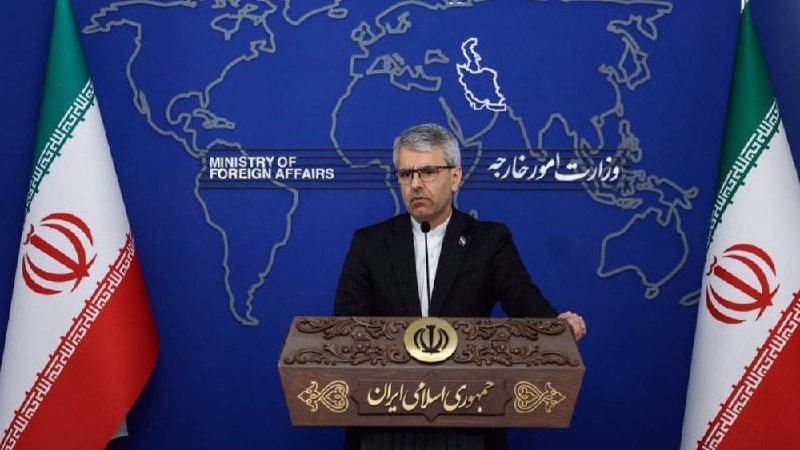
A young man from Indian-administered Kashmir walked out of Saudi detention in mid-July 2026 after months behind bars, his offence, according to Iranian-aligned military channels, was reposting a portrait of Ayatollah Ali Khamenei on a personal account. The case, reported by the Telegram channel IRIran_Military on 18 July 2026 at 07:47 UTC, is small in scale but unusually legible in what it reveals about how Tehran has learned to leverage its standing among Shia communities abroad as quiet diplomacy, and how Gulf monarchies have learned to manage the political cost of detaining them.
Tehran's foreign-policy apparatus has spent the better part of two decades cultivating Shia diaspora networks as a constituency it can claim to defend, and the Kashmiri case is the kind of bread-and-butter consular work that builds that claim one phone call at a time. What makes the episode worth watching is not the prisoner himself but the choreography around him: an Iranian-aligned channel posting the news in a celebratory register, a Saudi state that allows the release, and an Indian-administered Kashmir that receives the man back into a region where public expressions of Shia identity have grown more politically expensive since 2019.
A portrait, a charge, a long negotiation
The thread, posted at 07:47 UTC on 18 July 2026, frames the man as a Shia Muslim from Kashmir who was arrested inside Saudi Arabia and held for months before being sent home. The triggering act, sharing an image of Khamenei, sits inside a wider pattern of Gulf states treating the open display of Iranian religious figures as a politised act rather than a private devotional one, particularly since the 2016 attack on the Saudi diplomatic mission in Tehran and the subsequent rupture in bilateral relations. Saudi authorities do not publish a detailed breakdown of such cases, and the channel does not name the detainee, the date of arrest, or the facility involved. The sources do not specify whether formal charges were filed or whether the man was held administratively, a gap that recurs across nearly every similar case that surfaces in this region.
Read narrowly, the story is about one person and one phone screen. Read against the longer pattern, it is the kind of case Tehran's foreign ministry will quietly point to when engaging Gulf counterparts. Saudi-Iranian rapprochement, brokered under Chinese auspices in March 2023, formally reopened embassies and revived security coordination, but the working-level business of prisoner files, Shia detainees in particular, has moved at the pace of bilateral confidence rather than diplomatic communiqués.
Why Iran amplifies it
Iranian-aligned outlets have a structural reason to publicise these cases. The Islamic Republic derives a measurable share of its regional legitimacy from being seen as the external guarantor of Shia communities that span national borders: Bahrainis, Pakistanis, Kashmiris, Iraqis, Lebanese, and the smaller communities of the Gulf itself. Each successful consular intervention is a deposit in that account. The channel's framing, leading with the man's Kashmiri origin, his imprisonment for an image of Khamenei, and his eventual return, hits the three notes Tehran wants external audiences to hear: Shia Muslims are vulnerable abroad, the Saudi state is the proximate threat, and Iranian diplomacy delivers results where others have not intervened.
The same logic applies at home. Shia in Indian-administered Kashmir have weathered curbs on processions, mourning rituals, and public religious display since the reorganisation of the region's constitutional status in August 2019, and cross-border religious identifications carry political weight that local authorities track carefully. A young man who reaches Mecca or Medina and returns with a martyrdom-narrative attached is, for several constituencies at once, a useful symbol.
The Saudi calculation
Riyadh's quiet release is no less calculated. Saudi Arabia does not publish a Shia-detainee count and does not maintain a public list of deportations for religious-expression offences, which means the political cost of such cases tends to be one-sided: the detainee's family complains, Iranian-aligned media amplifies, and the Saudi interior ministry absorbs the reputational damage without a domestic constituency large enough to constrain the policy. That asymmetry has begun to shift in small increments. The 2023 Beijing-brokered understanding created a diplomatic channel through which individual cases can be raised without escalating into a wider standoff, and a quiet release, in that context, costs Saudi Arabia less than a headline-grabbing trial.
The Saudi calculus is also internal. The kingdom's Shia minority, concentrated in the Eastern Province, has its own grievances and its own relationship with Iranian clerical authority, and the interior ministry has spent the better part of a decade trying to draw a line between domestic Shia citizenship and external Shia allegiance. Releasing a foreign detainee for an image-posting offence does not change that line materially, but it does signal to Beijing, to Manama, to Doha, and to Tehran that the new normal allows for quiet concessions on low-profile cases without conceding the broader frame.
What remains unseen
The sources do not say how the man's release was secured, whether the Indian mission in Riyadh was involved, what consular communications preceded the release, or whether any Iranian official travelled to Saudi Arabia in connection with the case. The naming convention in the original post, "a young man from Kashmir," is consistent with how Iranian-aligned channels handle politically sensitive cases when the principals have not consented to being named, and it leaves a documentary gap that is unlikely to be filled by the Saudi interior ministry or by the Indian external affairs ministry in the near term. The fact-pattern, in other words, is reported by interested parties on one side and is silent on the other, and the version that travels is the version that travels.
For now, the case is a footnote. It becomes a precedent only if Tehran succeeds in packaging it as one, and Riyadh decides, in the next similar file, that the political cost of holding the prisoner is higher than the cost of letting him go.
Wire provenance
This editorial synthesis draws on the following public wire/social posts:
- https://t.me/IRIran_Military