Israeli strike on Lebanese border town injures two soldiers, hits agricultural greenhouses
Two Lebanese soldiers were wounded in an Israeli airstrike on the southern border town of Mansouri on 18 July 2026, the same strike that destroyed agricultural greenhouses and triggered a secondary explosion from munition remnants.
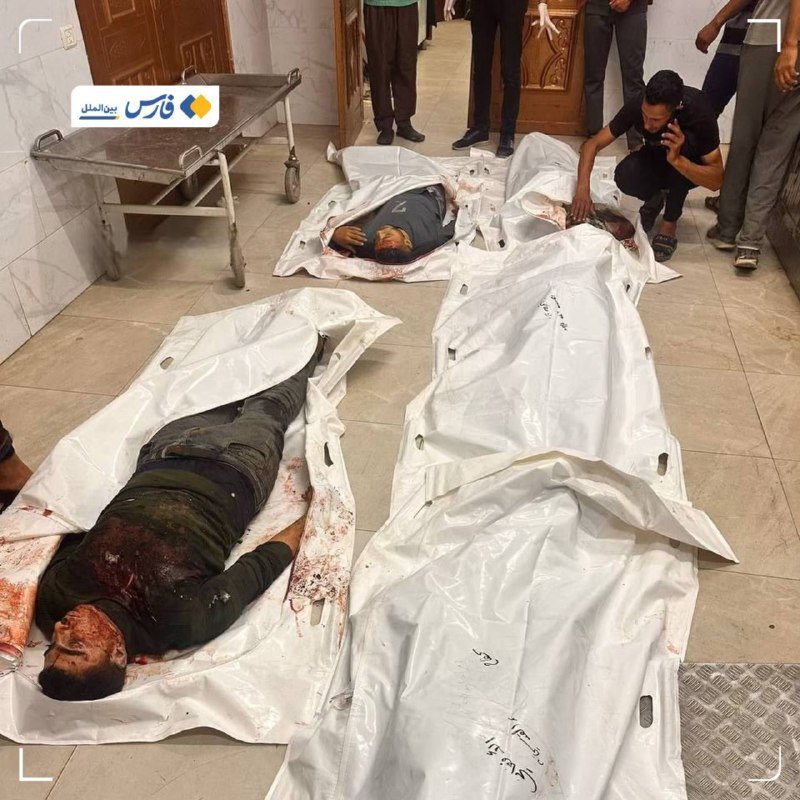
An Israeli airstrike hit the southern Lebanese town of Al Mansouri at approximately 09:59 UTC on 18 July 2026, destroying agricultural greenhouses and wounding two Lebanese soldiers, according to initial wire reports.
The strike was first logged by regional outlets as an attack on the neighbouring locality of Jabal al-Rafi, before follow-up wires clarified that the principal impact site was Mansouri itself, a town in the Tyre district of south Lebanon near the border with Israel. Images circulated by the on-the-ground network World Field Witness (@wfwitness) showed wreckage consistent with a direct hit on greenhouse structures used for cultivation in the village.
The picture, in plain terms, is the latest iteration of a pattern that has come to define the Israel-Lebanon frontier: kinetic action that targets infrastructure and personnel in the same strike, and that produces knock-on effects long after the munition detonates. Two Lebanese soldiers were injured in the attack, regional outlets reported within minutes of impact. Local accounts then indicated that remnants of Israeli munitions at the strike site may have caused a secondary explosion, compounding the damage to surrounding property and complicating the immediate aftermath for first responders. The order of those two events, the soldier casualties and the ordnance detonation, matters: it places uniformed personnel of the Lebanese Armed Forces in the same impact zone as unexpended Israeli material, and it suggests the targeting logic did not exclude the area where military movement was likely.
A strike on a town, not a target
Mansouri sits just outside the security zone framework that has governed south Lebanon for most of the post-2006 period, and the geography matters as much as the ordnance. World Field Witness framed the strike as occurring outside the security zone, implicitly invoking the November 2024 ceasefire arrangement between Israel and Hezbollah that halted the previous round of hostilities and that set out a defined perimeter for Israeli operations. Two readings of that perimeter now compete. The Lebanese-aligned framing holds that any strike beyond the agreed zone represents a violation of the framework. The Israeli framing, by contrast, treats cross-border action as a continuing defensive necessity whenever infrastructure or personnel linked to armed groups are identified. The sources reviewed for this article do not include a formal Israeli statement on the 18 July strike, and the Israeli military's English-language channels had not, as of mid-morning UTC, posted confirmation or denial of the operation. That silence is itself part of the story.
The targeting of greenhouses is the kind of detail that gets underplayed in casualty-led coverage but that local agricultural communities feel for seasons. A greenhouse in the Litani river plain is not a symbolic structure; it is the productive asset of a household economy. The destruction of multiple such structures in a single strike pushes the cost of the day's violence well past the two injured soldiers and into the longer arc of food production and rural employment.
What the wires say, and what they don't
The first public reports of the strike came from outlets aligned with the regional counter-mainstream, including The Cradle Media and World Field Witness, before any confirmation from wire services was visible in the immediate aftermath. Reuters, AFP, Associated Press and the BBC had not, by the time of writing, published standalone English-language stories on the Mansouri strike; the available record is built from Telegram posts, the type of source that often runs ahead of mainstream wire confirmation on southern Lebanon and that occasionally runs ahead of the facts as well. The reports that two Lebanese soldiers were injured were attributed to local sourcing rather than to a Lebanese Armed Forces statement; the reports that munition remnants caused a secondary explosion were framed as "local reports indicate," a formulation that is short of confirmation but not idle speculation either.
This is a familiar epistemic problem in covering south Lebanon. Mainstream wire services apply a higher verification threshold than regional Telegram channels, which means wire confirmation typically arrives minutes to hours after the first reports and often without the granular visual detail the regional channels provide. The trade-off is real: the regional reporting is faster and more textured, the wire reporting is slower and more authoritative. Both are needed to reconstruct what happened in Mansouri on 18 July 2026, and neither alone is sufficient.
The structure underneath the strike
The pattern is no longer novel, and that is the structural point. A strike in south Lebanon, a casualty report, a contested perimeter, a wire-service lag, an Israeli silence, and a regional outlet that leads the first cycle of reporting: this sequence has played out repeatedly since the November 2024 ceasefire took hold. Each individual incident is bounded, the casualties are limited, the diplomatic temperature stays manageable. But the cumulative effect, the steady drumbeat of strikes on the Lebanese side of the border, is to test the framework from below without, in the language of strategic communications, breaking it. The framework holds in its formal architecture while being eroded in its operational practice, and the day a serious incident forces a reckoning with the distinction may be closer than the rhetoric of stability suggests.
For the households of Mansouri, the structural question is immediate. Two soldiers are wounded, the greenhouses are gone, the surrounding area is being cleared of ordnance. The next round of reporting will move on; the agricultural calendar in that part of the Litani plain will not.
What remains uncertain
Three points are not settled by the available sourcing. The exact target the strike was aimed at is not identified: a Lebanese Armed Forces position, a vehicle or structure used by an armed group, or a piece of civilian infrastructure. The number of additional civilian casualties, if any, is not disclosed. And the Israeli military's account of the operation has not been published. Until at least one of those is addressed, the strike sits in the standard ambiguous zone that defines cross-border action in the south, with the Lebanese side inclined to read it as a violation, the Israeli side likely to read it as a measured response, and the diplomatic centre quietly hoping the temperature stays manageable through the rest of the week.
This piece draws on regional Telegram reporting rather than on confirmed wire copy, given the absence of mainstream wire confirmation at time of writing. Monexus will update when an Israeli military statement or a wire-service lede becomes available.
Wire provenance
This editorial synthesis draws on the following public wire/social posts:
- https://t.me/thecradlemedia
- https://t.me/thecradlemedia
- https://t.me/wfwitness
- https://t.me/wfwitness
- https://t.me/wfwitness
- https://t.me/thecradlemedia