Strait of Hormuz: IRGC claims oil tanker blasts as it alleges a closure to US military action
Tehran's Revolutionary Guards say two tankers caught fire after entering a mined southern channel of the strait; a second wave of reporting describes cruise-missile and drone disablements of four other vessels.
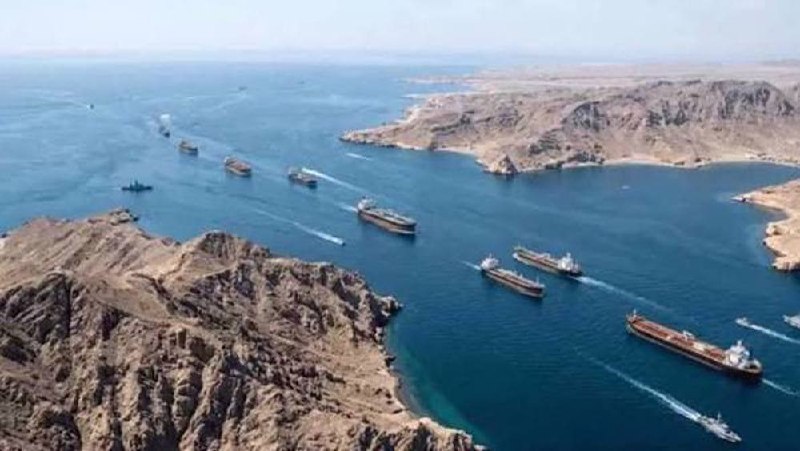
Two oil tankers were on fire south of the Strait of Hormuz on the evening of 17 July 2026 after entering a route the Iranian Revolutionary Guard Corps described as mined, according to a statement carried by Iranian state-aligned channels. The IRGC's claim, posted at 21:59 UTC via Telegram channels including Clash Report, said the strait was "fully closed to oil and gas shipments" until US military action ceased, framing the closure as conditional, retaliatory and directed at Washington rather than at commercial shipping in general. By 23:06 UTC, the picture had widened: a follow-up statement, relayed by Middle East Spectator and corroborated by DD Geopolitics, said the IRGC had disabled four additional "violating" tankers with cruise missiles and a drone.
What the IRGC is asserting is not a maritime accident but a controlled, escalatory move with a price attached: passage of crude and product flows through the world's most important oil chokepoint, suspended and keyed to the trajectory of US force deployments in the Gulf. The strait handles roughly a fifth of seaborne oil. Any sustained interruption, even one declared unilaterally by a single power, reprices bunker fuel, shipping insurance and shipping routes in hours.
The two waves of reporting
The first wave, between 21:59 and 22:07 UTC on 17 July, was confined almost entirely to Tehran's information ecosystem. Press TV, the BRICS News channel, and the war-monitoring feeds @wfwitness and @Middle_East_Spectator all carried versions of the same IRGC framing: that two tankers had "exploded and caught fire" after entering what the statement called a minefield in the southern route of the strait, and that vessels had been "deceived" into the channel. Press TV's bulletin at 22:06 UTC was a near-verbatim relay of the IRGC wording; BRICS News added the directive that ships "must avoid entering the mined path in the Strait of Hormuz to protect" themselves.
The second wave arrived after 23:00 UTC, again via Telegram rather than mainstream wire. Middle East Spectator, one of the fastest aggregators of Iranian state messaging on the platform, posted at 23:06 UTC that the IRGC had "disabled four violating oil tankers in the Strait of Hormuz with cruise missiles and drone." DD Geopolitics echoed the line at 23:44 UTC. The discrepancy matters: the first report named two tankers and described them as having struck naval mines; the second described four further tankers disabled by strike, not by mine. War Monitor, reposted at 23:48 UTC by osintlive, tied both strands together and added that Iran was "carrying out" further actions, without specifying.
The composition of these sources shapes what the story means at this hour. Telegram channels with Iranian-government or Iran-sympathetic reach carried the original statements; aggregators with Western-leaning audiences carried the second. None of the major maritime authorities (the UK Maritime Trade Operations agency, the US Navy's 5th Fleet, Lloyd's List) appear in the source set, which means the picture is currently one-sided and Tehran-scripted.
What is plausible, what is performative
Iranian naval mining is technically feasible. Mine-laying operations in the southern approaches to the strait have been rehearsed in Iranian naval exercises for years, and the southern channel closer to Omani waters is the natural place to seed a contact-detonation or influence-trigger field without immediately closing the entire strait to Iranian-flagged traffic. The framing in the IRGC statement, which describes the route as the "southern (illegal) route," implies a pre-existing Iranian claim that any transit outside the Iranian-controlled northern corridor is unauthorised: a legal posture that, if it sticks, would extend Iranian inspection rights over commercial shipping far outside its territorial sea.
The escalation to cruise missiles and one-way attack drones against tankers is harder to verify and easier to read as signalling. Houthi attacks on Red Sea shipping over the past two years have used similar weapons profiles, and Iran's exports of those capabilities to its partners have been widely documented. Using them on tankers in the strait itself, however, would mark a qualitative shift: insurance war-risk premiums for the Persian Gulf have historically assumed Iranian intent to harass, not to sink, commercial hulls carrying crude from Iran's GCC neighbours. A confirmed kinetic strike would move the assumption from coercion to combat.
The IRGC's own framing, that the closure is contingent on US military action, points to a coercive rather than destructive intent. The clause "until U.S. military action" reads as a bargaining position: reopen the corridor, calm the deployment posture, and transit returns. That is a more conventional Iranian posture than a sustained campaign of tanker-sinking.
Who has skin in the game
The actors with direct exposure are not those named in the IRGC statement. On the shipowning side, tanker operators listed in the Persian Gulf include state fleets from Saudi Arabia, the UAE, Iraq, Kuwait and Qatar, alongside Greek, Indian and Chinese commercial operators. Insurers at Lloyd's and the IG P&I clubs set war-risk rates by the day for transits through the strait; a confirmed mine or strike incident typically adds a digit to those rates within hours. Refiners in Asia, particularly India's state-owned processors and China's independent refiners, take the price hit first.
On the military side, the US 5th Fleet, forward-based in Bahrain, operates the primary task force tasked with securing commercial transit through the strait. Its posture, and any British or French naval escort additions, would be the variable Tehran appears to be indexing its action to. A second variable sits in Tel Aviv and Riyadh: Iranian moves in the strait have historically been calibrated against the tempo of nuclear-file negotiations and against incidents on the Israel-Lebanon front. The sources in this thread do not fix that variable; it is one of several things still untested.
What remains contested, what is not yet verified
The two operational details that matter for prices, shipping and policy are still single-sourced from Tehran-aligned channels: the presence of a minefield in the southern channel, and the use of cruise missiles and drones against four additional tankers. Neither claim has been independently corroborated by a recognised maritime authority in the source set, nor visibly contested by any Western or GCC government. The owner, flag and cargo of the two tankers on fire are not specified in the threads; that information, once it arrives from the Lloyd's database or from port states, will determine whether insurance markets treat this as two isolated incidents or as the opening of a campaign.
The IRGC's claim that the strait is "fully closed" until US military action ends is also a claim about US posture, not only about maritime traffic. A clean test of that framing is whether Washington describes its naval operations in the Gulf as continuous or as suspended. Until that clarification lands, expect the war-risk insurers to price the worst plausible reading of the Telegram reporting, and expect Iranian state media to keep the messaging tight to the original wording.
Desk note
Monexus framed this around the two-wave reporting from Telegram because no mainline wire had corroborated the IRGC statement at the time of writing. Where Western and Gulf-state outlets develop the picture (Lloyd's List, Reuters tanker-tracker, US 5th Fleet statements), Monexus will return to it. The Iran-file desk treats Iranian state releases as primary sources for Iranian intent while flagging them as such in the lede.
Wire provenance
This editorial synthesis draws on the following public wire/social posts:
- https://t.me/ClashReport
- https://t.me/wfwitness
- https://t.me/Middle_East_Spectator
- https://t.me/presstv
- https://t.me/bricsnews
- https://t.me/Middle_East_Spectator
- https://t.me/DDGeopolitics
- https://t.me/osintlive