Iran strikes a Kuwaiti oil site, and the Gulf’s deterrence script tears
Kuwait Petroleum Corporation says repeated Iranian attacks on a vital oil facility caused injuries and material damage, the first such strike on a non-Iraqi Gulf producer and a marker that Tehran’s shadow war is widening faster than its diplomats can contain it.
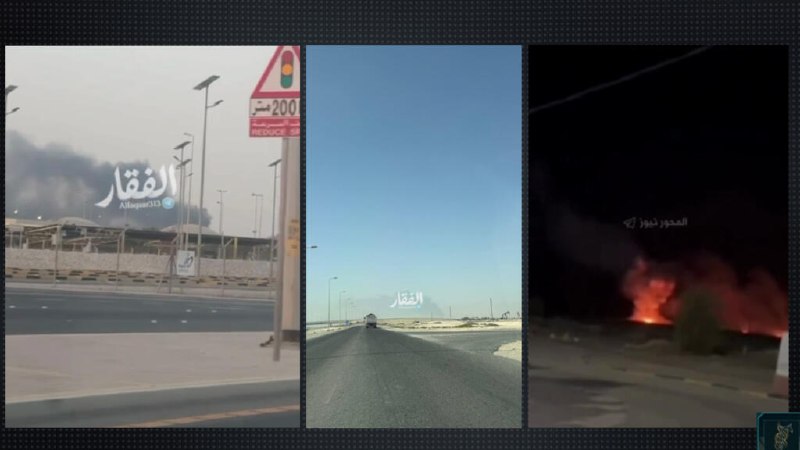
Kuwait Petroleum Corporation said on 18 July 2026 that "one of the vital sites in the oil sector was subjected this morning to repeated brutal Iranian attacks, resulting in a number of injuries and significant material losses." The Kuwait Fire Force separately reported that several firefighters and one worker were injured responding to fires at two targeted sites. Within an hour the claim was being relayed across Gulf monitoring channels and the Arabic-language wire desks, with Al Jazeera carrying the KPC line directly. The episode is the first publicly attributed Iranian strike on a major piece of Kuwaiti upstream infrastructure, and it lands in a Gulf that has spent two years telling itself the worst was already priced in.
The script the Gulf states have been reading from, in which Iran's pressure runs through proxies in Iraq, Yemen, Lebanon and the Strait of Hormuz, just acquired a new chapter. Tehran is now being named, by name, as the author of an attack on a fellow OPEC producer and a U.S. security partner. That changes the diplomatic grammar of the next 72 hours in ways that no communiqué from the foreign ministry of either capital will be able to smooth over.
What actually got hit
KPC did not name the specific facility in its initial statement, describing it only as a "vital site in the oil sector." The Kuwait Fire Force said it was responding to fires at two locations. Telegram channels monitoring the incident, including the war-tracking feed wfwitness, reported the fires were still being tackled more than an hour after the first reports. Liveuamap, which maintains a near-real-time incident ledger on Iran, logged the KPC statement at 10:46 UTC and pointed readers to its archive entry on the event. The KPC language, "repeated attacks", suggests this was not a single drone or a single salvo but a sequenced strike, the kind of operational signature that points to planning rather than opportunistic fire.
What KPC did not do is also telling. There is no publicly available production guidance in the KPC statement, no force majeure declaration in the language quoted by Al Jazeera, and no request for international assistance. That is consistent with a company that believes it can absorb the hit operationally and is buying itself time to coordinate the political response with the government in Kuwait City.
The Iranian problem Tehran does not want
Iran's own public posture, across the Islamic Republic's state-aligned outlets, has been to frame any military action as defensive and directed only at actors it accuses of hosting or enabling strikes against Iranian territory. Striking a Kuwaiti oil site does not fit that story at all. Kuwait is not a party to the military coalitions currently striking Iranian assets. Kuwaiti airspace hosts U.S. and coalition forward-deployed formations but has not been publicly identified as a launch point for offensive operations against Iran. The framing problem is sharper still because Kuwait has spent the last two years quietly hosting back-channel mediation, including shuttle diplomacy that Gulf officials credit with keeping lines open during earlier rounds of escalation.
Tehran therefore has a choice to make, and it has to make it fast. Either it owns the strike and accepts that the Gulf Cooperation Council's quiet consensus on containment is over, or it disowns it and accepts that a U.S.-partnered Gulf state has just been hit by an Iranian-built or Iranian-supplied weapon system that someone in the chain of command did not bother to coordinate with the foreign ministry. Both options are bad. The first makes the next GCC summit in Riyadh a confrontation rather than a coordination meeting. The second exposes a command-and-control problem inside Iran's own axis of resistance that its adversaries will spend the next decade studying.
The deterrence math just changed
For the Gulf monarchies, the arithmetic of deterrence has run through a familiar set of inputs: U.S. carrier presence in the Arabian Sea, the Patriot and THAAD batteries dotted across the UAE, Saudi Arabia and Qatar, the Integrated Air and Missile Defense initiative, and the unspoken assumption that Iran's appetite for escalation had a ceiling somewhere short of striking the energy infrastructure of fellow oil exporters. That ceiling is now visibly higher than Western and Gulf planners had publicly conceded.
The near-term price action will be loud. Brent will open with a risk premium on any signal that the Strait of Hormuz transit corridor, through which roughly a fifth of seaborne oil moves, can be threatened not just by Iranian naval action but by sequenced strikes on the producer states themselves. But the more durable move is in the insurance and shipping markets: war-risk underwriters were already repricing Gulf transit in late 2025, and a confirmed Iranian strike on a KPC asset will push those premia higher on a curve that does not unwind quickly.
What still isn't clear
The sources available at publication are KPC's own statement, the Kuwait Fire Force's operational update, and a small set of Arabic and English wire pickups of those two notices. Casualty figures are described only as "a number of injuries"; the second fire site has not been independently identified; the operational pattern, specifically whether these were drones, cruise missiles, or a combination, has not been publicly attributed by any independent OSINT analyst in the materials reviewed. Kuwait's interior ministry and the foreign ministry had not issued parallel statements in the immediate aftermath captured in the thread. Until those gaps close, the structural reading above is the dominant one but not the only one: it remains possible that the sequencing, language, and target selection reflect an Iranian message aimed at Washington via a Kuwaiti address rather than a direct decision to widen the war against the GCC.
The next real test is procedural. If the GCC, the Arab League, or the U.N. Security Council convenes an emergency session before Kuwait issues its own formal attribution, the script will tilt toward containment. If Kuwait names Iran in a diplomatic note within 48 hours, the script tilts toward confrontation. Either way, the assumption Gulf states have been quietly trading on, that escalation has a ceiling just below their own energy infrastructure, has just been retired.
How Monexus framed this: the wire services carried the KPC statement as a fact item; this publication reads the same statement as the breaking of a deterrence assumption that has underwritten Gulf energy policy for two decades, and treats the gap between KPC's language and the silence of the Kuwaiti foreign ministry as the live question.
Wire provenance
This editorial synthesis draws on the following public wire/social posts:
- https://t.me/Middle_East_Spectator
- https://t.me/wfwitness
- https://x.com/shaykhsulaiman/status/