Iran's Strait of Hormuz posture: Baghaei frames maritime restrictions as defensive, not escalatory
Iran's foreign ministry says new restrictions in the Strait of Hormuz are a 'responsible response' to the exploitation of the waterway by an aggressor. The framing lands as Tehran's negotiators insist Tehran never broke commitments first.
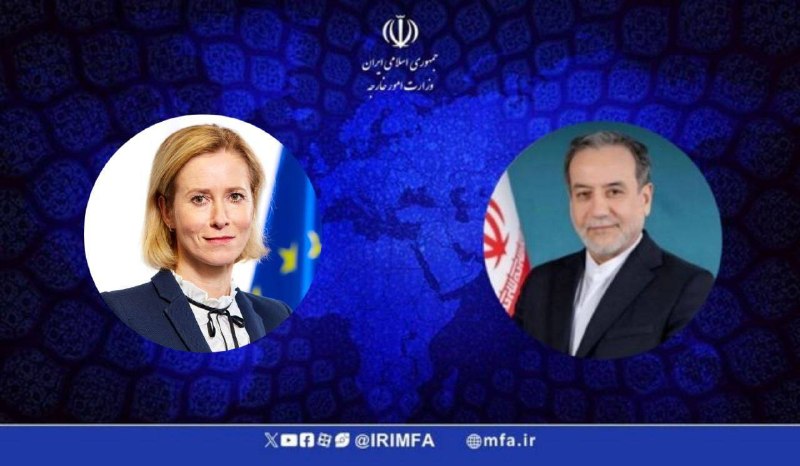
At 15:15 UTC on 18 July 2026, Iranian foreign ministry spokesperson Esmaeil Baghaei told reporters that Tehran was never the first party to break any commitment in its current diplomatic track, and that the United States had "practically broken the agreement from the first days," according to a Telegram bulletin carried by the Al Alam Arabic channel. Four minutes later, at 15:19 UTC, the same outlet transmitted a second line from Baghaei: the recent restrictive measures Iran has applied in the Strait of Hormuz are, in his words, "a responsible response to the exploitation of this waterway by the aggressor." By 15:34 UTC, PressTV had distilled both lines into a single caption: Iran is "merely defending itself in an imposed war."
The three-bullet sequence is a textbook exercise in Iranian crisis communication. A factual claim about compliance is paired with a security claim about the waterway, then collapsed into a moral frame. The order matters: Baghaei establishes Tehran as the aggrieved party before the maritime restrictions are introduced as a defensive measure rather than as leverage. Read together, the three telegrams amount to one argument rather than three statements.
What Baghaei actually said
The substance is narrow. Baghaei did not, in the three telegrams published on 18 July, name the agreement whose commitments he was defending, did not specify which "aggressor" he was referring to in the Strait of Hormuz remarks, and did not detail the form the "recent restrictive measures" take. The Al Alam Arabic wording links the maritime posture directly to "the exploitation of this waterway by aggressors to attack Iran"; the PressTV caption generalises the same posture into "an imposed war." Both formulations let Tehran preserve deniability on the operational specifics while hardening the political claim: any disruption to traffic through the strait is the fault of an external aggressor using the waterway against Iran, not of Iran's own rules.
That construction has a long pedigree in Iranian state communications around Hormuz. The framing allows Tehran to maintain that commercial shipping is unaffected in principle while placing the burden of any incident on the unnamed aggressor. The foreign ministry does not need to publish the new rules for the framing to work; it only needs the public posture to be in place before any contested event in the waterway.
Why the framing travels
Hormuz is the chokepoint the world cannot easily route around. Roughly a fifth of seaborne oil passes through it on most days, and any sustained disruption moves benchmark crude and shipping insurance in a way that is visible within hours. That sensitivity gives the Iranian foreign ministry a uniquely high return on rhetorical moves like Baghaei's: even before any new measure is operational, the framing itself nudges insurers, charterers, and the governments that insure their vessels to price Iranian action as risk, and external action against Iran as a separate risk layered on top.
PressTV's collapse of the two earlier lines into a single sentence is the move that does the most diplomatic work. "Merely defending itself in an imposed war" is a posture statement, not a description of events on the water. It positions Iran inside a war-as-context frame rather than an action-as-event frame. Once that frame is the default, any escalation, including a kinetic exchange in or near the strait, can be narrated as a continuation of defence rather than as a new offensive step.
What the sources do not say
The three telegrams that drive this story carry Iranian state-aligned messaging. The thread does not include independent reporting on what rules of navigation Iran has actually changed, what vessels have been stopped or inspected, or how the Iranian navy and the Islamic Revolutionary Guard Corps are dividing enforcement. The framing of "responsible response" cannot be checked against operational detail from the source items in hand. A reader weighing the diplomatic weight of Baghaei's words against their material effect on tanker traffic should hold the two questions apart.
The phrase "aggressor" is also undefined in the source items. Tehran has used it variously over the past year to refer to Israel, the United States, and at moments the broader Western coalition supporting strikes on Iranian assets. Without a named referent in the published lines, the term does double duty: it keeps the diplomatic door open to any party Baghaei later chooses to specify, and it keeps the maritime posture rhetorically unattached to a single campaign.
What to watch next
Three signals will tell whether the framing is load-bearing or merely cosmetic. First, whether Tehran publishes the text of any new Hormuz directive through its ports and maritime authority, or whether the restrictions remain informal. Second, whether tanker tracking services and Lloyd's List-class reporting register any change in transit times, vessel inspections, or insurance premiums for the strait in the days after 18 July. Third, whether the United States or its Gulf partners name the "aggressor" reference publicly and push back on it, or absorb it as rhetoric and move on the substance.
Until one of those signals breaks, the Baghaei sequence should be read as positioning rather than event. The argument being made to a global audience is that whatever happens in Hormuz from this point forward is something being done to Iran, not something Iran is doing to the waterway. For an energy market that prices Hormuz risk in basis points and war-risk premiums, that framing is itself a tradable input.
Desk note: Monexus treats Iranian foreign ministry and state-aligned channel statements as primary source material on Iranian intent, sourced explicitly and not paraphrased as neutral fact. Where the source material is exclusively Iranian, the article flags the gap between posture and operational detail rather than collapsing the two.
Wire provenance
This editorial synthesis draws on the following public wire/social posts:
- https://t.me/alalamarabic
- https://t.me/alalamarabic
- https://t.me/PressTV
- https://en.wikipedia.org/wiki/Strait_of_Hormuz
- https://en.wikipedia.org/wiki/Iran%E2%80%93United_States_relations