Iran's new missile profile puts US shield architecture under fresh scrutiny
A Wall Street Journal report cited by Iranian and US-aligned channels says Tehran is fielding faster, manoeuvring warheads designed to slip past American interceptors. The strategic arithmetic, not the headlines, is what matters.
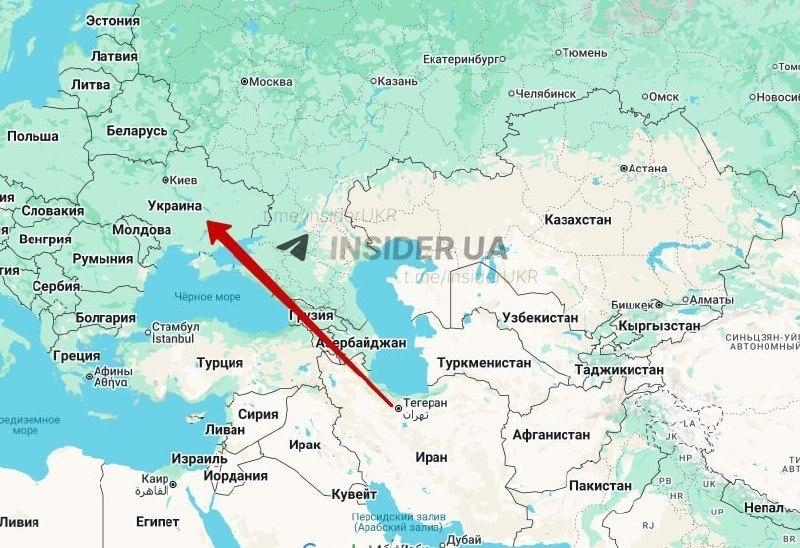
The Wall Street Journal reported on 18 July 2026 that Iran has fielded ballistic missiles capable of high terminal velocities and mid-flight manoeuvring in their final descent, characteristics the paper said render American missile-defence interceptors materially less effective. Two separate Telegram channels carrying the dispatch, the Iranian-aligned alalamfa feed at 23:44 UTC and the Washington-oriented megatron_ron account at 22:56 UTC, summarised the Journal's reporting within hours of each other. The story lands inside an already strained security conversation in West Asia, where any shift in Iran's strike profile reshapes the calculations of US Central Command, the Gulf monarchies, and Israel in roughly the same week.
The Journal's core claim is technical rather than political. The paper describes a class of Iranian projectiles that combine high re-entry speed with terminal-phase manoeuvring, a combination long treated by US planners as the hardest problem in hit-to-kill interception. Defensive systems optimised for predictable ballistic trajectories lose margin when the warhead shifts its flight path in the final seconds, when the interceptor has the least time to correct.
What the reporting actually says
The two Telegram summaries converge on the same set of facts. Iran, the Journal reported citing American officials, has developed methods to bypass US missile-defence architecture by exploiting speed and manoeuvrability in the warhead's terminal phase. The reporting does not name a specific weapon system, does not provide a deployment count, and does not specify which US shield component is most affected. It does frame the change as a deliberate engineering response to American interception doctrine, which is itself a posture statement.
That posture matters more than any single warhead. Iran's missile programme has, for two decades, been organised less around a single high-end weapon than around an industrial base that can iterate. If the Journal's reporting holds up under subsequent sourcing, it would mark the first publicly-acknowledged instance in which an adversary's strike profile has been redesigned specifically to defeat US homeland and theatre shields rather than to penetrate them incidentally.
What the dominant framing leaves out
Coverage of Iran's missile advances usually runs through one of two lanes. The first treats Iranian engineering as an extension of Tehran's regional posture, with each new weapon read as a signal to Israel and the Gulf. The second treats the same engineering as evidence of a coming crisis, with the implicit next step a US strike on Iranian production facilities. Both lanes are correct about what they see and wrong about what they miss.
What they miss is procurement tempo. A manoeuvring warhead is not a single breakthrough; it is a product of investments in guidance electronics, propulsion, and ground testing that span years. The fact that the Journal's American sources are now willing to describe the result publicly suggests the capability is no longer classified in the way earlier Iranian advances were, which in turn suggests it is being fielded in numbers rather than as a one-off prototype.
The other framing omission is cost asymmetry. A manoeuvring terminal phase forces an interceptor to expend fuel correcting for uncertainty, which in turn compresses the defender's magazine. The economics of missile defence have always favoured the attacker; what changes here is the ratio. A force designed to absorb a single wave is not the same force as one designed to absorb a saturated barrage, and US planners have been candid about which problem they prefer to face.
Structural read: a shield built for one war, tested by another
US missile-defence architecture was largely designed against a specific threat model: a small number of sophisticated North Korean or Iranian intercontinental-class missiles arriving on predictable trajectories. The Patriot, THAAD, Aegis, and the Ground-based Midcourse Defense system each address slices of that model. What they share is an assumption of sufficient warning time and a relatively constrained salvo size.
Iranian manoeuvring warheads do not change that assumption; they compress it. The defender still knows an attack is coming, but the engagement window at the terminal phase shortens, and the number of interceptors required per warhead rises. The structural effect is to push US posture away from point defence of fixed sites and towards dispersal, hardened basing, and a larger inventory of interceptors, all of which carry their own budgetary and political costs.
A second structural point sits underneath the first. Iran's industrial base, like North Korea's, is designed to survive sanctions and to iterate under concealment. American missile defence is designed to be visible: budgets are public, deployments are announced, tests are televised. The two systems are running different races on different tracks, and a single new Iranian warhead class does not change the scoreboard, but it does change the slope of one of the lines.
Counter-claims and the contested middle
Iranian state-aligned coverage of the Journal story, as carried by the alalamfa Telegram channel at 23:44 UTC, frames the new capability as proof of indigenous engineering under sanctions. That framing is self-interested but not baseless: a programme that produces a manoeuvring terminal-stage warhead while under extensive US and EU sanctions has, on its face, demonstrated a particular kind of resilience.
US officials quoted in the Journal, by contrast, treat the same capability as a problem to be solved rather than an achievement to be noted. Neither framing is wrong. The interesting question is which side's framing drives the next round of procurement. If US interceptors are re-engineered at scale to handle manoeuvring warheads, the cost will be visible in Pentagon budgets within two budget cycles. If Iran's programme continues to iterate without a US response, the visible cost will be in the planning assumptions of US Central Command and in the political calculus of the Gulf states, several of whom host US shield components and several of whom are quietly hedging.
Stakes and what to watch next
The immediate stakes are operational. Any US force package deployed to the Gulf or to Israel in a crisis now has to plan against a threat for which its interceptors were not optimised. The medium-term stakes are industrial. The next US defence budget request, due in early 2027, will be the cleanest public signal of how seriously the Pentagon is taking the reporting. Watch for interceptor procurement lines, for new testing programmes against manoeuvring targets, and for hardened-basing initiatives across the Gulf.
The longer stakes are strategic. A shield that visibly fails to scale against an adversary's actual production rate is, over time, a diplomatic asset that depreciates. The Gulf monarchies, which have built much of their regional posture around the assumption of US defensive cover, will read the Journal's reporting carefully. So will Israel, whose Arrow and David's Sling architectures address some of the same problems but on a smaller industrial scale. Neither ally will say so publicly in the next month; both will adjust their planning privately before then.
What remains genuinely uncertain
The Journal's reporting is consistent across both Telegram summaries but rests on anonymous American officials. The paper did not, in the versions circulating on 18 July 2026, name a specific weapon system, identify a deployment site, or quantify the size of Iran's manoeuvring-warhead inventory. Independent technical confirmation will take time: foreign-observatory measurements of Iranian test flights, commercial satellite imagery of new production facilities, and the slow leak of imagery from regional air-defence units. Until those arrive, the most defensible reading is also the most modest: Iran has, according to US officials cited by the Journal, found a way to make American interception harder. How much harder, and against how many targets, the open record does not yet say.
Desk note: this publication framed the story around the engineering and posture implications of the Journal's reporting rather than around the more familiar crisis-forecasting lane, because the technical change, not the next headline, is what will shape budgets and basing decisions over the next two years.
Wire provenance
This editorial synthesis draws on the following public wire/social posts:
- https://t.me/alalamfa
- https://t.me/megatron_ron
- https://en.wikipedia.org/wiki/Missile_defense