Tehran opens judicial front against Washington and Israel, framing recent strikes as war crimes
Iran's judiciary says formal proceedings are underway against US and Israeli officials over recent military action, a symbolic escalation that does not name defendants but seeks to harden a legal record.
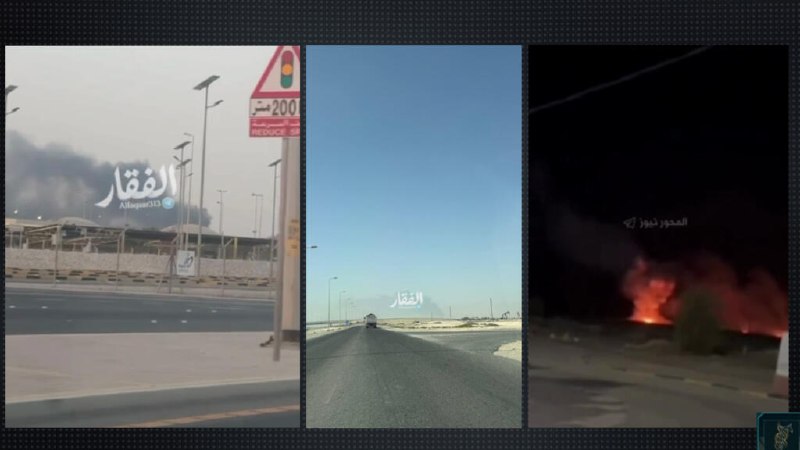
Iran's judiciary announced on 18 July 2026 that judicial and legal proceedings have been launched against United States and Israeli officials in response to recent military aggression against the country, according to statements carried by Iranian state outlets and regional media. The move, framed by Tehran as a war crimes indictment, opens a parallel legal track alongside the armed confrontation between Iran and its principal adversaries. It does not, on the public record, name individual defendants or specify a tribunal with jurisdiction over either Washington or Jerusalem.
The procedural posture matters as much as the substance. By lodging formal proceedings inside the Iranian judicial system, Tehran is constructing a documentary record it can carry into international forums, domestic courts of third countries, and the court of public opinion. The aim is not enforcement: Iran cannot compel the arrest of a US secretary of defense or an Israeli general. The aim is precedent, narrative, and the long arc of legitimacy that Iran believes it was denied after June's strikes. The file Tehran is now building is meant to outlast the news cycle.
What Tehran says it has done
Iranian judiciary spokesperson Asqar Jahangir told state media that proceedings against US and Israeli officials have been initiated over recent military aggression against Iran, the IRNA English service reported on 18 July 2026. The Cradle, a Beirut-based outlet covering Iran and the wider axis of resistance, also carried the announcement and described it as formal indictments for war crimes. Both outlets frame the action as a judicial response to strikes that Iran attributes to US and Israeli forces in recent weeks.
The statements do not identify specific individuals, do not name the court handling the case, and do not cite a treaty or domestic statute as the jurisdictional hook. Iranian war crimes indictments against foreign officials have, in past episodes, been issued in absentia by Revolutionary Court branches handling political cases. The Cradle's reporting stops short of naming a defendant list, and IRNA's readout does not enumerate charges. What is verifiable is that Iran's judiciary, speaking through its official spokesperson, has publicly claimed that proceedings are underway.
Why now
The timing points back to a kinetic exchange that has not yet been formally detailed in Western wire reporting available to this publication. Iran's framing, that the proceedings respond to recent military aggression, implies an attack on Iranian soil or assets that Tehran has decided to escalate diplomatically and legally. The June 2025 round of strikes, in which the United States struck Iranian nuclear-linked facilities and Iran retaliated against a US base in Qatar, set the legal precedent Tehran now invokes. The current proceedings, by the judiciary's own framing, treat recent action as a continuation of that earlier aggression.
A second, quieter driver is domestic. Iran's judiciary has been under sustained pressure over its handling of detained protesters, foreign nationals, and political prisoners. Opening a high-profile war crimes file against foreign officials allows the institution to reposition itself as a defender of sovereignty rather than a manager of repression. The Cradle's framing, sympathetic to Tehran, frames the move as a moral assertion of rights; IRNA's framing, official, presents it as routine legal business. Neither outlet dwells on the asymmetry of an Iranian court claiming jurisdiction over officials of two nuclear-armed states.
The legal terrain, plainly stated
Iranian indictments of foreign officials do not, by themselves, change any defendant's legal status. The Geneva Conventions and their protocols give the International Criminal Court jurisdiction over war crimes committed on the territory of states party to the Rome Statute or by nationals of such states. The United States is not a state party; Israel is not a state party; Iran signed the Rome Statute in 2000 but has not ratified it. None of the three is currently under ICC jurisdiction in a way that would bind Tehran's filing.
What the filings can do is generate friction. They create a public document that lawyers, prosecutors, and intelligence agencies in third countries can cite when weighing extradition requests, sanctions designations, or travel by named individuals. They produce a parallel record that activist networks and friendly governments can amplify. They give Tehran something to point to when it accuses Western-aligned institutions of selectivity: an Iranian court has indicted Washington and Jerusalem, and the International Criminal Court has indicted officials in The Hague's periphery for actions Tehran considers comparable. The optics are the point.
What this does not resolve
The proceedings do not specify which strikes, which facilities, which casualties, or which chain of command is being targeted. The sources do not enumerate defendants, do not name a tribunal, and do not cite a statute. Tehran's judiciary has, in previous episodes, issued in absentia verdicts against foreign officials; whether the current filing will reach that stage is not yet visible in the reporting.
The Cradle and IRNA are also not neutral observers. The Cradle operates with a documented editorial sympathy for the axis of resistance; IRNA is an arm of the Iranian state. A Western wire confirmation, either from Reuters, the Associated Press, or the BBC, would harden the record. None had been published in the immediate window in which the Iranian announcement broke. The factual core, that Iran says it has launched proceedings, is solid; the legal and operational specifics remain thin.
The longer game
Tehran is betting that lawfare, even in a forum without jurisdiction, compounds over time. The 2024 ICC arrest warrants against senior Russian officials produced travel restrictions and diplomatic friction without delivering a single defendant to The Hague. Iran is copying that playbook from the other side of the table. Each new filing, each new named official, each new claim of evidence, widens the surface area on which adversaries have to defend themselves.
The structural pattern is familiar: states denied conventional leverage against stronger adversaries turn to legal and informational instruments that operate on reputation, alliance cohesion, and individual mobility. Iran's judiciary cannot jail a US general. It can, over years, make that general's travel and public profile measurably more complicated. That is the horizon Tehran is working toward. Whether the current filing grows teeth depends on whether it gets picked up by courts, prosecutors, or media outlets outside Iran's sphere of influence, and the reporting available at publication does not show that pickup yet.
This publication noted the Iranian framing as given by Iranian state media and The Cradle, and flagged the absence of a named defendant list, a named tribunal, and a jurisdictional hook. Western wire confirmation was not available at the time of publication.
Wire provenance
This editorial synthesis draws on the following public wire/social posts:
- https://t.me/Irna_en
- https://t.me/thecradlemedia
- https://t.me/TheCradleMedia