Iran claims strikes on US logistics in Kuwait and Jordan as explosions rock both countries
Iran's army says it hit US ammunition depots, bridges and a fuel reserve in Kuwait and Jordan. Footage released by Iranian state media purports to show drone attacks on American assets across both host nations.
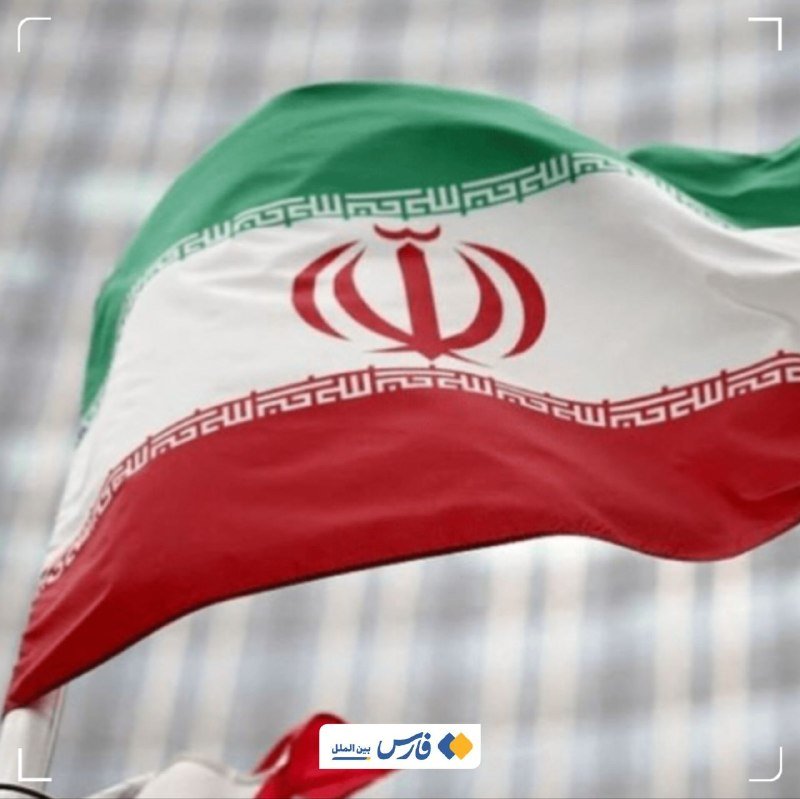
Explosions were audible across Kuwait and Jordan late on 17 July 2026, according to Iranian state-affiliated media, as Iran's army publicly claimed responsibility for strikes against US military infrastructure in both host countries. In statements carried by Press TV and Al-Alam Arabic, Iranian military spokespeople said the operation had hit ammunition depots and bridges inside Kuwait and a fuel reserve inside Jordan, and released video that it said depicted the drone launches.
What the Iranian statements describe, taken together, is a coordinated attack on logistics nodes used by the United States across two non-belligerent Arab host nations. The framing matters as much as the ordnance. By naming depots, bridges and fuel reserves rather than troops or headquarters, Iran's army is signalling a doctrine of calibrated escalation: degrade the sustainment architecture of an adversary without producing the kind of body-bag footage that locks Washington into open war. Whether that signal lands is a separate question, and one the next 72 hours will answer.
The sequence as Iran told it
The first reports of the strikes surfaced on Telegram channels linked to Iranian state media shortly before midnight UTC on 17 July. Tasnim, the news arm closely tied to the Islamic Revolutionary Guard Corps, posted twice in quick succession at 23:30 and 23:31 UTC that the sound of explosions was continuing to be heard in Kuwait and Jordan. By 00:00 UTC on 18 July, Al-Alam Arabic had carried an Iranian Army statement asserting that the targets were "strategic assets, command and control centers, logistical infrastructure and defense systems belonging to the US Army" in both countries. Press TV followed at 00:14 UTC with footage it described as showing retaliatory drone attacks against US assets in Jordan and Kuwait. The most specific claim came at 00:48 UTC, when Press TV reported that the Iranian Army said its latest strike had hit US ammunition depots and several bridges in Kuwait, and a fuel reserve in Jordan.
The pattern of statements is itself a piece of evidence. Tehran moved from generic reports of blasts to a named institutional claim, then to imagery, then to a granular targeting list. That sequencing is consistent with a state that wants the operation read as deliberate and deniable at the same time: granular enough to demonstrate reach, restrained enough to leave Washington a corridor for de-escalation.
What is contested
No Western wire, US Central Command statement, Kuwaiti government statement or Jordanian government statement appears in the available reporting. As of 00:48 UTC on 18 July, the only on-the-record claims are Iranian. Press TV and Al-Alam are state-run outlets; Tasnim is operationally close to the IRGC. The framing of these strikes as retaliatory therefore rests on Iran's own account of a prior provocation, which is also the only provocation on the record so far.
Kuwait and Jordan are not bystanders of choice. Both host substantial US force contingents under long-standing defense cooperation agreements, and both have spent two decades calibrating their public posture to preserve that relationship without becoming a target. If the strikes are what Iran's army says they are, both governments face the same calculation Tehran does: how to acknowledge the attack without either appearing to acquiesce or provoking a wider response that lands on their territory. The silence out of Kuwait City and Amman is not yet a position. It is a tell.
A doctrine of infrastructure, not body counts
Iran's stated targeting list is striking for what it leaves out. Ammunition depots, bridges and a fuel reserve are the kind of targets a military strikes when it wants to attrit a forward-deployed force over weeks, not when it wants to produce a single dramatic headline. The depots can be rebuilt or resupplied; the bridges reopen; the fuel reserve burns down. None of them produce the kind of mass-casualty event that triggers automatic escalation under standing US rules of engagement.
Read against the long arc of Iranian signalling since the start of the year, the pattern is consistent. Tehran has alternated between direct strikes on Israeli-linked targets, arming of proxy forces, and now, apparently, action against the logistics tail of the US presence in the Gulf. The strategic bet is that the United States, already stretched across multiple theatres, will treat attacks on infrastructure as a cost it can absorb rather than a casus belli. The bet fails if Washington concludes that the cumulative tempo of Iranian action has crossed a threshold, or if a depot strike produces casualties the Iranian briefing did not anticipate.
The wider pattern is one of calibrated attrition, in which an adversary with limited conventional reach uses precision and repetition to convert a smaller arsenal into a sustained drain on a larger one. It is a posture built for a media environment in which a single dramatic strike is louder than a hundred small ones. The arithmetic only works if the larger power continues to absorb the small ones.
What to watch next
Three indicators will determine whether this is the opening of a sustained campaign or a one-shot signal. First, the response from US Central Command and the State Department: any official American confirmation of damage, or any denial, sets the baseline of credibility against which Iran's footage will be measured. Second, the posture of Kuwait and Jordan. Public statements from either government, or visible air-defence activity over their territory, will determine whether the strikes are treated as Iranian operations or as events on allied soil. Third, Israeli and Iranian exchanges across the same window. Iran framed the operation as retaliation; the original provocation, whatever it was, is not in the available record, and the next move from either side will tell readers whether the Kuwait-Jordan axis is a substitute battlefield or a parallel one.
The honest bottom line is that the available sources are all Iranian, and the gap between Iran's narrative and any independent accounting remains wide. Until Western, Kuwaiti or Jordanian confirmation arrives, the strikes exist as a Tehran-scripted event with supporting footage and a granular targeting list. That is not nothing. It is also not the whole story.
How Monexus framed this: the wire reporting on this story is, at the time of writing, exclusively Iranian state and state-adjacent. We have led with the Iranian claims and flagged every counter-claim as such, rather than paraphrasing Iranian statements into the passive voice of fact. Confirmation from CENTCOM, the Kuwaiti government or the Jordanian government is the threshold at which this story moves from Tehran's narrative to a verified event.
Wire provenance
This editorial synthesis draws on the following public wire/social posts:
- https://t.me/tasnimplus
- https://t.me/alalamarabic
- https://t.me/presstv
- https://t.me/presstv
- https://t.me/tasnimplus