India's army shrinks its intake and its young men pay the price
New Delhi is trimming its recruitment footprint to save money. For tens of thousands of rural young men promised a uniform and a salary, the deal has just changed underneath them.
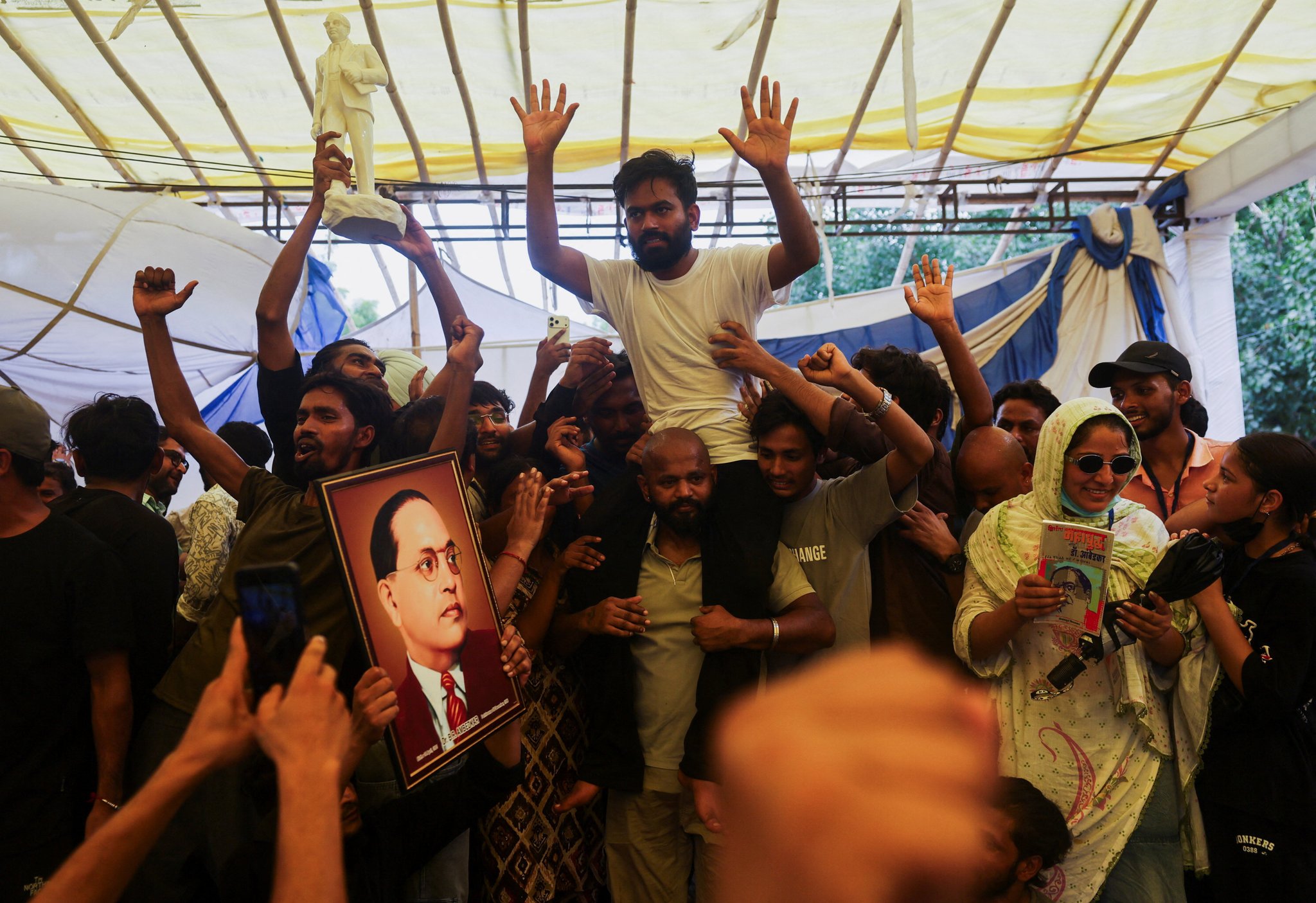
For decades, the Indian army sold the same promise to a particular kind of young man. He came from a village too small to put on a map, with a school-leaving certificate and no other employer within a day's bus ride. In exchange for his time and a body the state could lawfully order into harm's way, he got a steady salary, a uniform, a pension, and the sort of social mobility that the civilian economy in his district was never going to provide. On 17 July 2026, Nikkei Asia reported that this contract is being renegotiated, and that tens of thousands of recruits who answered the army's last big advertisement are now stuck in a holding pattern the army did not warn them about.
The signal is procedural rather than political. India's Ministry of Defence is trimming the force through its Agnipath scheme, the short-service, four-year entry route introduced in 2022, and quietly shrinking the annual intake of longer-service regulars. The savings show up fast on a balance sheet. The human cost shows up in railway stations, where the cohort that enlisted under the previous intake rules is waiting to find out whether the army intends to retain them on the terms originally advertised.
What changed on the army's books
The Agnipath scheme was sold, at launch, as a reform: a younger force, a smaller permanent pension bill, and a wider pool of disciplined labour for the private sector to hire after four years. The maths in the background was always the harder sell. A typical Agniveen, as the short-service recruits are called, signs on for four years at a starting package that the government has repeatedly described as competitive with private entry-level pay, with no commitment to a full twenty-year pension at the end. Of every batch, only a quarter are retained as regular soldiers. The rest cycle out at twenty-three or twenty-four, with a tax-free service fund and a civilian job market that has its own ideas about how to value ex-servicemen.
Nikkei's reporting on 17 July describes a cohort now caught between two intake regimes. Recruits who enlisted under the older, longer-service terms are finding that the army's internal maths no longer matches the promise on the poster. Some have been told their service will be reclassified; others, that medical or administrative categories will be applied retroactively. The exact numbers are not in the public reporting and the army has not, as of the Nikkei filing, published a breakdown. The shape of the complaint is consistent enough across districts to suggest this is policy, not paperwork.
The rural economy the army was subsidising
It is worth saying plainly what the army actually is in large parts of northern, central, and eastern India. It is the formal-sector employer of last resort. Districts in Uttar Pradesh, Bihar, Rajasthan, Madhya Pradesh, Jharkhand, and Odisha have, for at least two generations, produced a steady supply of young men who treat the army recruitment rally the way their fathers treated it: as the only civil-service-grade pay packet available without a degree or a contact.
The annual rallies are the visible part. The invisible part is the sub-economy that has grown up around them: coaching centres in Jaipur and Lucknow that charge a year's income to drill candidates on the physical and written tests; money lenders in the candidate's village extending credit against an expected call-up letter; families deferring a daughter's marriage by two years so the brother can finish his term and send money home. When the intake shrinks, this ecosystem does not shrink with it. The coaching centre still has its loan to service; the family still has its deferral.
That is the structural frame the procurement spreadsheet does not capture. Defence planners in South Block measure savings in crores of rupees and pension liabilities decades out. The young man in the queue measures his cost in the years he spent preparing instead of working, and in the wedding he put off. When those two ledgers diverge, the political cost eventually shows up at a different desk.
The industrial-policy backdrop
The cuts are not happening in a vacuum. The same week, TechCrunch reported on a slowdown in India's smartphone market driven by an AI-led memory crunch, with pricing pressure moving through the consumer electronics supply chain. For an army of mostly young, mostly rural, mostly male job-seekers, that timing matters. The private-sector employers that Agnipath was meant to feed with disciplined, four-year-trained labour are themselves trimming hiring plans and pushing back on wages. The ex-Agniveen the scheme was supposed to deliver to a grateful manufacturing base is, in 2026, arriving into a labour market that no longer has a use for him at the salary he was promised.
This is the part of the reform that does not appear in any Ministry of Defence press release. The argument for Agnipath rested on a particular industrial bet: that India's electronics, automotive, and contract-manufacturing sectors would be hiring enough, fast enough, to absorb a quarter-of-a-million short-service veterans every year. The bet has not paid off at the speed the brochures assumed. Memory pricing has squeezed the smartphone assembly hubs; two-wheeler exports have flattened; small-component foundries are still struggling to scale up to the PLI volumes that were promised in 2021 and 2022.
What the government is not yet saying
The Nikkei reporting names the cohort and the policy; it does not name the file. The army's public communications on the transition have stayed close to the Agnipath script: smaller permanent force, larger technical intake, faster promotion cycles. There is no public document, in the reporting available on 17 July, that quantifies how many recruits have been told their terms are changing, how many have been reclassified, or what the appeal mechanism is. The Ministry of Defence has not, in the reporting this publication has reviewed, set out a schedule for resolving the limbo.
That silence is itself the story. A reform of this scale, with this many households inside it, normally comes with a transition calendar that names the dates and the categories. The absence of one suggests either that the numbers are still being negotiated inside the ministry, or that the government prefers not to publish a number until it has decided how to fund the consequences.
The political geometry heading into 2026
New Delhi's defence-planning horizon runs through the middle of the decade. The army's force-structure review, the air force's pending order books, the navy's carrier plans, and the border-infrastructure programme along the Line of Actual Control are all calibrated against a China that is spending more, not less, on the same frontier. Cutting the ground-force headcount to pay for capital modernisation is a defensible choice on those terms. It is also a choice that falls, almost entirely, on young men who did not make it.
The 2026 state-elections calendar, the 2029 general election, and the demographic bulge that pushed the original intake numbers up in the first place, all run in the opposite direction. A defence reform that asks rural India to absorb the cost of a capital-intensive military build-up is, in plain electoral terms, a deferred invoice. Sooner or later, it will be presented for payment, and the question will be who signs the receipt.
This publication framed the cuts as a procurement story first, then as a labour-market story. The wire treatment on 17 July led with the policy and the human-interest angle; we have weighted the structural read more heavily because the policy will only land if the labour market absorbs the cohort it was supposed to absorb.
Wire provenance
This editorial synthesis draws on the following public wire/social posts:
- https://t.me/NikkeiAsia
- https://t.me/nikkeiasia