Germany raises domestic security alert as intelligence points to rising attack risk
Berlin has lifted its national security alert level after intelligence services reported an uptick in possible attack planning inside Germany, a move that hands federal agencies broader standing to deploy personnel and harden protective postures.
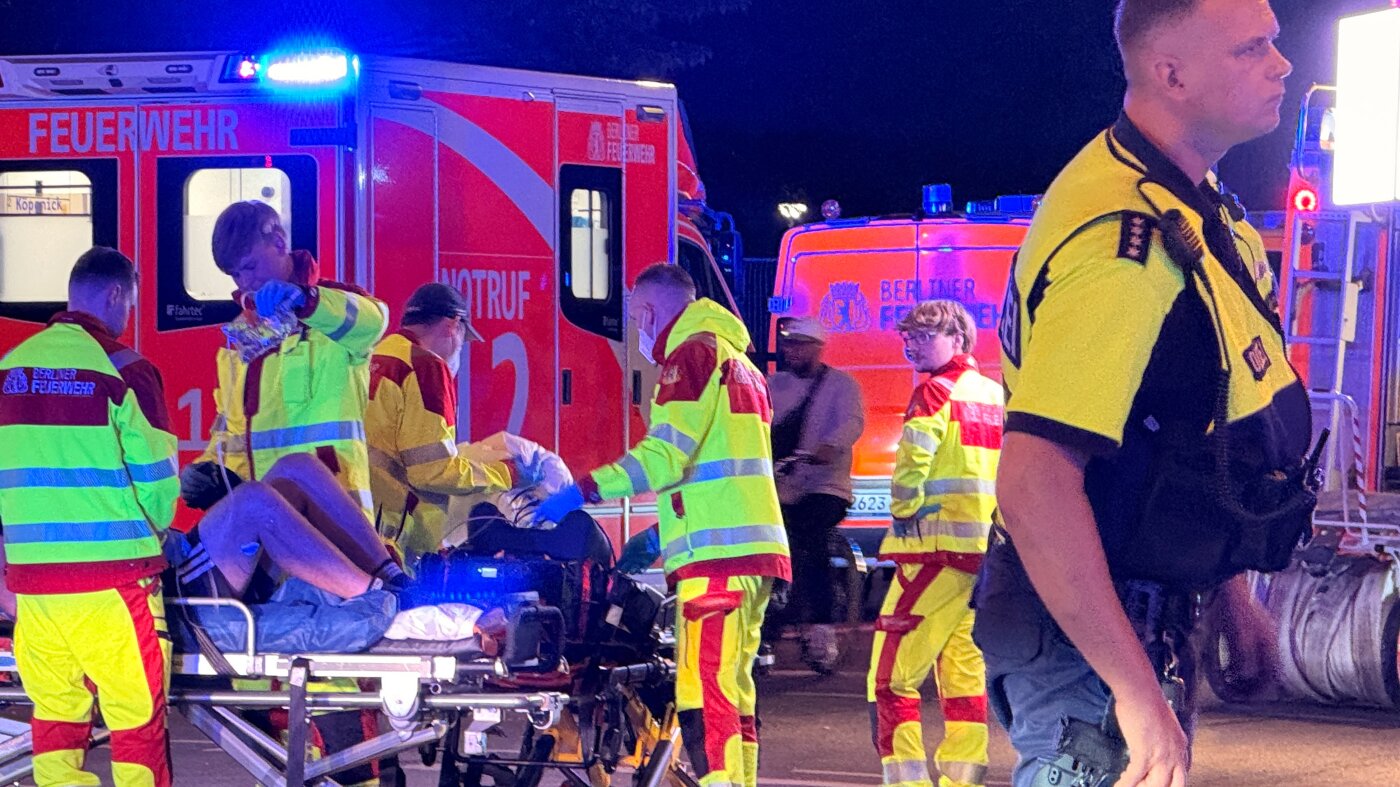
On 18 July 2026 the German federal government announced it had lifted the country's national security alert level in response to intelligence reporting pointing to a higher likelihood of attack planning on German soil, according to a Telegram dispatch from Jahan Tasnim carried at 15:54 UTC.
The move marks a formal recalibration of Berlin's internal threat posture rather than a public declaration of imminent attack, and it gives the federal interior ministry, the Federal Criminal Police Office (BKA), and the domestic intelligence service (BfV) standing to expand protective coverage around sensitive sites, accelerate information-sharing between Land-level security agencies, and pre-position counter-terror units. The dispatch frames the decision as intelligence-led, not event-led.
What the alert change actually does
Germany's alert regime operates on a graduated scale and the decision announced Friday moves the country to a tier at which federal protection around government buildings, transport nodes, and large gathering points is ratcheted up as a standing posture rather than triggered incident-by-incident. In practice that means longer deployments for armed police at federal facilities, faster liaison between BfV and state Landeskriminalämter, and the bureaucratic cover for the interior ministry to redirect funding toward surveillance and protective units without a fresh parliamentary vote.
The substance of the trigger, as reported, sits in the intelligence assessment rather than in any named plot: agencies cited an "increase in possible attacks" without identifying a specific operational plan. That distinction matters, because a rise in alert level on indicator intelligence rather than on a corroborated specific threat allows Berlin to harden sites while preserving the operational secrecy that counter-terror work relies on.
A country already on edge
Germany is not arriving at this alert decision from a baseline of calm. The country has lived under elevated counter-terror posture since the 2024 Mannheim stabbing and the subsequent Solingen attack, both of which forced Berlin into a series of knife-control amendments, tighter asylum processing, and additional BfV headcount. Border controls with Poland, the Czech Republic, and Austria have been extended repeatedly under Article 25 of the Schengen Borders Code, and the federal government has spent the better part of two years arguing about how to reassert them without provoking a fresh confrontation with Brussels.
A higher baseline plus a fresh alert move is the sort of compounding posture that tends to harden political reflexes in directions that don't always serve the underlying threat picture. Berlin's instinct in 2024 and 2025 was to legislate quickly on visible symbols of the threat (knife laws, deportation flights, fast-tracking of citizenship revocation), in some cases more visibly than the underlying intelligence picture warranted. A second alert adjustment in this cycle sits inside that pattern.
The alternative reading
There is a plausible second read of the decision. Intelligence agencies sometimes raise alert levels at moments when parliament is about to question their budget, when a major international event is approaching, or when ministers want the political cover of a raised baseline. None of those motives is being alleged here on the evidence in front of Monexus; the Telegram-sourced dispatch attributes the move flatly to intelligence reporting. But the standing temptation, in any security bureaucracy, is to convert indicator noise into posture change, and an honest read of the announcement holds that possibility next to the threat picture.
The dominant framing, on the evidence available, still favours the intelligence-led reading: BfV and BKA have shown restraint in public communications over the past two years, and the German political class across the coalition has, if anything, been reluctant to declare new emergencies cheaply. That judgement may change if fuller reporting over the coming days surfaces the specific intelligence that triggered the move.
What to watch next
The next 72 hours will be dispositive. Watch for any press conference from the Federal Interior Ministry laying out the indicator intelligence in more detail; watch for operational announcements from Land governments in Bavaria, North Rhine-Westphalia, and Baden-Württemberg, which carry the bulk of protective ground; and watch for whether the European Counter Terrorism Centre (EU CTC) at Europol issues a parallel note, which would widen the alert signal beyond Germany.
The bigger structural question is what a sustained higher alert posture does to a country that has, for two decades, anchored its post-Cold-War identity on a relaxed public security presence. Germany can absorb a temporary alert increase without distress. It cannot absorb a structural one, in which heightened federal protection becomes the new baseline, without rebalancing the federal-Land security compact that has defined its domestic order since the Basic Law took effect.
How Monexus framed this versus the wire: most international wire desks will compress this into a one-line "Germany raises security level" filed from Berlin. Monexus is reading the move through the longer arc of German counter-terror posture since 2024, against the background of already-elevated border and migration controls, and holding open the secondary reading that alert posture can drift independently of operational threat. The evidence in the source does not let us go further than that today.
Wire provenance
This editorial synthesis draws on the following public wire/social posts:
- https://t.me/s/JahanTasnim