Delhi Police hands the keys to a counter-intelligence hand
A 20-year Intelligence Bureau veteran takes charge of Delhi Police on the same week the ruling DMK signals a quieter course toward the Centre. The pairing reads as more than coincidence.
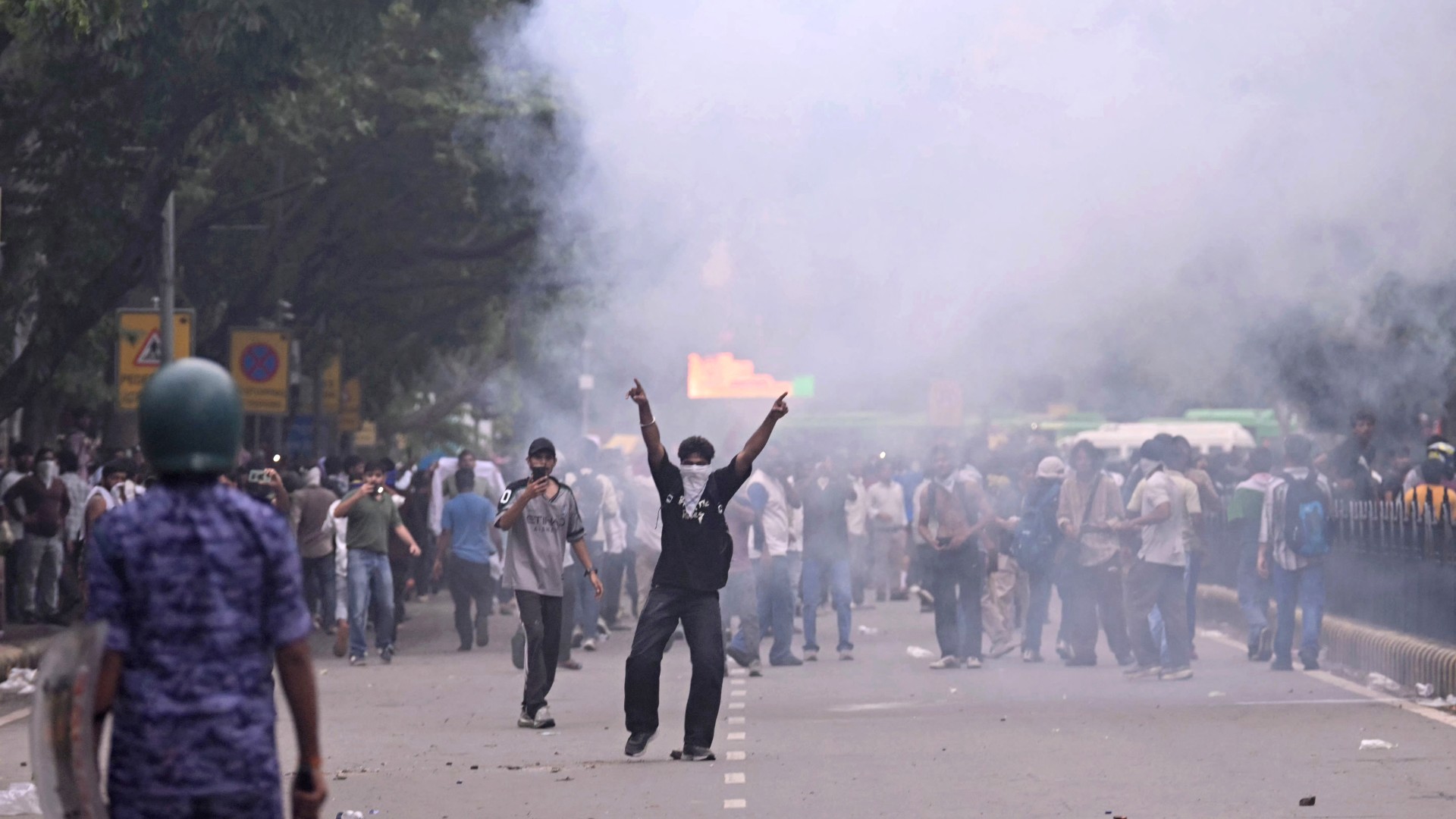
The Indian Express reported on 18 July 2026 that Delhi's new police commissioner is a career Intelligence Bureau officer returning to the capital force after two decades inside the country's domestic counter-intelligence machinery. The handover at Police Headquarters, by the same account, was unusually hurried: files cleared in days, a short ceremonial guard, and an immediate assumption of command by an officer whose last posting sat outside the capital's chain of accountability entirely.
That two events have landed in the same news cycle is the story. The DMK in Tamil Nadu is publicly recalibrating its posture toward the Union government after a period of open friction; the Delhi Police, constitutionally a Union-list force answerable to the central Home Ministry, has just been placed in the hands of a man who spent twenty years in an agency that reports, in effect, to the Prime Minister's Office. Read together, the signals point to a Centre tightening the screws on the federal compact without ever needing to name what it is doing.
The homecoming, and why the timing is loud
Satyender Kumar, according to The Indian Express's reporting on 18 July, has rejoined Delhi Police as Commissioner after a long stint with the Intelligence Bureau. The paper describes the move as a homecoming: an officer whose early career was built on the capital's streets, who then spent roughly twenty years in the IB, returning to the force he started in. The same day's follow-up piece characterises the transition as hurried and unusual, with senior officers summoned at short notice and the formal change-of-command compressed into a window measured in days rather than weeks.
In ordinary times, a transfer at this level is a slow affair. The Delhi Police commissioner sits at the intersection of three power centres: the Union Home Ministry, which drafts the order; the Lieutenant Governor, who administers the capital; and, in practice, the Prime Minister's Office, which weighs senior police appointments in a city that hosts every foreign mission, every seat of national government, and the protest infrastructure of every national movement. Hurried transitions compress the room for objection. They also compress the room for the kind of bureaucratic pushback that normally sandpapers an appointment between announcement and swearing-in.
The DMK recalibration, in parallel
On the same day the new commissioner took charge, The Indian Express carried a separate piece reading the DMK's Delhi posture as a deliberate reset. The Tamil Nadu party, governing the state under Chief Minister M.K. Stalin, has spent recent months in open litigation and rhetorical combat with the Centre over delimitation, Governor's speeches, and the federal fisc. The framing in the paper is cautious: the party is signalling a reset in its Delhi outreach while keeping options open. That phrasing matters. It is the language of a leadership that has decided the cost of confrontation now exceeds the return.
The DMK does not, in the ordinary course of events, take directional cues from personnel moves in Delhi Police. But the Union government's choices about who runs the capital's force are read carefully by every state administration that maintains a political office in Lutyens' Delhi. An IB veteran at the top of the city's police sends a particular kind of message: that the Centre is prioritising intelligence-grade policing over community policing, and that it wants a known hand on the wheel during a year of delimitation litigation, election-grade social media pressure, and a still-uncertain monsoon.
What an IB pedigree changes at the top of Delhi Police
Delhi Police is unusual in the Indian federal structure. It is not a state force; it is a Union-list force under the central Home Ministry, even though the elected Delhi government nominally controls "police" and "public order" in the capital under the 2018 GNCTD judgment. In practice, the commissioner reports through the Lieutenant Governor. The IB, by contrast, sits directly under the Ministry of Home Affairs and operates with far less public visibility than the city police.
A commissioner who has spent two decades in that world arrives with a different default setting. He knows the IB's reporting rhythms, its dossier conventions, and its working relationships with the Research and Analysis Wing and the Special Protection Group. He also knows which files travel quickly to which desks. Delhi Police's intelligence Fusion Centre, its Special Cell, and its Economic Offences Wing all generate material that crosses the IB's desk. Closing that loop inside one person's career experience is, on paper, a streamlining. In practice, it is also a concentration.
The compact under quiet stress
None of this is constitutional crisis. The commissioner is appointed by the Centre, the procedure is well-worn, and the hurrying of the transition, while unusual, is not unprecedented. What is new is the stacking: a Centre-state recalibration in the south, a governor-versus-state friction that has produced litigation in multiple high courts, and a Delhi Police command staffed, at the top, by an officer whose institutional memory is of an agency that exists precisely to manage the federal compact from the Union side.
The Indian Express's two pieces, taken together, sketch a pattern rather than a single event. The DMK is reaching for stability in Delhi because it has concluded that the cost of theatrical opposition now exceeds the dividend. The Centre, for its part, is placing a steady hand on the capital's police at a moment when the federal map itself is being redrawn by delimitation. Whether the hurrying at Police Headquarters reflects a desire to install that hand before a specific political calendar event, the sources do not specify. The Indian Express reports only the speed and the unusual shape of the handover, not the underlying instruction that produced it.
For readers outside India, the practical stake is narrow but real. Delhi hosts every embassy accredited to the country and the political infrastructure of every Indian state. The capital's policing posture under a counter-intelligence veteran will, in the months ahead, shape how protest is stewarded, how religious gatherings are policed during the festival calendar, and how information flows between city intelligence desks and central ones. The DMK's parallel softening, if it holds, will reduce the volume of state-versus-Centre litigation reaching the Supreme Court. If it does not hold, the courts will continue to be the venue where the federal compact is renegotiated, with a Delhi Police leadership already configured to read those disputes through a central-security lens rather than a city-policing one.
This Monexus piece draws on a single day's Indian Express reporting rather than a wider wire net. The paper is the primary source for both the DMK recalibration and the Delhi Police handover; readers seeking independent corroboration will need to wait for either an IB press note or a follow-up in the national wires.