Aoun in Washington: a Lebanese presidency goes hunting for a deal
Lebanon's president flew to Washington on 18 July 2026 to meet Donald Trump, while a sitting Lebanese parliamentarian publicly accused him of offering to hand over Hezbollah's heavy missiles.
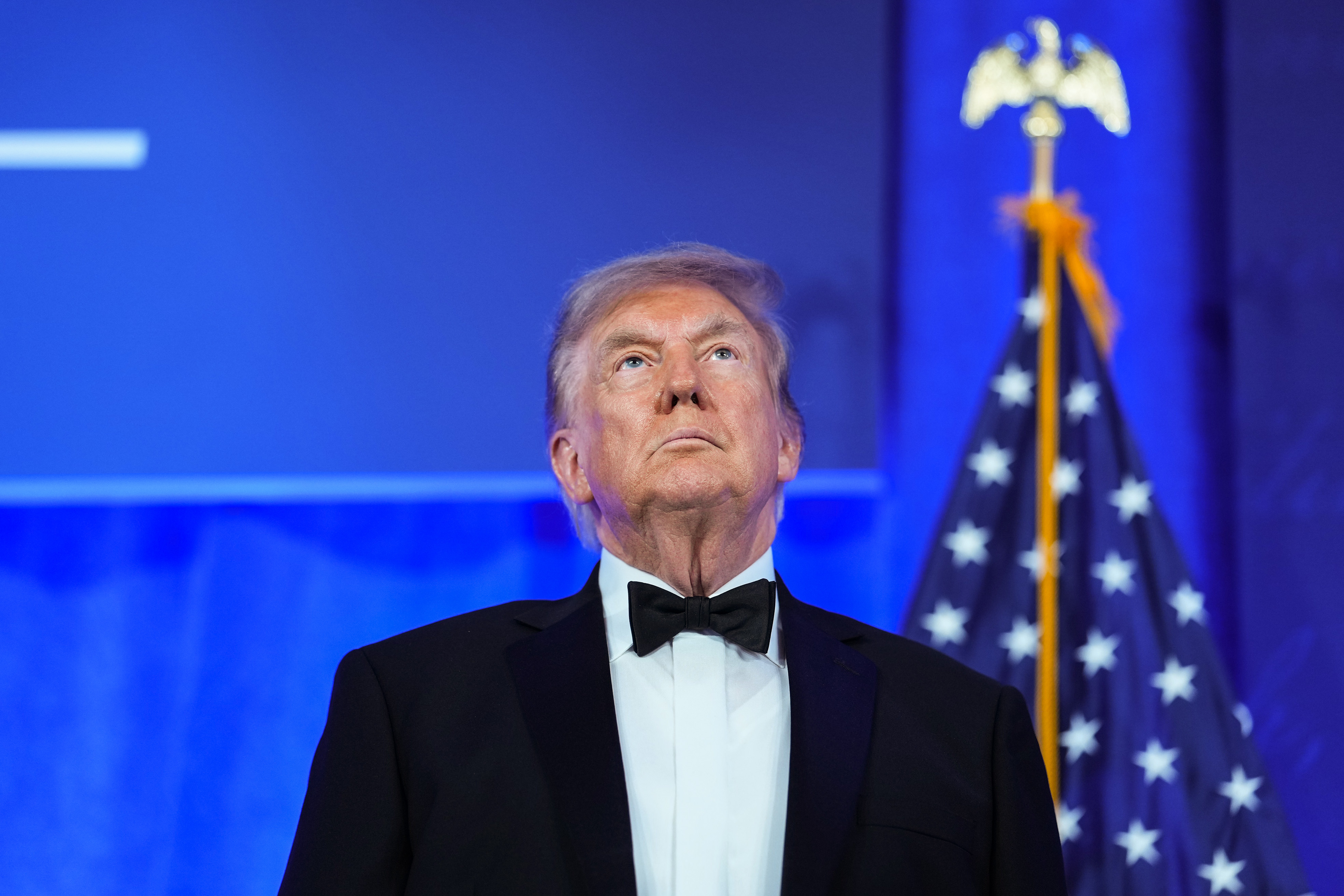
Lebanese President Joseph Aoun departed Beirut for Washington on the morning of 18 July 2026, according to posts from Lebanese, Iranian and Beirut-based outlets that carried the announcement in overlapping windows between 08:13 UTC and 09:25 UTC. The trip, confirmed by the Lebanese presidency, frames a working meeting with United States President Donald Trump; what the same presidency has not disclosed is the price tag attached to it, or what Beirut believes it is bringing to the table.
The arithmetic of the visit is what makes it a story rather than a routine bilateral. Aoun's government is presiding over a country whose territory is still partly contested by an armed non-state actor, whose currency has spent three years in managed collapse, and whose security forces operate under ceasefire terms negotiated in late 2024. A meeting with a Trump administration that has made the neutralisation of Hezbollah's military infrastructure a standing demand is, by construction, a negotiating session over capability, not pleasantries. The headline photograph is a handshake; the underlying ledger is hardware.
What makes this trip combustible is the claim, repeated in Iranian and Beirut-aligned coverage, that Aoun is pitching the handover of Hezbollah's heavy missile stockpile as a confidence-building gesture. The accusation is on the record of a named Lebanese parliamentarian, not in the editorial framing of an outside outlet, and the Lebanese presidency has not, as of the reporting window, issued a categorical denial. A reading of the dispute helps locate where the Lebanese centre of gravity actually sits.
The departure, and the timing
The earliest public confirmation of the trip came at 08:13 UTC on 18 July 2026 from the Beirut-based Telegram channel WFWitness, which reported Aoun's departure from Beirut and named Washington, D.C. as the destination. Iranian state outlets Tasnim News and Fars News carried the same announcement within the next ninety minutes, characterising it as a meeting with "his American counterpart Donald Trump" and pairing it with an unusually direct accusation of political intent. By 09:25 UTC, The Cradle, which publishes from Beirut and is widely read across the Axis of Resistance press ecosystem, had posted its own confirmation, attributing the announcement to the Lebanese presidency itself and noting that the trip followed "the conclusion of unspecified prior activities", a phrase that, in regional diplomatic usage, usually signals a prior domestic political sequence that needed to be closed before the foreign leg could open.
The compressed reporting window across ideological lines (WFWitness, Fars, Tasnim, The Cradle) is itself a tell. When outlets whose editorial priors on Hezbollah range from sympathetic to adversarial converge on the same itinerary within an hour, the underlying facts have usually been pre-coordinated for release. The political choreography, in other words, was set in Beirut before the aircraft took off.
The missile allegation, and who made it
Fars News International, in its 08:44 UTC bulletin, framed the trip around a quoted claim by Lebanese parliamentarian Hassan Fazlullah, identified as a member of Lebanon's parliament, that Aoun is "looking to deliver Hezbollah's heavy missiles to the United States". The phrasing is unusually pointed for a regional wire: "heavy missiles" is a category, not an item, and within Lebanese national-security discourse it usually denotes the long-range, guided and unguided projectiles in Hezbollah's arsenal whose single biggest political risk is also their single biggest diplomatic bargaining chip. Fazlullah's factional position was not specified in the available reporting, and his name does not appear on the Wikipedia list of incumbents as a nationally household reference, but Iranian outlets cited him as a Lebanese institutional source rather than as a commentator, which signals that the claim is intended to land inside Lebanese politics, not outside it.
A reasonable read of the framing is that the allegation is not new reporting but a political signal: a sitting parliamentarian invoking the presidency in a foreign-policy context of maximum sensitivity is, in Lebanese practice, a form of conditional disclosure, designed either to compel clarification or to lock in a denial. The Lebanese presidency's own announcement, carried by The Cradle at 09:25 UTC, names the destination and the counterpart and is silent on substance. Silence, in this case, is not exoneration.
The ceiling Aoun is operating under
Two structural facts set the ceiling on what any Lebanese president, this one included, can credibly offer in Washington. The first is the ceasefire architecture negotiated in late 2024, under which Hezbollah's military posture south of the Litani and along the Syria border is monitored by an inspection mechanism that has, since the ceasefire took hold, generated repeated disputes over Israeli strikes inside Lebanese territory and over the slow pace of Hezbollah's pullback from positions it held during the war. Any offer that touches Hezbollah's heavy missiles is, by definition, an offer inside that architecture, not outside it. The second is the internal balance of forces inside Lebanon itself, where the Shia parties and their parliamentary bloc retain a direct line to the armed wing regardless of who occupies the Baabda Palace. A presidency that promises to deliver capabilities it does not unilaterally control is offering future political leverage in exchange for present American attention, a structurally weak position even before any figure is attached to it.
What this means for Aoun's Washington leg is that the most valuable deliverable he can plausibly carry is not arms but the framework for arms, that is, an institutional sequence under which withdrawals, inspections, and stockpile verifications could be sequenced over time, in exchange for a road map on the Lebanese state's own priorities, from IMF conditionality to border demarcation with Israel and Syria. Whether Trump is interested in a framework of that kind is a separate question. The administration's pattern, across other regional negotiations, has been to prefer visible single-shot deliverables to multi-year scaffolding.
Why this story reads as a press leak rather than a denial
If Aoun had wanted the missile allegation suppressed before takeoff, the standard playbook in Lebanese politics is to send a short, categorical statement from the presidency, usually within an hour of the originating claim. None appears in the reporting window. What appears instead is corroboration of the itinerary by four outlets across ideological lines, all of whom took care to name the destination and the counterpart and to leave the substantive allegation in the air. The pattern is consistent with an intentional-leak scenario: the substance is allowed to circulate because the substance is itself the negotiating position, while the presidency retains the option, on landing in Washington, of stating its position in its own terms. The Lebanese state, in other words, may be using the public controversy as a way of fixing the price of an eventual deal before the talks begin, a tactic that has a long lineage in Lebanese-Arab diplomacy and one that depends for its success on the other side's interpretation of it as serious.
The downside of the tactic is that it also fixes the price of an eventual failure. If Aoun returns from Washington empty-handed, the same allegation that travelled with him outbound will travel back, and the presidency's room to negotiate the next round will narrow.
The shape of the next forty-eight hours
The diplomatic calendar between now and the end of this news week is dense, and several items will bear directly on how the Aoun visit is read in Beirut and in Washington. The Trump administration's posture on the late-2024 ceasefire architecture, particularly on the question of whether the inspection mechanism is to be expanded, narrowed, or quietly allowed to lapse, will set the ceiling on any Lebanese offer the presidency is willing to put in writing. So will the public position taken by the Shia parliamentary bloc, whose silence in the reporting window to this point is itself a signal worth tracking. If that bloc endorses the trip before Aoun lands, the missile allegation will be downgraded in regional coverage; if it objects, the allegation becomes the trip.
What the available sources do not tell us, and what no responsible reading of the situation can fill in from outside, is the precise nature of the alleged offer. "Heavy missiles" is a category. The number, type, condition, and current custodial control of any specific missile class within Hezbollah's arsenal is not specified in the four bulletins of 18 July 2026, and the Lebanese presidency, as of the reporting window, has not named any of those variables itself. The story's substantive pivot is the trip itself: what Aoun carries in writing, and what he carries back. Until that material is public, every claim about its contents is an inference dressed as fact, including this one.
This piece is built from Telegram-channel reporting between 08:13 UTC and 09:25 UTC on 18 July 2026; the underlying diplomacy is, by definition, days ahead of what is in the public record.
Wire provenance
This editorial synthesis draws on the following public wire/social posts:
- https://t.me/wfwitness
- https://t.me/FarsNewsInt
- https://t.me/tasnimnews_en
- https://t.me/thecradlemedia
- https://t.me/TheCradleMedia
- https://en.wikipedia.org/wiki/Joseph_Aoun_(general)
- https://en.wikipedia.org/wiki/Joseph_Aoun_(general)
- https://en.wikipedia.org/wiki/Joseph_Aoun_(general)