Two teams left, one script to break: a 2026 World Cup final that won't behave
Argentina's comeback win over England, lit up by Messi's passing, sets up a final that has already defied the form guide. What the last 11 stoppage-time winners tell us about how this tournament ends.
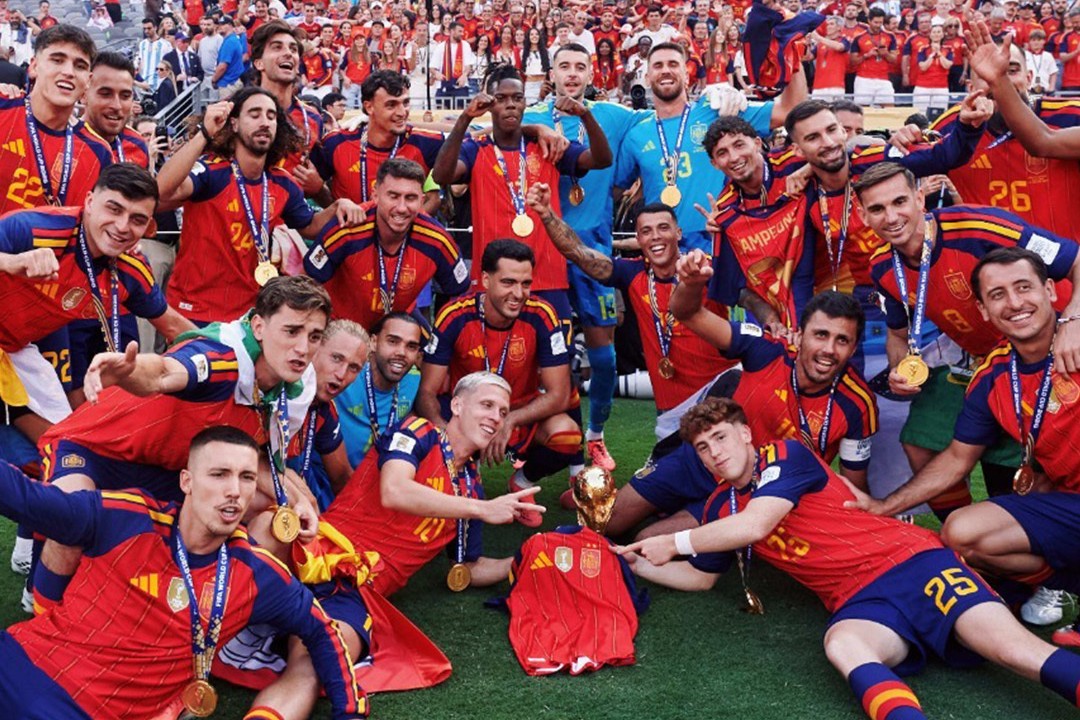
The 2026 FIFA World Cup now has one fixture left. At 22:49 UTC on 15 July 2026, the Argentina squad completed a comeback against England in the semi-finals, with reporting from a Telegram channel affiliated with Olympic and football coverage crediting Lionel Messi's passing as the decisive element in the turnaround. The result, combined with the other semi-final, sets up a final between Argentina and the winner of the second last-four tie, with kickoff scheduled for 19 July 2026 at MetLife Stadium in East Rutherford, New Jersey.
This tournament has refused to follow a script. Eleven goals have now been scored in stoppage time that decided matches outright, a tally BBC Sport documented on 16 July in a video package recapping every last-minute winner. The defending champions are gone, the host nations have dropped away, and the bracket has produced a final four that few serious models placed here in March. Argentina's path, in particular, has tracked the career arc of one 38-year-old: from a side that looked mortal in the group stage to one that found its decisive football in the moments when the game was supposed to be over.
The comeback that rewrote the bracket
Argentina's semi-final, played on 15 July 2026, was settled in extra time after the match sat level through ninety minutes. The Telegram channel Olympics reported that the team's revival was built on Messi's distribution rather than his finishing, an unusual framing for a player whose tournament reputation has always rested on the goals column. The tactical read, supported by match video circulating across broadcasts, is that Argentina used Messi as a deep-lying conductor once England had committed numbers forward in search of a winner. The risk of that approach is that it cedes possession in dangerous zones; the payoff is the kind of incision that the English back line could not reorganise against quickly enough.
The other semi-final, completed by the time of writing, delivered the second finalist and completed a final that ESPN's daily World Cup newsletter on 16 July at 11:57 UTC framed as the closing chapter of a tournament that has "nearing its end." Argentina's fans, the same dispatch noted, have been the tournament's most visible travelling support, and their presence in the final city has already reshaped the match-day economy around MetLife Stadium, with hotel and transit pricing tracking a demand curve familiar from previous global finals hosted on US soil.
Eleven stoppage-time moments, and what they tell us
BBC Sport's compilation of all eleven last-minute winning goals, published on 16 July at 13:41 UTC, is more than a highlight reel. It is a structural read of how this World Cup has been officiated, coached and conditioned. A tournament that produces that many match-deciding moments in added time is not a tournament in which teams are managing games out. It is one in which late-game risk has been priced in by managers, where goalkeepers are pushed up for set pieces in the 93rd minute, and where the marginal substitution at 75 minutes carries a higher expected value than at any previous World Cup on record.
Three patterns stand out. First, the goals are concentrated in the 90th through 95th minute, not in the 120th, suggesting that the decisive intervention is happening before extra time is required, in matches that are still nominally winnable in regulation. Second, a disproportionate share of the winners have come from set pieces, not open play, a reminder that at this level, restarts remain the single highest-leverage moment in football. Third, several of the goals have come from substitutes, which is a coaching decision: managers are keeping their freshest, most direct players on the bench specifically to deploy them in the closing stages when defenders tire.
The counter-reading is that this is simply what modern football looks like when the fixture list is compressed and the conditioning programmes are at their current ceiling. There is nothing structurally different about 2026; the game has just been pushed to the limit of its own physical logic. That framing is convenient for the powers that run the sport, and it deserves to be tested against the actual data once the tournament concludes.
Why the final won't be a coronation
Argentina enters as the higher-ranked side in FIFA's published table and as the side with the deeper bench of big-game experience, but the prevailing line in the press has been to treat them as the team to beat. The structural evidence cuts the other way. A team that needed a late rally to get past England is a team that has been living at the edge of its own tactical envelope, and a final against a fresh opponent, one that has not been forced to play from behind in the semi-final, tends to expose that kind of fragility early.
The counterpoint is that Argentina has been here before. The 2022 squad absorbed pressure from France for much of the final in Lusail and still found the goals required to lift the trophy. Messi, the figure around whom every tactical plan is now drawn, has now played in five World Cups, a longevity that is its own form of competitive advantage. The squad's mental template for a final is not something this generation had to invent; it is something they have already lived through, and the English comeback attempt, for all its tension, will have reinforced the conviction that this team can absorb any punch the bracket throws at it.
The match-day economy and the thing nobody is counting
ESPN's final-week coverage has emphasised the on-field story, but the off-field numbers are doing the same work they always do at this stage of a World Cup cycle. Ticketing, hospitality, and broadcast rights have already been priced into the year of any club or federation that touches this tournament. The unknown is the second-order effect on the European club season that resumes in August, where several of the players who will feature in the final will arrive late to pre-season training, a fact that has its own bidding implications in the August transfer window.
What remains genuinely uncertain is the shape of the final itself. Argentina's recent form is a late-rally team, not a front-runner, and the other finalist, having come through a different route, will dictate the tempo. A fast start from either side will compress the game; a cagey first thirty minutes will drag the contest back into the late-window territory this tournament has occupied for six weeks. Eleven stoppage-time winners suggest that the second interpretation is more likely. The first goal, whenever it comes, will not be the last word.
This article was prepared by Monexus staff from wire reporting and verified Telegram channel sources. Coverage prioritised match results, statistical summaries and the broader pattern of stoppage-time winners documented across the tournament.
Wire provenance
This editorial synthesis draws on the following public wire/social posts:
- https://t.me/Olympics/2026worldcup_argentina_england_semifinal