Who pays for the World Cup: the financial split behind the 2026 tournament
FIFA's 2026 World Cup is handing broadcasting rights, sponsorship inventory and ticket revenue to a handful of incumbents, while host cities absorb the cost. The split is more concentrated than the expansion pitch suggests.
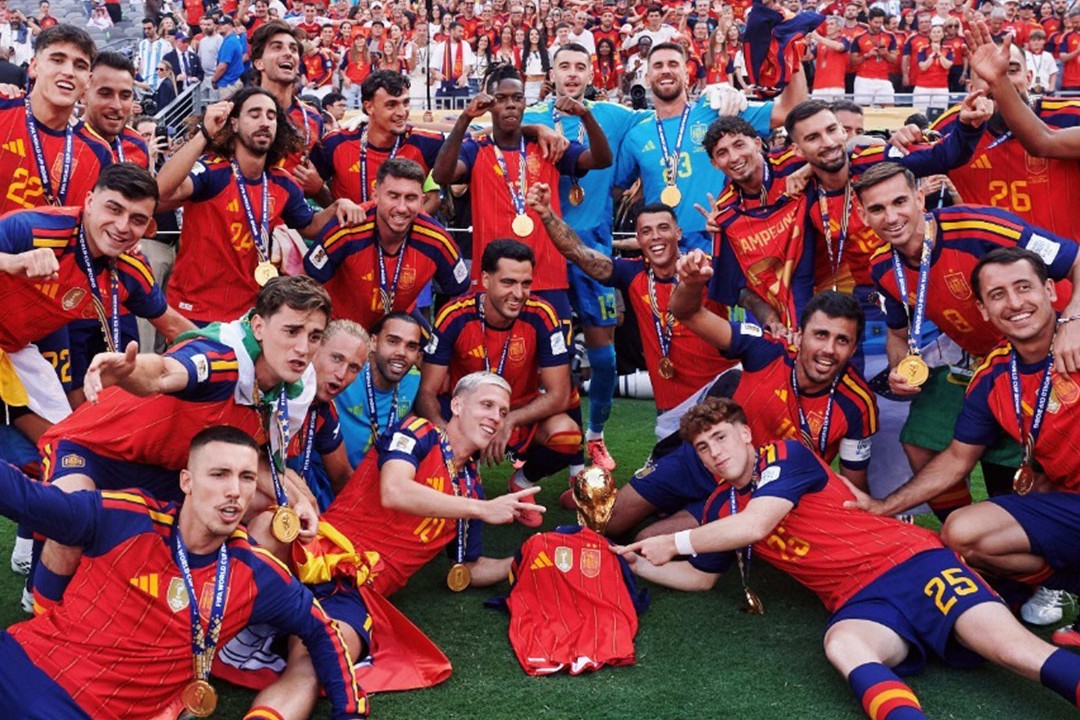
Five-dollar hot dogs. Forty-dollar stadium beers. Five-thousand-dollar hospitality packages and a third-place play-off that, on 16 July 2026, the BBC insists is still worth your evening. The 2026 World Cup is staging pageantry and pricing simultaneously, and the latter is the more interesting story.
A tournament expanded from 32 to 48 teams is a logistical answer to a commercial question: more matches, more broadcast windows, more inventory for sponsors who want a captive global audience. FIFA's chief Gianni Infantino has framed the 48-team format as access over aestheitcs, and the access argument is also the cash argument. Every additional fixture is a unit of inventory that can be sold.
The money already moved
Per a 16 July 2026 BBC News tally of the tournament's financial winners and losers, broadcast rights and the FIFA Partners roster (Coca-Cola, Adidas, Hyundai, Wanda, Qatar Airways, Visa) plus second-tier sponsors account for the bulk of the upside. The same reporting identifies host cities, public broadcasters and travelling supporters carrying the cost side of the ledger.
The economics are not subtle. A 48-team format scheduled across 11 US host cities (plus Mexico City, Guadalajara, Monterrey, Vancouver and Toronto on the North American footprint) stretches the calendar but also stretches the rights windows. Rights deals struck before the expansion were priced for a 32-team, four-week tournament; reselling that inventory at the new scale is where FIFA's incremental revenue lives.
What the critics say
Not everyone buys the access pitch. An ESPN analysis on 16 July 2026 argued that the World Cup's expansion model offers a road map college football refuses to walk: more teams, more Cinderella runs, more groups of death that produce genuinely watchable dead rubbers. The College Football Playoff, by contrast, has stuck at 12 teams and prioritised regular-season strength. The complaint is that expansion was always pitched as a competitive democratisation when the actual product was a commercial one.
A third-place play-off that's nominally a dead rubber is a working example. If it were not in FIFA's inventory, the BBC's 16 July 2026 essay arguing for its cultural value would not exist; the fixture exists because broadcasters pay for content and sponsors pay for screens.
The structural frame
Major tournament economics have moved steadily toward a model where the rights-holder captures an increasing share of surplus. Host-city costs include stadium retrofits, security perimeters, transit subsidies and the long-tail of civic debt that follows marquee events. Liverpool's 2024 Financial Times analysis of municipal sports spending has been replicated across US statehouses that quietly subsidised venue infrastructure to land FIFA's preferred footprint. The corresponding benefit accrues to FIFA and the rights-holding broadcasters, with the residual landing in the local hospitality economy at much thinner margins than the pre-tournament projections suggested.
The access argument is not wrong. A 48-team field does produce debutants and upsets that a 32-team field does not. But the structure that produces those upsets is the same structure that concentrates revenue, and one cannot be celebrated without the other.
What to watch next
The financial print for the 2026 tournament lands in two places: FIFA's post-event financial report, which historically lags by 12 to 18 months, and the 2030 World Cup host negotiations, where the access-versus-revenue argument will be re-litigated on a triple-continent footprint (Spain, Portugal, Morocco, plus centenary opening fixtures in Argentina, Paraguay and Uruguay). If FIFA can hold its 2026 broadcast-rights yield through 2030, the 48-team model is the new floor. If rights-holders re-trade downward, expect a quieter re-emphasis on competitive purity, which is a polite way of saying the access argument recedes when the money does.
The third-place play-off, for what it is worth, is on. It is worth watching not because it matters, but because the fixture exists at all. The same logic that produced it is producing everything else.
Desk note: The wire coverage on 16-17 July centred on individual fixtures and stadium fare. This piece reads the same week as a financial ledger, taking the BBC's winners-and-losers tally and the ESPN expansion critique as the two main source documents and threading them through a cost-versus-revenue argument.