Venice Hands Closing Slot to Veronesi’s ‘Dio Ride’ as Festival Leans on Italian Star Power
The 83rd Venice International Film Festival will close with Giovanni Veronesi’s out-of-competition ‘Dio Ride,’ a high-profile Italian bet as the Lido angles for celebrity gravity over competition drama.
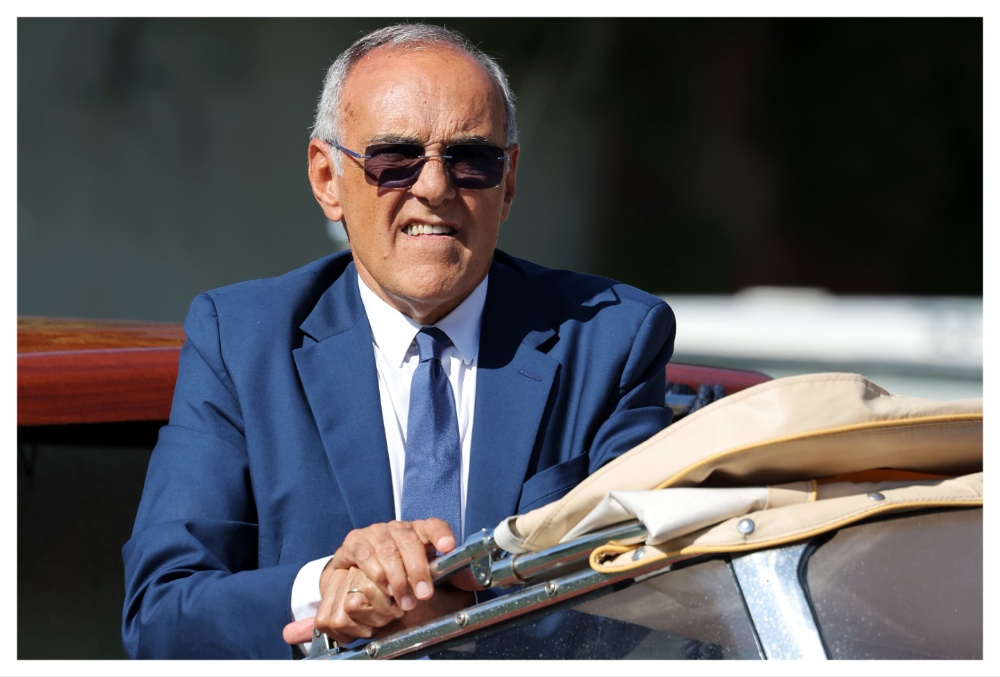
Giovanni Veronesi’s “Dio Ride” will play as the closing film of the 83rd Venice International Film Festival, the Lido announced on 17 July 2026. The picture, written and directed by the Italian filmmaker, screens out of competition at a festival scheduled to run from 2 to 12 September 2026, with the closing slot positioned to send the event out with a domestic headline rather than a competition jury verdict.
The booking matters less for what it adds to the official selection and more for what it says about where Venice now puts its weight. A festival that built the modern part of its reputation on the competition’s trophy politics is closing on an Italian feature, out of competition, written and directed by a filmmaker whose draw is reliably Italian. The trophy race can still produce the news; the closing-night applause is being bought separately.
The home-team calculation
The selection signals a festival management that is no longer pretending the closing-night film is anything other than a curated crowd-pleaser. Slotting “Dio Ride” out of competition takes the Golden Lion out of the conversation and puts Italian star wattage back into it. Variety’s 17 July 2026 announcement framed the film as a Veronesi feature built around a recognisable Italian lead, the kind of booking that turns the closing gala into a red-carpet production rather than an awards deliberation.
That is a calculated trade. The competition can still deliver prestige through its jury and its laureates, but television deals, distributor bidding and the broader September-awards season all flow more reliably through a closing film that travels. An Italian-language feature with a known director gives Italian distributors, public broadcasters and sales agents a single, photographable anchor for the final weekend.
What the out-of-competition frame costs
The framing is not free. Closing out of competition means no jury consideration, no Lion in play, and no second-weekend oxygen from a major award. For a director with Veronesi’s track record, that is a manageable price: the film arrives with its own commercial gravity. For a festival trying to convert the closing slot back into a competition headline, the trade-off cuts the other way.
It also narrows the cultural frame. An Italian director closing an Italian festival with an Italian-led cast is defensible as national showcase; it is harder to defend as global summit. Cannes has spent two decades turning its closing slot into a soft-power instrument, alternating French and international titles. Venice, by choosing a domestic out-of-competition feature, is signalling that the closing-night audience is the priority, not the closing-night prize.
The September calendar writes itself
The 2-12 September window places the festival squarely ahead of Toronto, where industry buyers and awards strategists typically pivot from Lido premieres to North American rollouts. A closing-night film with Italian commercial anchors is built for that handoff. Distributors can use the closing slot to lock press coverage; producers can use the post-screening reception to schedule follow-up meetings on the Lido’s final morning.
That scheduling logic is part of why an out-of-competition Italian feature is the lowest-risk closing booking Venice could make. The festival gets its red carpet. Italian cinema gets a global photograph. The competition stays free to generate its own news across the previous ten days. Each piece of the festival is asked to do only the job it can do.
What remains in the dark
The Variety announcement stops at the closing slot, the section, and the lead. It does not detail the full cast beyond the Italian star headlining the film, the production companies, the sales footprint, or the distributors attached. Buyers and awards watchers will be reading the festival’s official press book for those answers; the 17 July announcement is a single data point, not a programme.
What is also unresolved is how the closing choice will read once the full competition lineup is published. If the in-competition titles skew heavily international, the Veronesi close will look like national ballast; if the competition itself leans Italian, the closing booking will read as a doubling-down. The festival has placed its closing card. The competition still has to deal.
This piece frames the closing-slot booking through the lens of festival economics and the trade between competition prestige and commercial gravity; the wire announcement is read for what it confirms about Venice’s September priorities.