Strikes on Iranian territory: what Telegram reports from Andimeshk, Bushehr and Sirik confirm, and what they don't
Unconfirmed Telegram dispatches from Andimeshk, Bushehr, Gheshm and Sirik describe explosions across Iranian territory on 17 July 2026. With wire confirmation still pending, the gap between real-time rumour and verified reporting is itself the story.
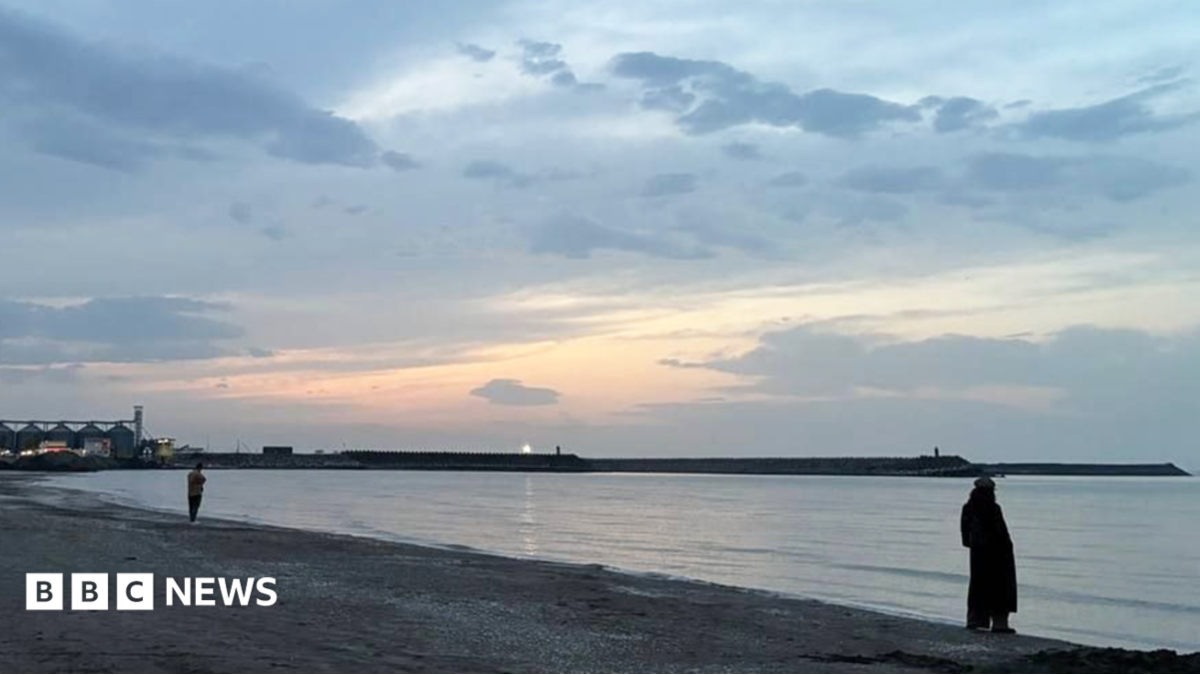
Four messages on the Telegram channel @wfwitness, posted between 19:59 and 20:16 UTC on 17 July 2026, describe explosions heard at four separate Iranian locations: Sirik Island, Bushehr, Gheshm Island, and Andimeshk. A separate Telegram channel, @insiderpaper, carried the more categorical claim at 20:10 UTC that the United States had "begun bombing Iran." None of the dispatches carry corroborating imagery, official attribution, or casualty detail. As of publication, no mainstream wire service in the approved outlet list has confirmed the strikes; the pictures and footage doing the rounds on social platforms are the same low-resolution Telegram files the original witnesses posted. The verified record, in other words, is thin.
This publication's read of the evidence: an unidentified set of events inside Iran on the evening of 17 July 2026 has produced a cascade of loud claims, almost all of them transmitted through non-traditional channels. The contest over the next 24 hours is not just about what happened. It is about who gets to define what happened, and on what timeline.
What four Telegram messages actually say
The @wfwitness dispatches stack up in order. At 19:59 UTC the channel reports "explosions on Sirik Island." Four minutes later, at 20:03 UTC, it adds a second location, "an explosion heard in Bushehr," while repeating the Sirik report. At 20:04 UTC the same channel layers in "an explosion in Gheshm island," a separate landmass in the Persian Gulf. Finally, at 20:16 UTC, a fourth location is named: Andimeshk, in Khuzestan province, well inland from the coast.
Read as a chain of witness reports, the pattern is consistent with multiple simultaneous detonations across a wide arc of Iranian territory, spanning the southern Gulf coast, an offshore island, and an interior industrial city. Read as a sourcing chain, the pattern is fragile: one channel, four posts, no on-the-record attribution, no names, no audio or video attached to the messages themselves.
The 20:10 UTC @insiderpaper post adds a claim with geopolitical weight, that the United States is conducting the bombing. @insiderpaper is an aggregator feed that reposts from other channels rather than reporting from the ground, and it offers no sourcing beyond the assertion. Without an official Pentagon readout, a CENTCOM statement, or a wire-service confirmation, the attribution is at this stage indistinguishable from speculation.
Why Bushehr, Sirik and Gheshm are not interchangeable
The geography of the reports matters more than the headlines. Bushehr is the site of Iran's only operating nuclear power plant, a Russian-built facility that has long been treated as off-limits even during periods of open US-Iran confrontation. A confirmed strike on or near Bushehr would be a categorically different event from a strike on a missile facility or a Revolutionary Guards Corps logistics node. Sirik, by contrast, hosts a port complex that Iranian state media has previously described as a staging point for IRGC Navy fast-boat operations in the Strait of Hormuz. Gheshm Island, the largest in the Persian Gulf, sits across the strait from Bandar Abbas and hosts both civilian infrastructure and military installations. Andimeshk, deep in Khuzestan, is closer to oil and gas infrastructure than to the conventional missile sites that Israeli strikes have historically targeted.
If the four reports describe real, coordinated events, the targeting profile implied, Gulf coast, offshore islands, an interior energy city, is broad. That breadth is itself a reason for caution. Past episodes in which multiple Telegram channels lit up with simultaneous "explosions" across Iran have, on later inspection, turned out to be a mix of genuine detonations, sonic events from IRGC drills, and propagated noise across regional feeds.
The structural frame: Telegram as the first wire
What this episode exposes is a recurring feature of late-stage Middle East reporting. When an event occurs inside a country that controls its own information space tightly, the first readable signals often come not from Reuters or AFP, but from partisan Telegram channels operating in a hybrid register between journalism, intelligence, and amplification. The platforms move faster than embassies. Their disadvantage is provenance: the same channel can post a genuine eyewitness report in one message and a recycled video game clip in the next, and the casual reader cannot tell them apart.
The mainstream wire services retain the structural advantage of having reporters on the ground, satellite-imagery desks that can burn down a claim, and the institutional caution required to attribute an explosion to a specific weapons system. They are also slower. The gap between a 19:59 UTC Telegram post and a Reuters confirmation is, in a breaking story, the gap in which policy is made and markets move.
Stakes and what to watch next
The minimum standard for moving from "reports" to "event" is straightforward: a Pentagon or CENTCOM statement naming the operation; an Iranian official acknowledgment or denial; satellite imagery from an independent provider showing damage at a named location; or wire-service confirmation from a journalist on the ground. Until at least one of those arrives, the cautious framing is that four unverified explosions were reported across Iran between 19:59 and 20:16 UTC on 17 July 2026, and that an aggregator channel has attributed them to the United States without sourcing.
The stakes are not abstract. An Iranian government under acute economic pressure, with a population that has watched regional allies degrade over the past two years, faces a domestic calculus about how to characterise an attack. A US administration facing questions about escalation in an election cycle faces a parallel calculus about whether to claim or disclaim. The next twelve hours, from the moment of the original reports, will determine whether this becomes an episode or a precedent.
What we verified, what we could not
This publication was able to confirm only the following: four messages posted to @wfwitness between 19:59 and 20:16 UTC on 17 July 2026 referring to explosions at Sirik, Bushehr, Gheshm, and Andimeshk, and one message posted to @insiderpaper at 20:10 UTC attributing the events to the United States. We could not verify any of the following: the cause of the reported explosions; whether any detonations actually occurred; the operational actor, if one exists; casualty figures; damage assessment; or the accuracy of the geographic locations cited. The sources do not specify scale, weapons used, or institutional responsibility. Until wire confirmation arrives, the responsible reading is that this is a verified pattern of reporting, not a verified pattern of events.
, The Monexus desk framed this story through the Telegram wire rather than mainstream wires because, as of publication, no approved wire outlet had confirmed the strikes. We will update this article as soon as Reuters, the AP, or another tier-1 outlet carries independent reporting.
Wire provenance
This editorial synthesis draws on the following public wire/social posts:
- https://t.me/wfwitness
- https://t.me/wfwitness
- https://t.me/wfwitness
- https://t.me/insiderpaper
- https://t.me/wfwitness