US strikes three bridges and a tunnel in Hormozgan as Tehran denounces attacks on civilian infrastructure
Iranian foreign ministry spokesman Esmail Baghaei accused Washington of "showcasing so-called strength" by striking civilian infrastructure, hours before reports of attacks on three bridges and the Shahid Mirzai tunnel in the southern province.
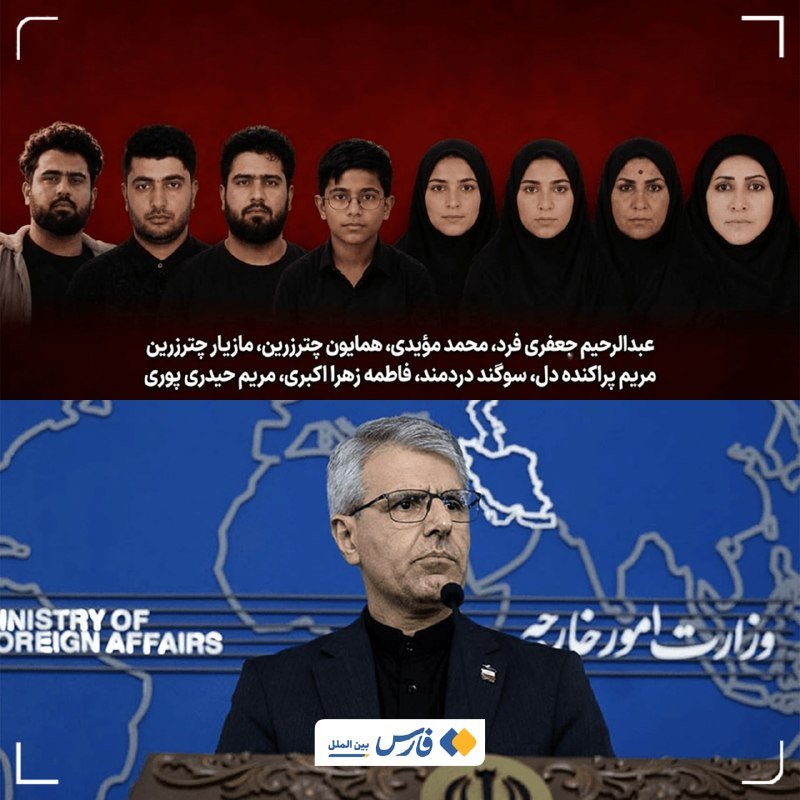
At 20:44 UTC on 17 July 2026, Iranian foreign ministry spokesman Esmail Baghaei accused the United States of "attempting to showcase its so-called strength by attacking civilian infrastructure and killing civilians," according to a Telegram post by the channel wfwitness summarising the briefing. The accusation preceded, by roughly two hours, separate reports of US strikes on three bridges and the Shahid Mirzai tunnel in Hormozgan Province, the coastal strip that wraps Iran's southern flank and overlooks the Strait of Hormuz.
If both accounts hold, the sequence frames a contested war narrative in real time: Tehran alleging attacks on civilian infrastructure, and a separate channel reporting the specific targets that would correspond to that description. The gap between the diplomatic framing in Tehran and the operational reporting from allied channels is itself the story. Washington has, in the language of one Telegram account, struck infrastructure that a foreign ministry has, in the same evening, named as the moral object of the day's protest.
A statement, then a target list
Baghaei's remarks were released through the foreign ministry's standard communications channel and republished in summary form by wfwitness at 20:44 UTC. The wording, as relayed by the channel, accuses the United States of "committing a war crime" by attacking civilian infrastructure, a phrase that tracks the structure of past Iranian responses to strikes on energy and transport assets.
By 22:32 UTC, the Telegram channel rnintel reported that the US had struck three new bridges in Hormozgan Province. One minute later, the same channel added that the US had also attacked the Shahid Mirzai tunnel in the same province. The Shahid Mirzai tunnel, which crosses the Zagros ranges above the southern coastal road network, has appeared in prior reporting on infrastructure used by Iranian military logistics. The bridges, unnamed in the brief Telegram report, sit on routes that connect the port cities of Bandar Abbas and Bandar Lengeh to the interior. None of the reporting available here specifies whether the strikes were conducted by manned aircraft, drones, cruise missiles, or a combination.
What the framing does
Iran's choice to lead with a foreign ministry statement, rather than a military briefing, signals an information strategy aimed at international audiences, particularly UN bodies and diplomatic corps in New York and European capitals. The phrase "civilian infrastructure" is calibrated for legal vocabulary in The Hague and for the wire desks in London and Washington. A parallel military readout, were one to follow, would more likely name the targets in operational terms.
For Washington's side, the absence of a US military briefing in this source set means the framing of the strikes rests entirely on the Telegram reports and any Western wire pickup that follows. That asymmetry favours the side that names its targets first and attributes its reasoning in plain language. The pattern repeats across recent reporting on the US-Iranian exchanges: Tehran publishes the moral frame; operational detail follows from non-official channels; Western wire desks absorb both.
The geography of Hormozgan
Hormozgan Province stretches along the southern Iranian coast, wrapping the Strait of Hormuz at its narrowest point. Roughly a fifth of the world's seaborne oil passes through that strait each day under normal traffic conditions. The province's road and rail infrastructure connects the coastal ports, where Iranian naval assets and commercial shipping cluster, to the highland interior. Bridges on the Bandar Abbas road network and tunnels through the Zagros approaches have both civilian and military utility; they carry civilian freight and passenger traffic, and they also shorten the logistics distance for Iranian forces moving equipment toward the coast.
Strikes on three bridges in a single province in one operational window, by the structure of the reporting, suggest a deliberate interruption of that corridor rather than a single symbolic target. The tunnel, by contrast, has a name attached to it in the reporting and may be more identifiable to readers outside Iran; the bridges do not.
What remains uncertain
The source material for this article is narrow. It consists of a single Iranian foreign ministry statement, relayed in summary form, and two Telegram posts from rnintel naming the targets. The Telegram channels carrying the operational reporting do not cite official US Central Command statements, Israeli military briefings, or wire-service confirmation within the items provided. No casualty figures, no munitions used, and no specific bridge names appear in the available text. The reporting describes "three new bridges," a phrase that leaves open whether other bridges have been struck previously or whether these are the first such strikes in the campaign.
For Washington, the choice of targets raises a familiar question that follows every strike on infrastructure dual-use in character: how the US distinguishes between civilian and military objects, and what the legal adviser chain inside the relevant command has signed off on. That question cannot be answered from the Telegram reporting alone.
The stakes in the corridor
If the reporting holds and the strikes continue at this pace, the practical question becomes the throughput of the southern corridor itself. Bridges and tunnels are chokepoints; once damaged, traffic reroutes onto longer roads or stops. The economic effect on civilian freight, on port operations, and on the daily movement of people along the coast accumulates quickly even when individual strikes are small. The diplomatic effect, meanwhile, builds on each foreign ministry statement. Tehran's communications machinery appears designed to convert each strike into a legal artefact, a piece of evidence for a future proceeding, rather than a news cycle.
The sequence on 17 July, a moral protest at 20:44 UTC followed by target detail at 22:32 and 22:33 UTC, suggests a coordination between operational action and information release that is neither coincidental nor fully visible in the public reporting. What is visible is the gap: an accusation of attacks on civilian infrastructure, and within two hours, a list of civilian-named objects that fits the accusation. The line between those two facts is where the next twenty-four hours of coverage will sit.
How Monexus framed this: the source set is Telegram-only and Iranian-adjacent. The piece acknowledges that fact in its uncertainty paragraph and avoids attributing weight to the Iranian framing beyond what the foreign ministry itself released, while still treating the operational reporting as plausible pending Western-wire corroboration.
Wire provenance
This editorial synthesis draws on the following public wire/social posts:
- https://t.me/wfwitness
- https://t.me/rnintel
- https://t.me/rnintel