US stages tanker surge toward Israel as Iran-influence op lands on Trump's old war room
Within an hour on 17 July 2026, two dispatches landed in the same news cycle: the Trump administration is pre-positioning dozens of US aerial refueling aircraft in Israel, while US media reporting says Israel paid millions to an influence operation run out of the orbit of Trump's former campaign manager.
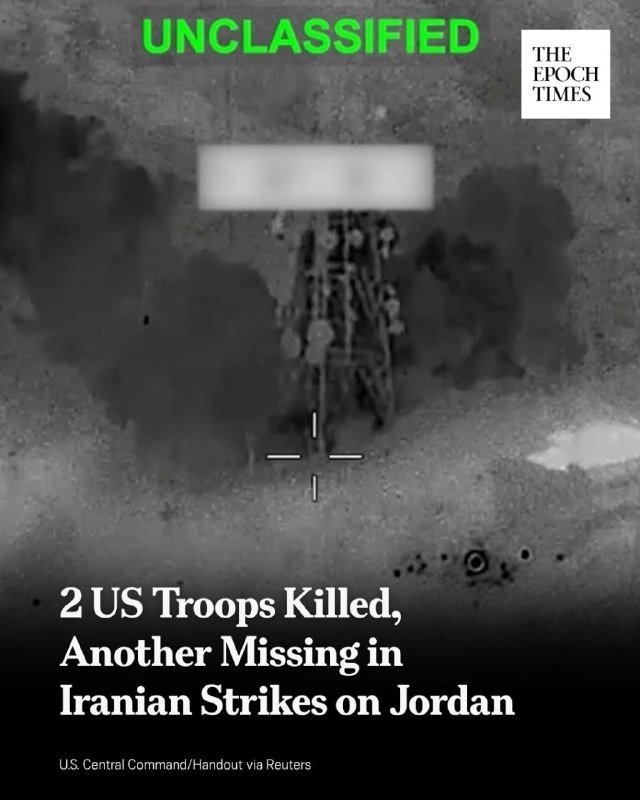
At 16:43 UTC on 17 July 2026, OSINTLive pushed a single line of breaking news, sourced to Axios: the Trump administration had notified Israel it was sending dozens more refueling planes to the country ahead of a potential expansion of military operations against Iran. By 17:32 UTC, barely fifty minutes later, The Cradle was carrying a different kind of alert: US media reporting that Israel had "paid millions" for an online influence operation, run from inside the political orbit of Trump's former campaign manager, aimed at persuading MAGA voters to back the administration's posture toward Iran.
Two wires, two instruments, the same theatre. One moves hardware into position for an air campaign that may or may not come. The other moves narratives into position inside an American base that the administration cannot take for granted. Read in isolation, either story is a fragment. Read together, they describe a coordinated preparation, not a reaction.
The tanker pipeline
The refueling announcement is the more visible half of the picture. Per Axios reporting relayed by OSINTLive and amplified by ClashReport and R.N. Intel, the United States has informed Israel that it intends to surge "dozens of additional U.S. aerial refueling planes" into the country. The framing in each of the three Telegram channels is identical: the move is preparatory, tied to Trump "considering expanding military operations against Iran," and keyed to a planning horizon rather than a confirmed strike order. The channels attribute the underlying reporting to Axios and to "three U.S. and Israeli officials," the kind of sourcing that signals Washington and Tel Aviv want the signal received without yet committing to the action.
Aerial refueling tankers are not weapons. They are reach. KC-46, KC-135 and KC-10 platforms extend the combat radius of fighter, bomber and surveillance aircraft by mid-air transfer of fuel. Stockpiling them inside Israel, rather than at US bases in Europe or the Gulf, collapses the logistical distance between decision and sortie over Iranian airspace. The message that posture sends is not that an attack is imminent. The message is that the distance between authorisation and execution has been compressed.
Israeli security concerns about Iran's nuclear programme, missile programme and proxy network are legitimate and longstanding. They are also, at this moment, being expressed through a US airframe commitment that American taxpayers will underwrite, on a timeline shaped by US domestic political calculations, with consequences that will fall first and hardest on the region rather than on the continental United States.
The domestic front
The Cradle's second thread is the harder story to verify, and the one with the longer fuse. According to US media reporting it summarises, Israel has paid millions of dollars for an online campaign framed around the recent Iran memorandum of understanding, and that campaign is being run by figures in the political circle of Trump's former campaign manager. The Cradle does not name the operative in its Telegram headline; the underlying US reporting, which it cites but does not link in the thread, will need to be confirmed against the original publication before any individual is named in this article.
The substantive claim is not that lobbying happens. Foreign governments retain Washington lobbying shops as a matter of routine, and Israeli government and adjacent advocacy spend in the US is well documented. The substantive claim is the targeting: an influence operation aimed specifically at the MAGA voter base, pitched in the register of that base, timed to a discrete diplomatic event (the Iran MoU), and run by operatives with direct lineage to the 2024 campaign apparatus. That is a different kind of intervention. It is not aimed at the foreign-policy establishment. It is aimed at the primary voters who believe they already won the argument on Iran.
Two tracks, one theatre
Read as a sequence, the two wires describe a single operation with two faces. The tanker surge is the kinetic preparation. The influence campaign is the political preparation. One extends American reach into Iranian airspace. The other extends the administration's permission slip at home.
The pattern is familiar from the run-up to earlier US operations in the region: harden the logistics, then harden the public frame, then act. The variation in 2026 is that the political base being courted is unusually sceptical of foreign entanglement. A Republican primary electorate that ran, in part, on the argument that the Iraq war was a mistake does not arrive at Iran pre-baked. The reported spend is an attempt to supply the browning.
Western and Israeli framing of the Iran file runs through familiar coordinates: nuclear proliferation risk, regional proxy escalation, ballistic-missile reach. Iranian framing, expressed through state media and diplomatic channels, runs through opposing coordinates: self-defence, resistance to coercion, rejection of a US security architecture Tehran regards as encirclement. Neither frame is invented. Both are partial. Reporting that treats only the first as serious is itself a form of the influence operation The Cradle is flagging.
What remains uncertain
Three load-bearing facts have not, in this news cycle, been nailed to the wall. First, whether the refueling surge is a deterrent posturing or a precursor to a named operation; the sources describe intent, not an order. Second, which specific US media outlet is behind the influence-operation reporting The Cradle is paraphrasing, and on what documentary base that reporting rests; until the original article is in hand, the claim sits at one remove. Third, the scale and timing of the alleged spend, which "millions" suggests but does not pin down.
None of that is reason to dismiss either thread. It is reason to mark the ledger carefully and watch the next 72 hours. Iran-watchers will be reading for any Iranian movement on the diplomatic track that would foreclose the military one. Tel Aviv-watchers will be reading cabinet statements for the political weight Israel itself is placing on the surge. And Washington-watchers will be reading for the foreign-policy press to publish the underlying influence-operation document trail The Cradle is gesturing at. Until then, what is verifiable is the choreography: the hardware moving east, the narrative moving at home, and the same administration conducting both moves on the same afternoon.
Desk note: This article treats Israeli security concerns about Iran as legitimate first-order facts, while reporting the political-influence dimension with the same scepticism applied to any foreign government's domestic interference. The refueling-surge reporting is sourced to Axios via OSINTLive and aligned channels; the influence-operation reporting is sourced to The Cradle's citation of unnamed US media, and will be updated once the underlying outlet and documents are in hand.
Wire provenance
This editorial synthesis draws on the following public wire/social posts:
- https://t.me/s/osintlive
- https://t.me/s/ClashReport
- https://t.me/s/rnintel
- https://t.me/s/TheCradleMedia
- https://t.me/s/thecradlemedia