Trump Media puts Truth Social on the paywall: Wall Street gets the posts first
Trump Media is selling institutional clients faster access to the president's market-moving posts, raising fresh conflict-of-interest and disclosure questions in the days after a deadline for the White House to release Epstein files passed without action.
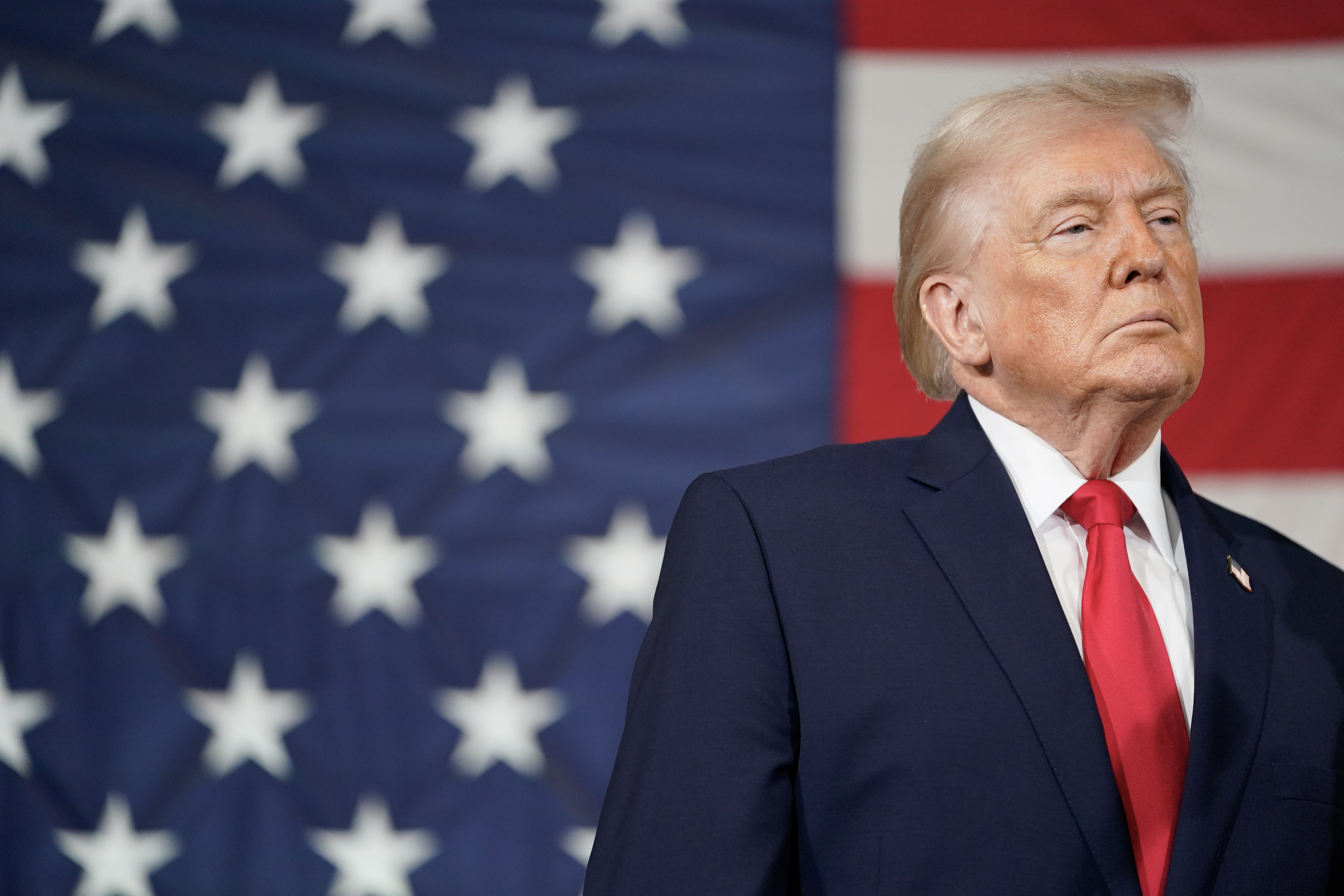
At 12:49 UTC on 17 July 2026, The Verge reported that Trump Media, the operator of US President Donald Trump's Truth Social platform, is preparing to sell Wall Street trading firms and other institutions faster access to what the company calls the "most market-moving" posts on the president's account. A Telegram wire from @theverge_news carried the story twelve minutes later, and by mid-afternoon the Guardian's US business desk had labelled the move "brazen corruption" in a sharply worded lede of its own.
The mechanics are simple, and that is what makes them uncomfortable. Under the new arrangement, paying clients will receive Truth Social content through a low-latency data feed that beats the public timeline by a margin the company has not publicly quantified. The structure effectively converts a presidential communications channel into a tiered information product, where institutional subscribers learn first and retail traders learn last. That hierarchy of access is not new in financial markets; it is the defining feature of how Bloomberg terminals, Refinitiv, and direct exchange feeds have been sold for decades. What is new is that the asset being sold is the President's own words, and the seller is the company that bears his name.
A president who moves tape by typing
The premise of the product is empirically grounded. Since Trump's return to office, individual Truth Social posts have demonstrably moved share prices, cryptocurrency markets, and Treasury yields within seconds of publication. Trading desks have built internal dashboards to scrape the account the moment new posts appear; entire Telegram channels exist to retweet the handle in real time. Trump Media is now proposing to formalise that asymmetry into a paid relationship.
The company's pitch to clients, as paraphrased by The Verge's reporting, frames the feed as a service for professionals who "need to react to market-moving statements faster than the public timeline permits." In other words, the seller is not denying that some traders will see posts before others; it is selling that gap as a product. The headline language on the company's announcement is restrained; the structure is not.
The plan lands in a market environment that has already priced in political speech risk. Options desks run volatility surfaces on Trump-post windows. Crypto traders maintain key-management routines calibrated to single-message shocks. A paid fast lane converts an externality the market has been managing for free into recurring revenue for the platform, and recurring latency advantage for the buyers.
The disclosure problem nobody has solved
n The most uncomfortable question is also the most procedural: does the President have a financial interest in the speed at which markets read his words? Under federal disclosure rules, the President is required to file periodic financial reports, and ethics watchdogs have long argued that the line between official communication and family-business revenue is unusually thin in this administration. A paid data product that monetises presidential speech intensifies that overlap.
Watchdogs quoted in the Guardian's coverage called the plan "brazen corruption" and pressed the Securities and Exchange Commission to clarify whether a publicly traded company may sell preferential access to statements by a sitting president who, by virtue of office, sets policy that moves the same markets the company serves. Trump Media trades under the ticker DJT and is subject to the same disclosure regime as any other listed issuer.
A second open question is regulatory. The United States has no federal statute that explicitly prohibits latency-tiered access to a public figure's social-media posts. The Securities Exchange Act's anti-fraud provisions target misrepresentation; insider-trading rules target securities traded on the basis of material non-public information. Whether a Truth Social post is "public" the moment it is published, or only when it has propagated through a paid feed versus a free timeline, is a question the courts have not yet been asked to settle. Trump Media's structure is engineered to sit precisely inside that ambiguity.
Counter-read: it's just a data feed
The defence is not weak, and it deserves airtime. Truth Social is a private platform operated by a private company. The president chooses to use it as his primary communications channel. Selling access to that channel is, on this telling, no different from a newswire licensing its feed, or a sports league selling real-time data to betting operators. Retail users continue to see every post the president publishes. Institutional users pay for convenience and speed. The president's office does not edit the feed; the company does not move policy.
Two points weaken that defence. First, the asset is not a sports score or a corporate filing; it is the official communication of the head of state, which carries regulatory, monetary, and security consequences that a quarterly earnings release does not. Second, the seller and the subject share a name and a family. Trump Media is not licensing a neutral feed; it is monetising its namesake's words, and the reputational and political risk of those words falls on the office the namesake still occupies.
A more cautious read holds that markets have long tolerated, and regulators have long permitted, structural information asymmetries where the underlying asset is speech or sentiment rather than securities. Polling aggregators, satellite-imagery vendors, and political-risk consultancies all sell faster, sharper reads on public statements. The Trump Media plan sits closer to that tradition than to a classic insider-trading case. That is a coherent position; it is not a comfortable one.
Stakes
The trajectory, if it continues, runs in two directions at once. On one axis, it accelerates the financialisation of political speech: every presidential utterance becomes an asset class, priced by latency, traded by subscription. On the other axis, it hardens a two-tier information economy in which retail investors, pension savers, and ordinary citizens receive official communications on a slower timeline than the desks that bet against them. Neither outcome requires a regulator to act today for the pattern to deepen tomorrow.
The next inflection points are predictable. The SEC will be asked, formally or informally, whether the feed triggers any existing disclosure regime. Trump Media will likely file clarifying language in its next quarterly. Institutional clients will sign, because the edge is real and the price is modest. And the president's posts, which already function as quasi-official statements, will continue to move markets in the seconds before most of the country reads them.
What remains genuinely uncertain is whether the line between presidential communication and corporate product can hold under this much weight, and whether the agencies that police that line have the appetite to test it.
This publication led with the structural framing, paid latency on a sitting president's speech channel, rather than the personalities, because the structure is what survives the news cycle.
Wire provenance
This editorial synthesis draws on the following public wire/social posts:
- https://t.me/theverge_news