Trump's primetime China accusation meets a fractured broadcast window and a Truth Social paywall
NBC and ABC refused to air Trump's primetime address live, the president used the moment to accuse Beijing of the largest US election-data breach in history, and Trump Media moved to monetize the feed.
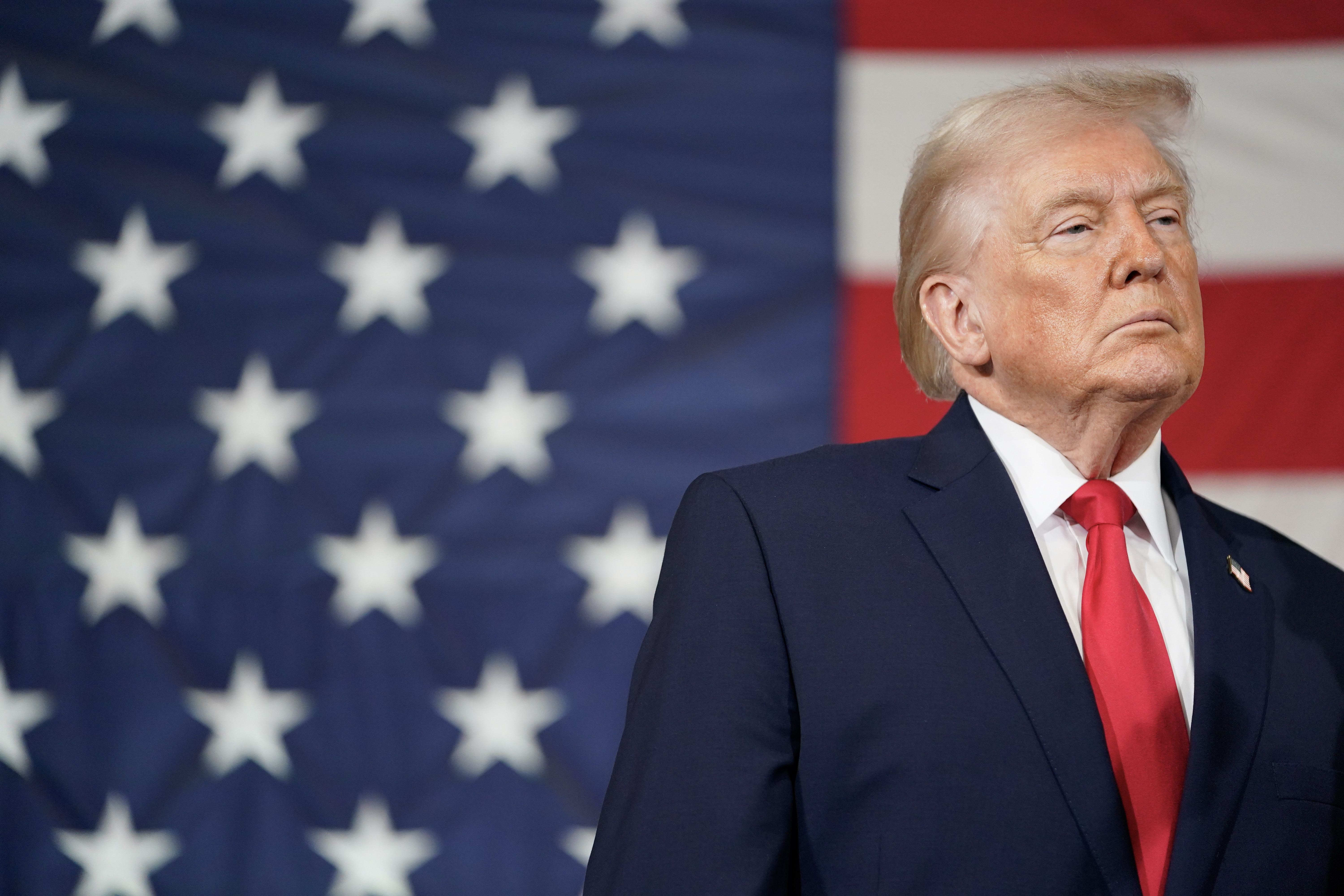
At 21:52 UTC on 16 July 2026, NBC and ABC informed viewers they would not carry President Donald Trump's primetime address live on their broadcast networks, a coordinated refusal that handed the president's framing of a "really big" speech almost entirely to cable, streaming and the platforms he controls. By 01:14 UTC on 17 July, Trump had used the address to accuse China of working through American contacts to influence US business leaders during his first administration, and by 01:19 UTC he had escalated to the claim that Beijing had illicitly acquired 220 million US voter files in what he called the largest election-data breach in history. Hours earlier, Trump Media had disclosed plans to sell paid, faster access to Truth Social posts, turning the same feed that day-old cable coverage could not platform into a paid product for traders and investors.
The night fused three distinct stories that the wire treated as separate bulletins: a broadcast standoff, a foreign interference allegation aimed at Beijing, and a new commercial product from the parent company of Truth Social. Read together, they sketch a familiar pattern, official allegations issued on the president's own platforms, then commercially distributed back to the financial class on a latency advantage.
A speech with no broadcast runway
NBC and ABC's refusal to clear primetime for Trump came at the end of a day in which Polymarket traders had assigned roughly an 81% probability that the address would name China as an election-interference actor. That prediction markets had converged on the content of a presidential address before the address aired is itself a measure of how telegraphed the line of attack had become. The decision by two of the four major US broadcast networks to decline carriage left Fox and CBS as the remaining free-to-air windows, a configuration that handed the live audience almost entirely to Trump's natural constituency and to cable news channels whose own ratings incentives pulled them toward carrying the speech.
The networks that declined did not, in the available reports, dispute that the speech would be newsworthy. The framing was carriage: primetime is finite inventory and networks reserve the right to clear only addresses whose framing they can audit. The two networks effectively delegated the live event to the platforms Trump owns, in particular Truth Social, where the remarks would be posted, by Trump's own company, in a form that, as of 18:27 UTC on 16 July, was being remarketed as a paid, lower-latency feed.
The allegation: 220 million voter files
The substance of the accusation, delivered in the speech and restated on Truth Social in the hours that followed, was structural. Trump told viewers that Beijing had "illicitly acquired" 220 million US voter files, beginning during the 2020 election, in a breach he characterised as the largest in US history. He paired that with a separate, contemporaneous claim that Chinese actors had worked through American contacts to influence US business leaders against his first administration. The 220-million figure is striking because it sits close to commonly cited estimates of the universe of registered US voters, which makes the allegation, if taken at face value, a claim that the entire active voter file has been compromised.
Chinese-government channels named in the same wire coverage did not, as of the available reporting, issue a substantive on-camera rebuttal before publication of this article. The structural counter-position is well known: Beijing routinely rejects US allegations of election interference as a projection of Washington's own influence operations abroad, and points to the absence of any public indictment, DOJ filing or intelligence-community assessment cited in support of the 220-million figure. The administration has not, in the materials available to Monexus, released a court filing, a sealed indictment, a declassified intelligence summary or a referenced state-level breach notice that would allow the figure to be independently verified against a primary record. The figure sits in the public sphere as a presidential assertion.
A separate datum complicates the larger election-meddling frame: earlier in the day, Trump publicly claimed that "hundreds of thousands" of dead people remain on US voter rolls. That claim has a long political lineage in US election litigation, but the cited magnitude outstrips the published findings of most state-level voter-roll audits, which have historically turned up rolls in the low thousands per state. Two presidential assertions about electoral integrity made within twelve hours of each other, neither paired at this point to a primary record.
Truth Social, monetized
The third leg of the night belonged to Trump Media. Its 18:27 UTC announcement that it would sell "faster access" to Truth Social posts, marketed to traders and investors as a real-time feed, places the platform inside a category already occupied by X (formerly Twitter), where API access to posts has, for years, been sold to hedge funds, news desks and election-odds shops at latency advantages measured in milliseconds. The premise is the same: if a president is going to use a social platform as a primary newswire, the right to read that wire faster than the retail public is a saleable input.
The product is being marketed at a constituency that is already a structural beneficiary of Trump's Truth Social usage. Polymarket's own reaction illustrates the loop: at 13:42 UTC on 17 July, the prediction market flashed a "BREAKING" alert that Netflix stock had plunged 11%, the kind of single-source move that pricing algorithms trained on real-time social signals are designed to amplify. The profitable move is the move that occurs before the speed advantage is widely shared. Truth Media's announcement positions the company to be a seller of that advantage, priced into a market whose participants have a fiduciary interest in not closing the gap.
Stakes for an address without a runway
If the prediction-market consensus holds and the China allegation becomes a standing line of Trump 2.0 messaging without a primary record attached, the operational consequence is an information environment in which the president can move sentiment on election integrity, on US-China relations and on individual equity names inside a single news cycle, on platforms whose corporate parent captures the rent. Beijing's structural counter-position, in the absence of a Chinese-government concession to the 220-million claim, is to treat the allegation as an extension of US domestic campaigning; the structural frame for Washington is the inverse, that an unverified allegation of this scale is being deployed at the precise moment the broadcast gatekeepers have narrowed the room in which the allegation can be fact-checked in real time.
The remaining contest is procedural. Either the administration produces a primary record for the 220-million figure and converts the allegation into an indictable matter, or the allegation stays where it is now: a presidential claim, dispersed across a paid feed, ahead of the wire.
This publication's framing differs from the wire in two places. We treat the broadcast refusal, the China allegation and the Truth Social paywall as a single coordinated event rather than three separate bulletins, and we read the prediction-market consensus on the speech content as evidence of how fully the line of attack had been pre-positioned before the address aired.
Wire provenance
This editorial synthesis draws on the following public wire/social posts:
- https://x.com/unusual_whales/status/...
- https://x.com/polymarket/status/...
- https://x.com/unusual_whales/status/...
- https://x.com/polymarket/status/...
- https://x.com/polymarket/status/...
- https://x.com/polymarket/status/...
- https://x.com/polymarket/status/...