Sydney Winner ‘Time and Tide’ Finds a Sales Partner in Paris
Vee Shi’s hybrid nonfiction debut ‘Time and Tide,’ which premiered in competition at the Sydney Film Festival, has been picked up for international sales by Paris-based outfit Inwave Films.
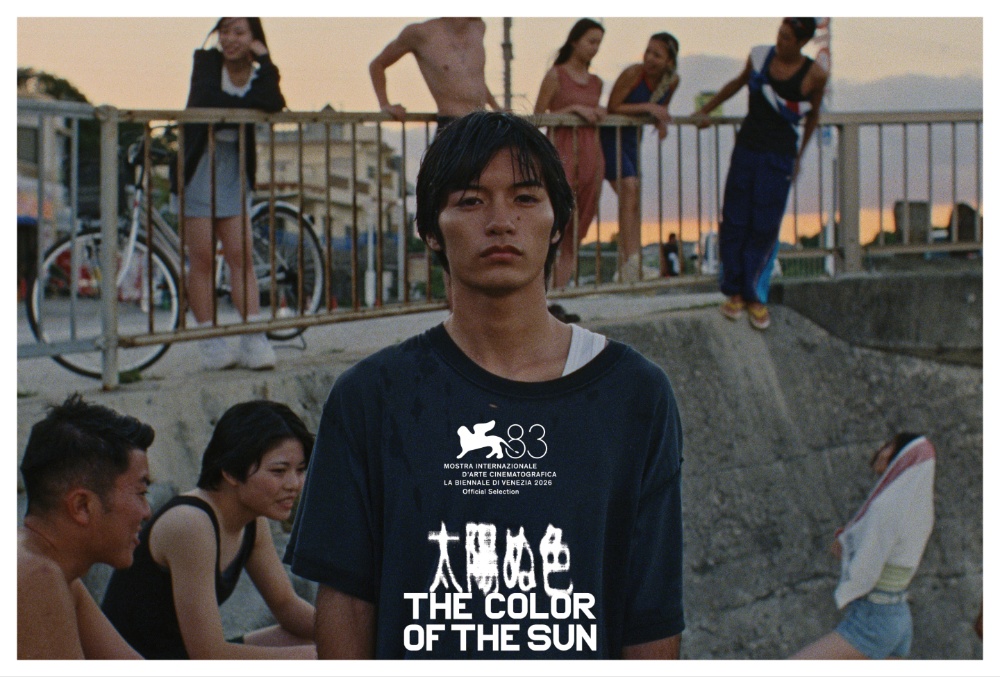
On 17 July 2026, Variety reported that Paris-based sales outfit Inwave Films has acquired international rights to Time and Tide, the debut feature from filmmaker Vee Shi. The film, a hybrid work blending documentary and fiction, world premiered in competition at the Sydney Film Festival and is now positioned to travel to festival programmers and buyers outside Australia.
The pick-up is a small but instructive data point in how festival-circuit debuts get monetised. Time and Tide arrives with the kind of credential a young sales agent can take into a market, a competition slot at a respected A-list festival, a clear stylistic identity, and a director with a point of view rather than a packaged-IP package. Inwave’s bet is that those ingredients translate into territory presales and, eventually, theatrical life in cities where the film’s themes, coastal life, displacement, labour, already resonate.
What the deal actually covers
The Variety report frames Inwave’s role narrowly: international sales. That distinction matters. Inwave is not a distributor and is not acquiring production or remake rights; it is the intermediary that will pitch the film to festival selection committees, national distributors, and television buyers across Europe, Asia, and the Americas. Australian distribution, in practice, will be handled separately, usually by the producer’s own team or a domestic specialist.
The hybrid format, part observational documentary, part staged drama, is one of the harder categories to monetise because it confuses traditional acquisition logic. Pure documentaries sell on broadcast, educational, and streamer non-fiction slates; narrative features sell on cast, director profile, and genre. A film that sits between the two has to be sold on the strength of its images and its subject, which is exactly the kind of film a boutique sales outfit like Inwave is built to handle.
The Sydney credential
Sydney has, over the past decade, repositioned itself as a launchpad rather than a finishing line. A competition slot at the Sydney Film Festival is no longer a domestic handshake; it is an entry ticket to the autumn European festival calendar, to Toronto and Rotterdam follow-ups, and to the kind of slow-burn critical attention that can carry a film for two years after its premiere. Time and Tide is the kind of title that benefits disproportionately from that runway: small-scale, location-bound, dependent on a director’s eye rather than on star wattage.
For a first feature, the Sydney competition credit is the line on the poster that signals the film has been vetted by a curatorial jury rather than self-selected into a market sidebar. That distinction does most of the work when Inwave walks into a buyer’s office.
Where Inwave fits
Paris-based sales companies occupy a specific niche in the European film economy. They are smaller than the legacy majors, StudioCanal, TF1 Studio, Pathé, but more willing to take risks on first-time directors and formally adventurous work. Inwave’s catalogue, by its own positioning, leans toward festival-bound titles from the Asia-Pacific and francophone worlds that need a European foothold before they can clear the noise of the larger markets.
The structure is unglamorous but durable. Inwave takes a sales commission on territory deals; the producer retains copyright and creative control; the film travels festival by festival, accumulating reviews and broadcast interest until a critical mass of offers justifies a coordinated release. For a debut feature like Time and Tide, that pathway is often the only realistic one, too small for a major studio’s international arm, too distinctive for a non-fiction streamer to acquire as catalogue filler.
Counterpoint
The optimistic read is that a hybrid documentary from a first-time director has cleared its first commercial hurdle and is now positioned to find audiences abroad. The pessimistic read is that international sales deals at this scale often deliver modest numbers, a handful of territory presales, a broadcast window in two or three countries, a streamer pickup that pays out modestly against the production budget. The sources do not specify the financial terms of the Inwave agreement, and acquisition fees for festival-bound debuts are typically not disclosed. What can be said is that Inwave’s involvement puts the film in front of a buyer network it could not reach from Sydney alone.
What to watch next
The next two industry checkpoints will determine whether the deal converts into actual screenings. European autumn festivals, Venice, San Sebastián, and IDFA in particular, are the realistic next stop for a hybrid nonfiction title with a Sydney competition credit, and any further selection there would materially strengthen Inwave’s negotiating position with broadcasters. A theatrical release in Australia, separately negotiated, would be the clearest signal that the film has crossed from festival curiosity to small-scale commercial proposition. The Variety report does not specify either, but both are now the obvious next questions for the producer’s team.
This desk frames festival sales pickups as commercial infrastructure rather than as art-world news: the deal is the story, and the art is the asset.