Eight ships a day: how a US naval blockade throttled the Strait of Hormuz
Traffic through the world's most important oil chokepoint has fallen to eight confirmed crossings a day, as the US Navy enforces a blockade against Iranian shipping and confronts vessels in the waterway.
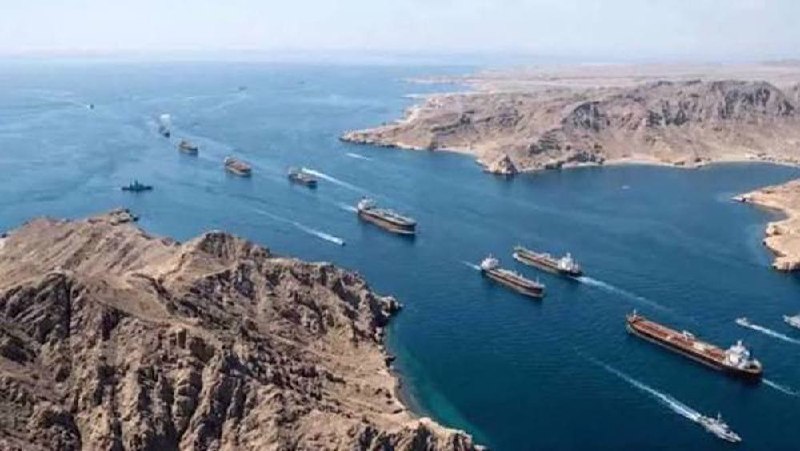
Eight ships crossed the Strait of Hormuz on Wednesday. The figure, confirmed on 17 July 2026 by Iranian state-affiliated outlets Fars News and the Fars News International feed, marks the lowest single-day traffic the chokepoint has registered in three weeks. Hours later, a damaged vessel, its crew heard on radio speaking Farsi, drifted in the same waters after the US military disabled it for what one Telegram channel said was a violation of the American naval blockade.
The two datapoints sit on top of each other for a reason. A blockade is not announced with a press release so much as imposed with a hull and a helicopter. By Thursday afternoon, the cumulative effect was visible: traffic through the strait, which ordinarily carries a fifth of the world's seaborne oil, had thinned to a trickle. The narrowing of the waterway is the policy. The floating hulk with Farsi-speaking crew is the price.
What eight crossings means in a normal week
Maritime tracking data routinely logs between 50 and 80 vessel transits a day through the strait in peacetime, with peaks during periods of high crude-export demand from the Gulf. A figure in single digits is not congestion. It is absence. According to Fars News, the 16 July count represented the lowest reading in roughly three weeks, suggesting a step-change rather than a typical seasonal dip.
The cause cited by the same Iranian outlets is a US naval blockade, a posture that converts a free-flowing commercial artery into a controlled corridor. Commercial insurers respond to that posture by raising war-risk premia or withdrawing cover entirely. Owners respond by routing around the strait via longer Cape of Good Hope voyages, or by holding tonnage in port. Either choice costs money. Both reduce the number of hulls seen from the Iranian coastal radar stations that Fars News and Farsna rely on for their daily counts.
The result is a self-reinforcing loop. A blockade signals risk. Risk drives up the cost of transit. Higher costs thin out traffic. Thinner traffic validates the original reading. By the time the loop is visible in a single-day count, the political decision has already been made; the eight-ship number is the trailing indicator, not the signal.
The disabled vessel and what a blockade looks like in practice
The reporting from the RN Intel Telegram channel, timestamped 15:56 UTC on 17 July, described a damaged vessel in the strait, with Farsi-speaking crew audible on radio traffic and a US military attribution for the disablement. The post framed the incident as enforcement of the blockade. The vessel's flag, owner, and cargo were not specified in the channel's short item, and the same source's geography of attribution, Farsi on the radio, points to an Iranian-registered or Iranian-crewed ship.
Two things follow from that single incident. First, a blockade is not a passive perimeter. It is a sequence of stops, boardings, warnings, and, when a vessel refuses to heave to, the application of disabling fire. The waterway's geography, only 21 nautical miles wide at its narrowest on the shipping lanes, makes interception technically straightforward; the operational question is not capability but rules of engagement and political tolerance for visible escalation.
Second, the visibility matters. Telegram channels that aggregate AIS and radio traffic now publish near-real-time snapshots of incidents in contested waterways. That compresses the information cycle for governments and for shipowners. A captain weighing whether to transit on Friday morning is reading the same Farsi-radio audio and the same eight-ship count that diplomats in Washington, Tehran, and the Gulf monarchies are reading.
Reading the Iranian framing without dismissing it
The traffic collapse is reported almost exclusively by Iranian state-affiliated outlets, Fars News, Farsna, and the Fars News International feed, all of which have an interest in framing the blockade as a humanitarian and economic strangulation. The framing is editorial, but the underlying numbers are drawn from radar and AIS data that other maritime watchers corroborate. Even granting a hostile framing, a single-digit daily transit count is extraordinary. The structural point survives the editorial wrapper.
Tehran's strategic interest in publishing the figures is also worth naming plainly. Iran wants the blockade to read, in the court of regional opinion and in the chancelleries of oil-importing Asia, as a US-imposed cost imposed not on Iran alone but on every tanker carrying crude from the Gulf. The traffic numbers, when paired with images of a damaged Iranian-crewed hull, do that work without a press conference. They convert an enforcement action into an incident with witnesses.
That does not mean the numbers are wrong. It means they are selected. Monexus treats the Fars-affiliated reporting as primary evidence of what Iranian state media says is happening, not as an unmediated description of what is happening, and finds the count itself credible on the underlying data while flagging the framing as Iranian state editorial.
The structural read: a chokepoint as policy instrument
The Strait of Hormuz is the world's most consequential oil chokepoint because the geography is unforgiving. There is no second strait of equivalent depth and width serving the Gulf's northern export terminals. When tanker traffic is interrupted, the substitution is not another route but more oil on the market from producers outside the Gulf, more strategic petroleum reserve drawdowns in importing countries, and a sustained risk premium on every barrel that does move.
A naval blockade by the US military in that context is a policy instrument of a particular kind. Unlike sanctions, which work through the financial system over months, a blockade acts on the physical movement of a commodity within days. Unlike air strikes, which destroy a target and end, a blockade is an ongoing operation that requires continuous naval presence and continuous decision-making about which hulls to stop and which to let pass. It is closer to customs enforcement than to warfare, but with frigates.
That is the structural pattern worth watching. The blockade makes the chokepoint itself a lever. Whoever controls the rules of passage controls, in effect, a tax on every barrel of Gulf crude. The traffic data released by Iranian state outlets is, in that sense, a measure of how tightly that lever is being pulled on a given day. Eight ships on 16 July means the lever is being pulled hard.
What remains uncertain and what to watch next
The single most consequential unknown is duration. Naval blockades of major oil routes have a short political half-life because of the global price impact and the diplomatic pressure that follows. If traffic remains in single digits for a second consecutive reporting day, the question shifts from enforcement to political viability, both in Washington and in the Gulf capitals whose own exports are collateral damage.
The disabled-vessel incident will also draw attention. If the vessel is formally identified and a flag state protests, the incident acquires a diplomatic cascade. If it disappears from the record, the question of accountability remains. Either path produces pressure on the blockade's rules of engagement, and pressure on rules of engagement is what changes the count of eight.
The counter-narrative to watch is the simplest one: that the traffic collapse is partly voluntary. Some owners will have decided, on their own commercial judgment, that war-risk premia make the transit unprofitable at current freight differentials. If that share is large, the blockade is less a stranglehold than an accelerant on a private exit already underway. Distinguishing the two is hard in real time and easy in hindsight. The next forty-eight hours of AIS data, published quietly by the same Iranian outlets that are loudly reporting the blockade, will tell.
Desk note: Monexus is reporting the 16 July traffic collapse using Fars-affiliated primary data while flagging the framing as Iranian state editorial; the disabled-vessel item is sourced to a single Telegram channel and is treated as an initial account pending independent corroboration.
Wire provenance
This editorial synthesis draws on the following public wire/social posts:
- https://t.me/farsna/
- https://t.me/FarsNewsInt/
- https://t.me/rnintel/
- https://en.wikipedia.org/wiki/Strait_of_Hormuz
- https://en.wikipedia.org/wiki/Energy_in_Iran