Rocafonda's prodigal son: Yamal carries Spain's hopes into a World Cup final shadowed by fitness doubts
A working-class Barcelona neighbourhood and a Sunday final in New Jersey collide, as Spain's teenage star trains apart from Pedro Porro and Argentina waits.
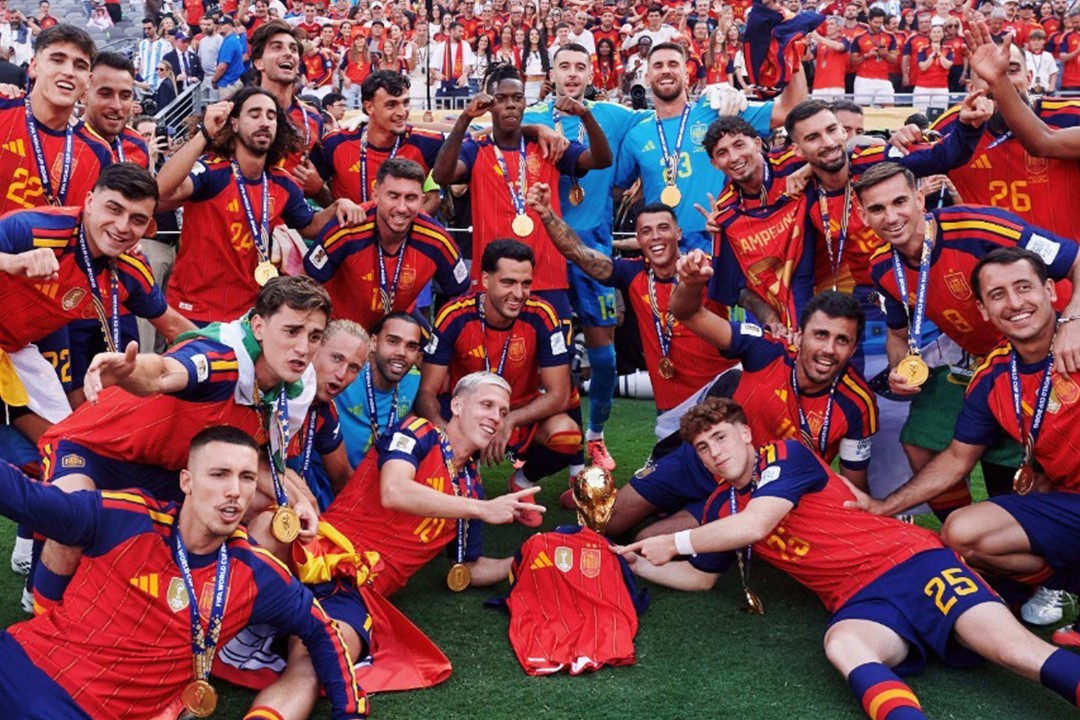
At 14:15 UTC on 17 July 2026, in Rocafonda, the working-class district outside Barcelona where Lamine Yamal grew up, residents and young players were already gearing up in Spain's red ahead of a World Cup final against Argentina. Reuters, reporting from the neighbourhood on the eve of the match, captured a sentiment that has become routine across Spanish football this summer: pride, disbelief, and the slow absorption of a teenager into national mythology.
By Sunday, when Spain and Argentina meet in New Jersey for the FIFA World Cup 2026 final, the question is no longer whether Yamal belongs on this stage. The question is whether his legs will carry him there. Spanish outlets reported earlier on 17 July that Yamal and Pedro Porro had trained away from the main group, an image that, on the morning of a final, carries more weight than any tactical briefing. A team built around a 17-year-old cannot afford to lose him in the warm-up.
The boy from Rocafonda
Rocafonda is not a place Spanish television tends to dwell on between Champions League montages. It is a dense, multi-storey Catalan neighbourhood on the fringes of Mataró, an hour up the coast from Barcelona, and it has produced, against the odds, one of the most gifted footballers of his generation. Reuters' dispatch from the district on 17 July records local players and residents expressing a pride that mixes the personal with the political: a teenager from a working-class estate now stands between Spain and a World Cup.
That framing matters. Spain's national team has spent the last decade smoothing out the rough edges of its image, swapping tiki-taka cosseting for a faster, more vertical game that suits a winger who can drop a shoulder past two defenders and pick out a cross from anywhere in the attacking third. Yamal is not a metaphor for that change. He is the change. A player who debuted in La Liga as a 15-year-old and who, by the time of this tournament, has carried Spain's attacking line through the knock-out rounds with the kind of authority the senior forwards around him could not manufacture.
The neighbourhood angle also carries a Global South inflection that European football journalism often flattens. Rocafonda's demographics skew Moroccan, Senegalese, Equatoguinean, and Latin American, a fact that Spanish papers have begun to treat as texture rather than anomaly. A Spanish attacking line led by a player whose family ties run to Equatorial Guinea is not a curiosity; it is the actual composition of the squad. Reuters' reporting from the district frames Yamal's emergence as the local story it is, without insisting on the sociology lecture that English-language outlets tend to bolt on.
The shadow over the squad
The pre-final picture darkened by mid-morning UTC. LiveMint's wire on 17 July at 05:43 UTC, citing Spanish training reports, said Yamal and Pedro Porro had trained separately from the group, raising concerns over their fitness for the final in New Jersey. Porro, the right-back who has been one of Spain's most reliable wide players this tournament, going absent in the same training session is the kind of detail that immediately draws the eye.
Spain's medical and coaching staff will make the call. The wire did not specify the nature of either player's issue, only that they were held out of the main session. There is a routine calendar of late-tournament knocks in any major tournament, and managers tend to disclose as little as possible until the line-up is printed. What the report does is reset the odds: a Spain XI without Yamal is a different Spain, one that loses its primary chance-creation axis and forces the coach to push Nico Williams or Dani Olmo into wider, more isolated roles.
Argentina, for their part, enter the final having seen off the Netherlands in the semi-final with the kind of composure their 2022 run foreshadowed. Their defensive shape, organised around a back three that has tightened as the tournament progressed, looks built to absorb exactly the sort of pressure Yamal generates. The duel, if it happens, will be one of the most-watched individual matchups of the tournament.
A final the calendar does not need
The fixture itself is a gift to broadcasters and a stress test for the players. Spain and Argentina have not played a World Cup final against each other since 2014, when a stoppage-time Götze goal decided a famously physical match in Brazil. Twelve years on, the contest carries a different weight: Spain's identity as a possession-first side has been rebuilt around directness, and Argentina have evolved from the Messi-anchored structure of 2022 into a more collective unit, with younger forwards rotating around a still-central talisman.
The 2026 final is also the first played under the expanded 48-team format, and the first staged across North America. The politics of that, from US visa arrangements for foreign fans to the ticketing disputes that have dragged through the tournament, sit outside this match-up. What matters on the pitch is whether Spain can convert the open-play dominance they have shown through the knock-out rounds into the kind of controlled, vertical football that breaks a disciplined Argentine low block.
Stakes beyond the trophy
For Spain, a win would be their second World Cup, and a validation of the post-2016 rebuild. For Argentina, a third would extend Lionel Messi's international career on the highest possible note and complete a narrative arc that began with the 2022 triumph in Qatar. For Yamal personally, a final at 17, regardless of result, confirms a trajectory the sport has rarely seen.
The structural point underneath the fixture is older than both teams. Football's centre of gravity has been migrating for a generation, away from the Western European leagues that once defined the game's commercial and tactical elite and toward a more plural map that includes South American academies, North African migrant communities in Spanish suburbs, and a global player market in which a teenager from Mataró can be the most valuable attacker on the planet. Rocafonda is not a footnote to that story. It is the story, told in concrete and clay and concrete-block apartment blocks, that the final on Sunday will inherit whether Yamal starts or not.
The fitness picture will clarify in the next 24 hours. The geopolitics of the fixture will resolve itself on the pitch. What will not change is the photograph Reuters filed on Thursday: a neighbourhood decked out in red, watching one of its own walk towards a World Cup final with the rest of the world following behind.
Desk note: Monexus frames this fixture through Rocafonda first, the medical bulletin second, and the global talent map third, rather than the inverted order that has dominated Anglophone previews of the final.