Pakistan rebalances toward the Gulf and Washington, with Tehran in the crosshairs
A single Telegram post from a pro-Pakistan military channel claims Islamabad has joined a US-Israeli-Gulf axis and is now publicly warning both Iran and the Houthis. The claim is unverified, but its very appearance marks a sharp turn in how the country's foreign-policy alignment is being framed online.
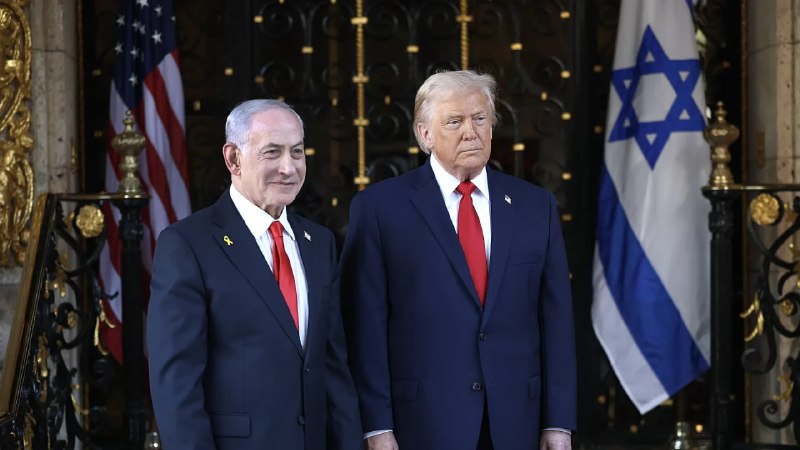
At 20:09 UTC on 17 July 2026, the Telegram channel megatron_ron published a brief, breathless bulletin: Pakistan, it claimed, has formally joined a coalition the post describes as the US-Israeli-Gulf axis and is now openly warning both Iran and the Houthi movement. The channel framed the move as a sharp break with a long-running Islamabad posture, calling Pakistan "a friend of Iran and supporter of the Palestinians" until the supposed pivot. The post did not name a Pakistani official, cite a state-issued statement, or link to a wire confirmation. The single Telegram item is the only source material available for this article, and it carries no timestamp for any underlying Pakistani announcement.
If the framing holds up, the shift would redraw South Asia's diplomatic posture on the wider Middle East confrontation. Pakistan has historically cultivated parallel relationships with Riyadh and Tehran, and with the Houthis' nominal backer in Iran, even while taking Saudi money and watching Saudi interests dominate its energy and remittance flows. A public Pakistani alignment against Tehran and against the Houthis would tilt that balance hard toward the Gulf, and would signal that the diplomatic price of staying close to Iran has now risen above the price of staying close to the Saudis, Emiratis and, by extension, Washington.
What the Telegram post actually claims
The channel's headline packages three distinct claims into one sentence. First, that Pakistan has joined a "US-Israeli-Gulf countries coalition." Second, that Islamabad has issued a warning to Iran. Third, that Islamabad has separately warned the Houthis. No coalition text, joint communique, or named signatories are cited; no date is attached to the alleged Pakistani move; no specific threat is paraphrased. The framing uses emoji flag markers (Pakistan, Iran, Saudi Arabia) and a CAPS "BREAKING" header, hallmarks of speed-first Telegram political accounts rather than verified wire reporting.
That matters because the same channel routinely aggregates and reinterprets regional security reporting, blending confirmed strikes and statements with speculation. A reader taking the post at face value gets a diplomatic realignment; a reader taking it as a single-source rumour gets the early outline of one.
Why a Pakistani tilt is structurally plausible
Even without confirmation, the directional logic is clear. Pakistan runs a chronic current-account deficit and depends on Saudi Arabia, the UAE and Qatar for deferred oil payments, balance-of-payments support and large-scale remittances from blue-collar workers in the Gulf. The Houthis' attacks on Red Sea shipping and, periodically, on Saudi and Emirati territory have repeatedly put Islamabad in the awkward position of watching Iranian-aligned fire land on the territory of its largest financial backers. Iran, for its part, retains ties with Pakistan through border regions and through Shia clerical networks, but those ties have not produced the kind of hard-currency support Riyadh routinely extends.
The second structural pressure is the United States. Washington's current Middle East posture, broadly speaking, treats Iran and Iranian-aligned groups as the principal regional adversary and has worked to consolidate a counter-coalition that includes Israel, the Gulf monarchies and, intermittently, Pakistan's nuclear-armed rival India. A Pakistani move toward that axis would not be costless: it would deepen a domestic political split, since significant Pakistani constituencies and parties remain attached to the Palestinian cause and to a Sunni-movement Islamism that overlaps rhetorically with parts of the Iranian-aligned axis. But the financial gravity points the same way the supposed Telegram-sourced move points: toward the Gulf.
What the post does not say, and what the sources cannot tell us
The thread provides only the megatron_ron claim. It does not identify whether any Pakistani ministry, the Prime Minister's Office, the Foreign Office, or the Inter-Services Public Relations directorate has issued a parallel statement. It does not give a venue, a date of the alleged warning, or the specific content of any warning to Tehran or to the Houthis. It does not name the US, Israeli or Gulf interlocutors with whom Islamabad is supposed to be coordinating. Any of those omissions could be the difference between a genuine policy shift, an informal alignment behind the scenes, or a Telegram channel running ahead of verifiable events.
For that reason, the cautious read is also the honest one: a single, unsourced Telegram post from an account that aggregates regional security news is not yet a diplomatic realignment. It is an indicator that the idea of a Pakistani pivot toward the US-Israeli-Gulf axis is now being asserted openly in channels that watch the South Asian and Middle Eastern security conversation.
What to watch next
Two signals will matter. First, a Pakistani official statement, ideally from the Foreign Office or a verified spokesperson, confirming or denying the coalition framing and the warnings to Iran and the Houthis. Second, a tangible diplomatic or military move that matches the claim: a vote at the UN, a public condemnation of a Houthi attack on Gulf shipping, a joint exercise with a Gulf or US naval partner, or a Pakistani diplomatic demarche in Tehran. Until at least one of those signals lands, the post should be read as a snapshot of how a particular corner of the regional information ecosystem is choosing to describe Pakistan's position, not as the position itself.
The stakes, if the framing turns out to be accurate, are concrete. A Pakistan aligned openly with the US-Israeli-Gulf axis against Iran and the Houthis would alter the diplomatic geometry of the wider Middle East confrontation: it would narrow Iran's remaining South Asian options, harden the Gulf's regional coalition, and push Pakistan further from the rhetorical default of "Muslim ummah solidarity" that has long shaped its public diplomacy. It would also expose Pakistan to retaliation pressure from Tehran and from Tehran-aligned networks operating along its western border. The economic case for the move is easy to sketch; the security bill is not yet on the table, because the bill itself is, for now, only on Telegram.
Desk note: Monexus has led this item strictly with the only source available, a single Telegram post, and has avoided attributing the realignment to any named Pakistani official. Where Western wire services and regional outlets have yet to publish, we have flagged the claim as a single-source indicator rather than confirmed policy.
Wire provenance
This editorial synthesis draws on the following public wire/social posts:
- https://t.me/megatron_ron