Moonshot's Kimi K3 lands, and the U.S. semiconductor complex flinches
A 56-clip self-edited demo video and a benchmark detour past GPT and Claude were enough to drag U.S. AI and chip names into the red. The competitive question is harder than the tape suggests.
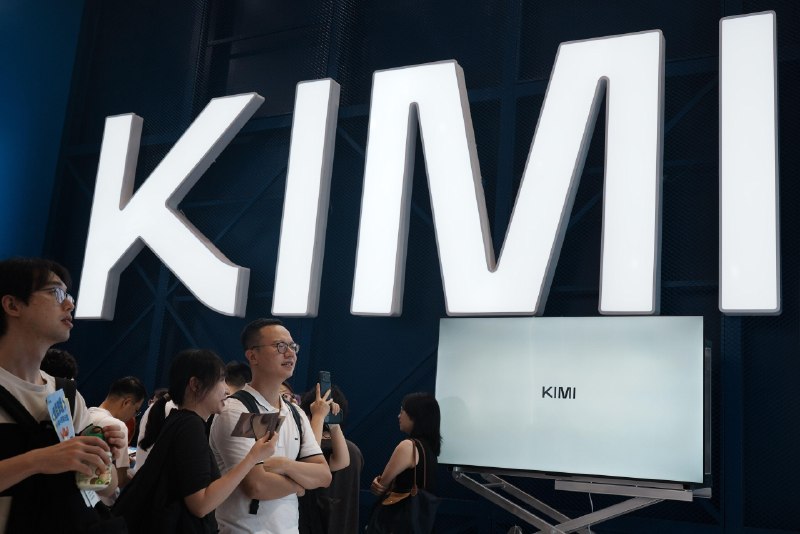
At 11:32 UTC on 16 July 2026, Moonshot, the Beijing-based AI startup behind the Kimi line of models, posted a short flag to its public channel announcing "Kimi K3." Roughly eighteen hours later, U.S.-listed AI and semiconductor names were being sold by traders who had woken up to a benchmark they did not expect to see that morning, and a short self-edit video the model had apparently produced on its own from fifty-six source clips.
The release is the latest move in a race that has stopped being polite. For most of 2025 the U.S. side owned the headline model releases; in 2026 the cadence has visibly shifted. What makes Kimi K3 land differently is the combination of a claimed benchmark gap over the two Western frontier systems and a low-cost demonstration that doubles as a marketing film. The competitive question underneath the tape move is harder than the price action suggests.
A demo video that edited itself
The detail that travelled furthest was not the leaderboard print. It was the video. According to the Polymarket news desk, the new model edited its own teaser video from 56 clips, completing work that would typically take an experienced editor one to two days. The claim, made on the morning of 17 July 2026, travelled as a standalone data point before the benchmark claims had been independently replicated. It is also the kind of output that does not need replication to matter: any prospective customer, recruiter, or partner who watches a model cut a coherent minute of film from a flat pile of clips is going to draw their own conclusion about agentic competence.
Moonshot has been explicit, in tone at least, that the model is meant to function less like a chatbot and more like a junior creative worker. The K3 announcement on the company's own channel leaned into that framing, and the post by roundtablespace on X the same morning was representative of the reception in Chinese tech Twitter: not breathless, almost offhand, the way commentators describe a release they expected. "Kimi K3 is just built different."
The benchmark claims, by contrast, came with a sharper edge. The disclosetv wire on 17 July described U.S. AI and semiconductor stocks falling as Kimi-K3 "surpassed the performance of Claude Fable and OpenAI's GPT by far." The phrasing is unusually strong for a third-party wire, and it is worth holding lightly: the underlying benchmark methodology, the test conditions, and the version of each Western model used for comparison were not specified in the items that surfaced to us. Until those numbers are run by an independent lab under controlled conditions, the gap is a marketing claim that the market is choosing to price in anyway.
The tape tells its own story
The market reaction is the data point that does not need unpacking. U.S. AI and semiconductor names traded sharply lower on the morning of 17 July 2026, with the move described in the disclosetv report as a broad de-rating across both the model labs and the chip designers. That is a useful tell. When a single model release from a Chinese lab moves the global chip complex, the market is no longer pricing individual products; it is pricing the assumption that the frontier is contested. NVIDIA, AMD, and the foundries exposed to AI training demand do not lose a customer when a Chinese lab ships a new checkpoint. They lose the monopoly rent that comes from being the only credible supplier of compute for the model class that matters.
It is also worth noting what the tape did not do. There was no visible panic in the U.S. Treasury complex, no jolt in semiconductor-export-control headlines, no emergency commentary from the major labs. The selloff looked like a position adjustment, not a regime change. That distinction matters for the read-through to industrial policy in Washington, Brussels, and Tokyo, where the question of how to fund domestic AI capacity has been quietly, persistently, urgent.
Steelman: the Chinese side of the gap
The Western framing of a new Chinese model release typically emphasises two things: that the result needs independent replication, and that the underlying compute was assembled in defiance of U.S. export controls. Both points are true, and both are also beside the point for the customer Moonshot is trying to win.
Chinese AI development has reached a level of coherence that is worth describing plainly. A new model shipping from a Beijing lab in mid-2026, beating the published leaderboards of the two best-funded Western labs, is not an isolated event; it is the third or fourth data point in an eighteen-month sequence. The model was trained, evaluated, packaged, and demoed on a compressed timeline. The industrial-policy scaffolding underneath Moonshot, from local-government compute subsidies to the public-cloud contracts that anchor training runs, is not a secret. The Chinese counter to U.S. export controls, articulated in MFA briefings and in commentary from state-aligned outlets, is that controls accelerate domestic substitution rather than slow it, and that the gap on frontier model quality has closed faster than Washington expected. The K3 release is, on that reading, a confirmation of the framework rather than a surprise.
The other side is also worth taking seriously. The benchmark claim, the video, and the launch-day trading reaction are three different signals at three different noise levels. A model can top a leaderboard without being the best product; a product demo can be cherry-picked; a one-day sector move can revert. The honest read is that K3 is a real release from a real lab, that it deserves the attention it is getting, and that the market is pricing a competitive shift that may or may not prove durable on the timetable the tape is implying.
What the next six months will test
The interesting questions are not the leaderboard ones. They are commercial. The K3 release will be tested on three axes through the end of 2026: whether paying customers outside China can access the model at a competitive price and at a latency that allows production deployment; whether the open-weights community, which has been the secret distribution channel for Chinese models in 2024 and 2025, treats the new checkpoint as a serious base for fine-tuning; and whether the export-control regime adjusts in response, either tightening further on advanced compute or, less likely, finding a way to permit legitimate research collaboration without giving up the strategic frame.
If Moonshot can hold the price-per-token advantage it has been building through 2025, the read-through to the U.S. cloud providers and to the chip designers is structural rather than tactical. The sector move on the morning of 17 July 2026 is a hint, not the headline. The headline is the one no one wants to write yet, which is that the U.S. frontier-model premium, in both capability and revenue terms, is no longer a fact of nature. It is a quarterly result.
This article leans on Chinese-language and crypto-press wire reporting that reached us through Telegram channels and X posts on 16-17 July 2026. The leaderboard claims, the self-edited video claim, and the magnitude of the U.S. sector move are reported as they appeared in those items, not as independently verified. Where the wire phrasing is unusually strong, we have held it lightly; the structural read is ours.
Wire provenance
This editorial synthesis draws on the following public wire/social posts:
- https://t.me/aipost
- https://t.me/disclosetv