Matt Damon at 55: The Working Man's Auteur Who's Outlasted the Brand
Variety's run-down of his 13 best performances lands the same week a writer who made the 1997 model work publicly wrestles with what the next chapter means. The throughline is not stardom. It is craft.
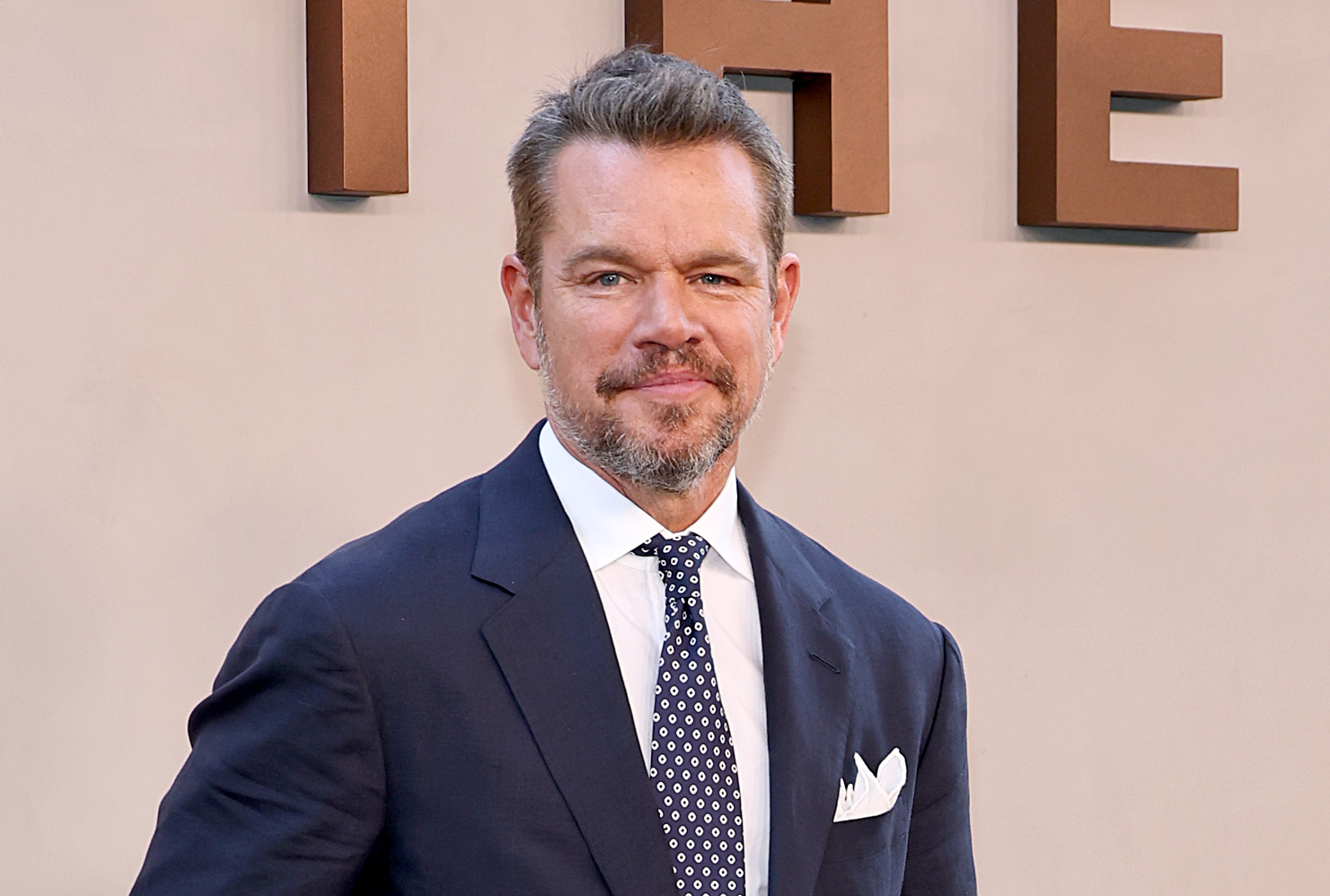
On 17 July 2026, Variety published a ranking of the thirteen best performances of Matt Damon's career, framing the actor, now 55, as one of the defining leads of his generation [1]. The list is the kind of exercise trade papers run when a subject has accumulated enough work to be argued about on substance rather than celebrity: the math genius, the Greek king, the Bourne identity, the oil-rig foreman, the stranded astronaut. Damon has been a working actor in the strict sense for three decades, and Variety's editors used the round-number birthday of his breakthrough year, 1997, to take inventory.
The Variety list is less a coronation than a map of what an A-list Hollywood career actually looks like once the tabloid metabolism has moved on. Damon's filmography splits roughly into two parallel tracks: the populist blockbusters that funded the smaller, more argumentative projects (Good Will Hunting, The Rainmaker, Syriana, The Martian, Ford v Ferrari), and the indie work where he was allowed to fail quietly. He has been a quiet but durable counter-example to the modern star economy, in which a handful of performers extract the overwhelming share of cultural oxygen, and the rest of the working cast competes for scraps.
A career built on doubling
What Variety's tally makes legible, when read end to end, is that Damon's signature move has always been doubling. He plays a man who is two things at once: brilliant and stuck, ordinary and exceptional, working-class and aristocratic, exposed and protected. The Bourne series turned that doubling into an industrial franchise. Will Hunting turned it into an Oscar. In Oppenheimer, the same year as much of his recent prestige work, the doubling was between the man who built the bomb and the man who tried to take it back.
The doubling also shows up in his production choices. Damon co-founded Pearl Street Films, a production banner that has prioritised blue-collar dramas and procedural stories (Promised Land, Manchester by the Sea as financier, Stillwater) over the franchise-extension logic that has swallowed most of his peer group. The brand, to the extent there is one, is restraint.
Why the list lands now
There is a market reason trade outlets are running these lists in the summer of 2026. Theatrical attendance has stabilised at a level below the pre-pandemic peak but above the panic lows of 2023 and 2024, and studios are increasingly using legacy IP as a release valve: sequels, reboots, reunions, anniversary reissues. A retrospective of an actor who has been quietly competent across all three phases of modern Hollywood, the late-studio-system indie era, the post-9/11 prestige decade, and the streaming-age franchise consolidation, becomes a way to measure what the industry has actually gained and lost in the transition.
The Variety ranking also lands in the same news cycle as ongoing contract negotiations between the Screen Actors Guild and the major streaming platforms over residual payments for films made under the 2023 contract's interim period. Damon has not been a public voice in those negotiations, and Variety does not put him at their centre. But the implicit argument of a career-retrospective list, that sustained craft outlasts the churn, is itself a position in the current debate about who gets to keep working.
The structural read
Hollywood's middle has been hollowing for the better part of a decade. The number of mid-budget adult dramas being greenlit has fallen, the number of stars under long-term first-look deals has fallen with it, and the cohort that survives is increasingly bifurcated between the franchise-anchored few and the character-actor many. Damon's career is a partial exception because he runs in both lanes simultaneously, and because he can attach himself as producer to the kind of material the studios themselves no longer fund without a star guarantee. The retrospective list, read structurally, is a record of one of the last mid-budget careers still operating at full volume.
There is a less flattering reading available. Damon's choices have often tracked what the industry calls four-quadrant appeal: the projects tend to be male, white, technocratic, and reasonably sentimental. Variety's list does not foreground this; mainstream retrospectives rarely do. The counter-frame is that an actor's job is to take the roles offered, and that the structural absence of, say, a robust mid-budget pipeline for women and actors of colour is a problem for the studios and the agencies, not for the working actor. Both readings can be true at once, and the trade press has generally declined to choose between them.
What stays and what moves
The interesting question for the second half of 2026 is whether the Damon model is replicable. The combination of A-list paydays underwriting personal projects, of partnerships with directors (Steven Soderbergh, Paul Greengrass, Ridley Scott, Christopher Nolan) that survive commercial disappointment, and of production control at the Pearl Street level, requires a kind of patience that the current studio structure is not obviously rewarding. The next twelve months will test whether the streaming residual fight settles in a way that lets mid-budget dramas get financed again, or whether the four-quadrant logic tightens further.
What is clear from Variety's tally is that the work itself is durable. Thirteen performances, three decades, no scandal-driven reappraisal required. The list is not a celebration. It is a ledger.
, Monexus framed this not as a celebrity milestone but as a working case study in how mid-budget careers survive the streaming transition; the Variety list is treated as the trade's own retrospective data point rather than as the news itself.