Iran's strikes on Jordan hit US troops; the strategic question is what comes next
Iranian strikes on at least two Jordanian bases wounded several US service members this week, according to CBS News, sharpening the question of whether the administration's retaliation stays calibrated or escalates.
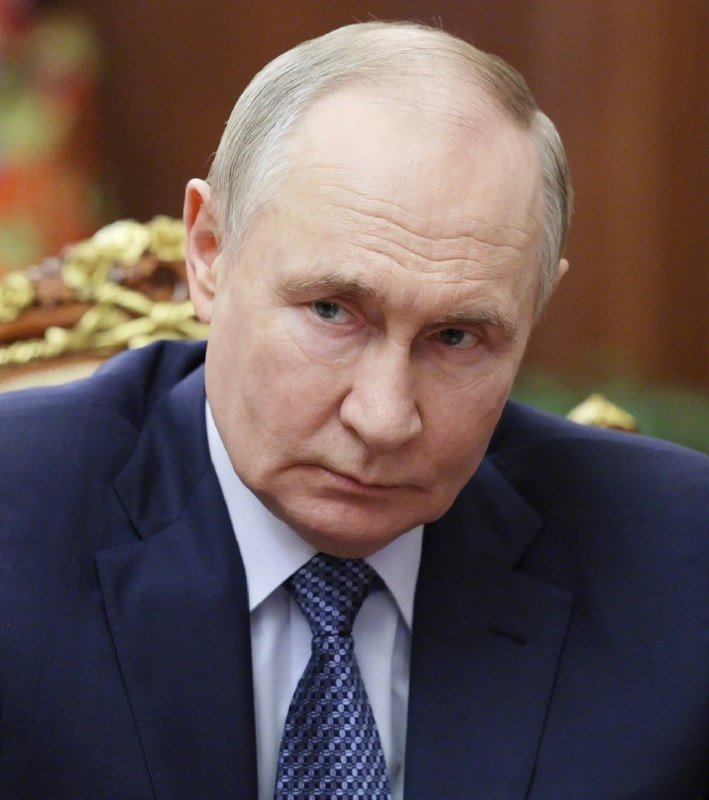
Iranian strikes hit at least two military bases in Jordan this week and wounded several American service members, CBS News reported on 17 July 2026, turning a long-running shadow war into a more visible one and forcing an immediate reckoning in Washington over how, and how far, to respond.
The strike is the clearest sign yet that Tehran is willing to translate its regional posture into direct attacks on US positions hosted by a key Arab partner. Jordan hosts some of the most consequential US forward infrastructure in the Levant. An Iranian willingness to test that posture, and a reported willingness to absorb casualties in doing so, resets the calculus for an administration already managing a multi-theatre Middle Eastern portfolio and a grinding war in Gaza and Lebanon. What changes now is not whether Iran is willing to escalate; it is whether Washington's response is bounded or expansive.
What the reporting says, and what it does not
The basic claim is consistent across four wire pickups over a roughly ten-minute window on 17 July 2026. CBS News, cited by Telegram channels IntelSlava and War Footage Witness, and amplified by Insider Paper and the Iranian outlet Tasnim, reports that Iranian attacks struck at least two military bases in Jordan this week, and that several US service members were injured when one of the facilities was hit. Tasnim's write-up, translated from Persian, adds that American officials announced at least two deaths; CBS's own framing, as relayed by the Telegram channels, says no American or Jordanian fatalities have been reported.
That contradiction is the article. One version of the same evening's reporting carries a death toll; the other does not. Until CBS publishes on the record and names which bases, which units, and which figures are confirmed, every downstream claim is necessarily provisional. The four telegram channels are essentially amplifying the same CBS report; Tasnim's addition of fatalities has the texture of Tehran pushing the body count upward, a recurring feature of Iranian state-aligned reporting after its own operations. The structural move is to over-claim inside Iran and under-claim inside the US.
Why Jordan, and why now
Jordan is not a battlefield. It is the connective tissue: airspace shared with Iraq and Saudi Arabia, ground access to Syria and Israel, and a quiet, decades-old US basing arrangement that lets Washington project into the eastern Mediterranean and the Gulf without owning a permanent footprint in either. Strikes there are not strikes on a participant in the current war; they are strikes on the architecture. By hitting a host-nation facility, Tehran forces the response to be either a calibrated retaliation against Iranian assets (the option that preserves the existing architecture) or a wider campaign that risks dragging Jordan, and by extension the Gulf air corridor, deeper into a confrontation its sponsors hoped to manage from the edges.
Three things make the timing legible. First, Iran has spent the last year signing defence understandings with Gulf states and positioning itself as the indispensable security partner of the eastern Arab world; a strike on Jordan fractures that posture. Second, Washington's Middle Eastern portfolio is unusually crowded, with Israel-facing decisions stacking on top of decisions about Iraq and Syria, all of them running through Jordanian airspace and territory. Third, the Iranian economy is under sustained pressure but the regime's external toolkit, missile production and proxy coordination, has been the substitute for the diplomatic leverage it has lost. Strikes like this one are the substitute acting out.
The counterpoint
The dominant Western framing reads this as Iranian escalation. The Iranian framing, as carried by Tasnim and the wider state-aligned press, reads it as retaliation for an unstated but ongoing American role in Israeli operations and in pressure on Hezbollah in Lebanon. Both readings are partial. A more useful third reading is that this is signalling at the joint, not at the public: a message that Iran can reach US soldiers in countries that are not formally at war with anyone, and that the ceiling of that capability is no longer theoretical. If that is the message, the response that minimises long-term damage is the one that demonstrates a capacity to absorb the strike and then strike a specific, named Iranian asset in a way that Tehran's own doctrine treats as admissible. Anything larger swings the joint toward a war the US domestic and political base has not voted for, and that Gulf partners have spent two years trying to keep off their soil.
Stakes and the next 72 hours
Three concrete things to watch in the next 72 hours. First, whether the Pentagon confirms casualty figures on the record and whether the count matches CBS's reported wording or Tasnim's translated addition. Second, whether Jordan issues a public statement or stays silent; a public Amman acknowledgment of victim support is a political signal that Tehran read correctly, and that Jordan expects compensation. Third, whether the administration's response reads as a target list (specific Iranian assets, specific times) or as a posture (forces repositioned, sanctions designations accelerated, a coalition notified). Target lists are escalatory in form but bounded in duration. Postures are de-escalatory in form but can outlast the administration that ordered them.
The wider pattern is the one regional wars keep confirming. Architecture (bases, air corridors, host-nation agreements) is more valuable than territory, and strikes on architecture are cheaper than ground campaigns but more expensive than anyone admits. Whoever leaves the architecture intact on 20 July 2026 will have written the region's rules for the next quarter.
The sourcing is thin and that should be said plainly. Four telegram channels, two of them running CBS copy and one (Tasnim) running its own framing, do not constitute a verified casualty ledger. Confirmation from US Central Command, the Pentagon, or the State Department on the record would close the gap, and at the time of writing none had appeared.
Desk note: Monexus kept the framing inside what the four wire pickups can sustain. The contradiction between the CBS-carried and Tasnim-carried casualty figures is preserved in the body rather than resolved, on the principle that an unresolved contradiction is more useful to readers than a smoothed-over one.
Wire provenance
This editorial synthesis draws on the following public wire/social posts:
- https://t.me/intelslava
- https://t.me/JahanTasnim
- https://t.me/insiderpaper
- https://t.me/wfwitness