Iran's Red Sea play: Tehran tells Houthis to stand ready as energy shock deepens
A Reuters dispatch on 17 July 2026 says Iran has asked Yemen's Houthis to prepare to close the Bab el-Mandeb. The directive lands on top of what one commodities reporter called the worst energy supply disruption on record.
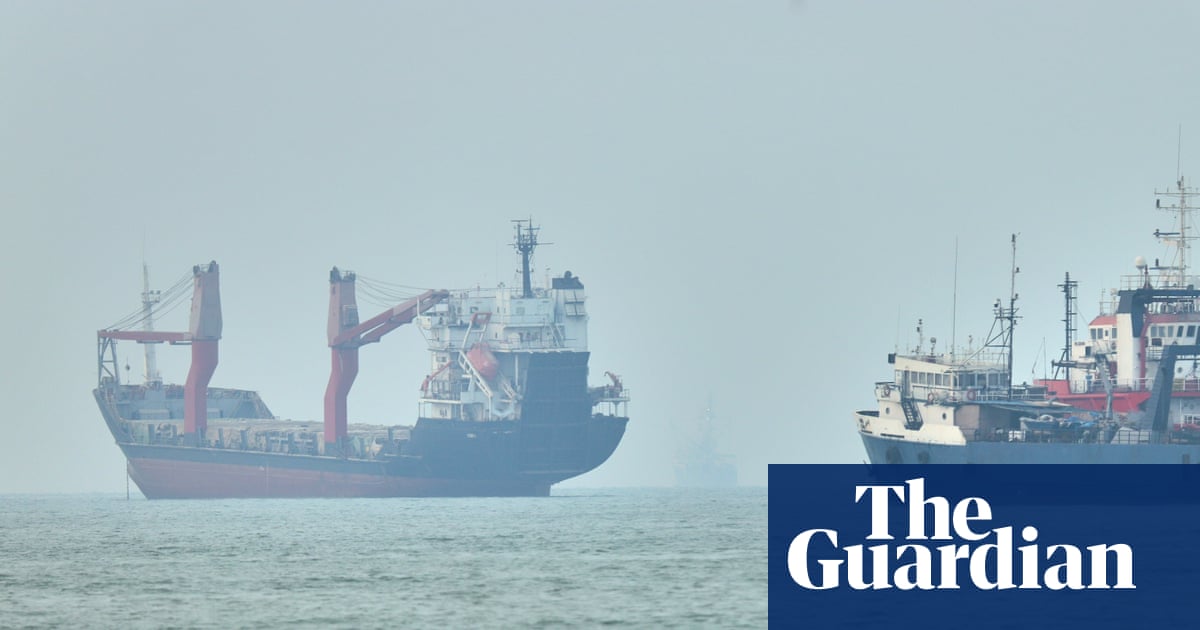
On 17 July 2026, Reuters reported that Iran has asked Yemen's Houthi movement to stand ready to close the Red Sea gateway. The warning landed inside commodities markets already strained by what Reuters correspondent Simon Webb described as "the worst energy supply disruption in history." The Indian Express, picking up the wire on the same day, framed the move as a potential Red Sea blockade and began mapping the route from a single Iranian directive to diesel prices in Mumbai and Rotterdam.
The story is not just another shipping scare. It is a deliberate signal from Tehran that the energy weapon, dormant in Western capitals for most of the post-2015 period, can be reactivated on demand, and that the geography of supply can be repriced in a single weekend.
What Reuters actually reported
The Reuters dispatch, circulated on X at 13:15 UTC and again at 14:45 UTC on 17 July 2026, attributes the directive to Iranian authorities and characterises the request as preparatory rather than executed. Webb's framing is unambiguous: a closure of the Bab el-Mandeb would "severely exacerbate" an energy market already operating outside its post-pandemic norms. The follow-up Indian Express explainer, published at 14:52 UTC, treats the directive as the trigger for a blockade scenario rather than the blockade itself. The distinction matters. As of the publication window, no Houthi action had been confirmed; the news is that Tehran has chosen this moment to ask.
The ask itself is structurally revealing. The Houthis have, since late 2023, demonstrated the capacity to disrupt Red Sea traffic through anti-ship missiles, drone boat attacks, and seizures of commercial vessels. What they have not done, in the publicly documented record so far, is close the strait entirely to commercial transit. A request to "stand ready" suggests Tehran is calibrating, not greenlighting. It is a futures contract on disruption, signed in Persian and posted on X.
Why the timing matters
The energy market Simon Webb references is not a generic market. Through the first half of 2026, refined-product cracks across diesel, jet fuel and marine bunkers have traded at structurally elevated levels, with freight rates for very large crude carriers (VLCCs) rerouting around the Cape of Good Hope adding an estimated two to three weeks of voyage time on Asia-Europe runs. Insurance premiums for Red Sea transits have, in industry surveys, risen by orders of magnitude relative to their 2022 baseline. None of this is new. What is new is the explicit Iranian request to convert a chronic nuisance into an acute event.
Indian Express's framing emphasises the second-order effect: a credible blockade threat, even one that stops short of execution, reprices the entire forward curve. Traders do not need an actual closure to bid up August and September diesel contracts; they need only the probability of one. The request itself is therefore the news, regardless of what happens next.
The structural frame, in plain language
Two facts, often elided, belong in the same sentence. First, the Bab el-Mandeb is a chokepoint without a viable detour for the largest vessels in the LNG and crude trade; the Cape route adds cost, time and emissions. Second, the actor now being asked to operate the chokepoint is a non-state movement whose missile and drone inventory is largely supplied, trained and politically directed from outside its own borders. The structure is familiar. A regional power with limited conventional reach, facing pressure elsewhere in its portfolio, leans on a partner that owns the terrain.
What this tells the rest of the market is that the geography of supply is now subject to political signals delivered through intermediaries. Coverage routinely defers to the language of official spokespeople on both sides, and the substantive analysis tends to be left to commodities desks. The reporting itself is not in dispute. The interpretive frame, however, matters. Read narrowly, this is a shipping story about insurance and routing. Read honestly, it is a story about who gets to move the world's oil, on whose terms, and on what notice.
Stakes, in concrete terms
Three sets of actors will feel this first. Asian importers, led by India and China, source a significant share of their crude and refined products through Red Sea terminals; a credible closure compresses margins at the same moment domestic demand for transport fuel is seasonally high. European buyers, already absorbing the cost of the Cape detour, face a second leg of repricing if LNG and product flows from the Gulf tighten. And the shipping industry itself, with insurers now repricing war-risk premiums on an almost weekly basis, enters a phase where capital allocation decisions are made against a backdrop of binary tail risk.
The Iranian calculus, in this reading, is leverage rather than profit. Tehran does not need the strait closed to benefit from the threat. It needs refiners and traders to believe it can be closed, on demand, with limited warning. The Houthis benefit from continued relevance as the designated operator of that option. Energy-exporting Gulf states absorb the political cost of being seen, again, as the upstream cause of a global price spike. And the United States and its European allies face a familiar menu of bad options: a naval escort regime that scales poorly, a diplomatic channel with Tehran that has been intermittent for years, and a Houthi problem that no air campaign has so far resolved.
What remains genuinely uncertain
Two things the sources do not settle. The first is the actual operational readiness of the Houthi forces to execute a full closure as opposed to the persistent harassment pattern of the past two and a half years; the Reuters dispatch describes a request to "stand ready," not a confirmed order to fire. The second is the precise shape of the Iranian political decision behind the request: whether this is a coordinated pressure tactic timed to ongoing negotiations elsewhere in Iran's portfolio, or a more diffuse signalling exercise aimed at multiple audiences at once. Reuters and Indian Express agree on the event. They do not, and cannot, agree on the motive. That gap is where the next 72 hours of price action will live.
This piece leans on the Reuters world wire and the Indian Express explainer for the directive itself, and treats the commodities-market framing in Webb's quote as the primary analytical anchor rather than secondary colour. The structural reading belongs to this publication.
Wire provenance
This editorial synthesis draws on the following public wire/social posts:
- https://x.com/reuters/status/194649200800000000
- https://x.com/reuters/status/194651900000000000