DeChambeau's two-stroke penalty reshapes the Open's second-round arithmetic at Royal Birkdale
A late-evening walk-back to the fifth green, a two-shot sanction from the R&A, and a leaderboard that no longer reads the way the broadcast suggested it would.
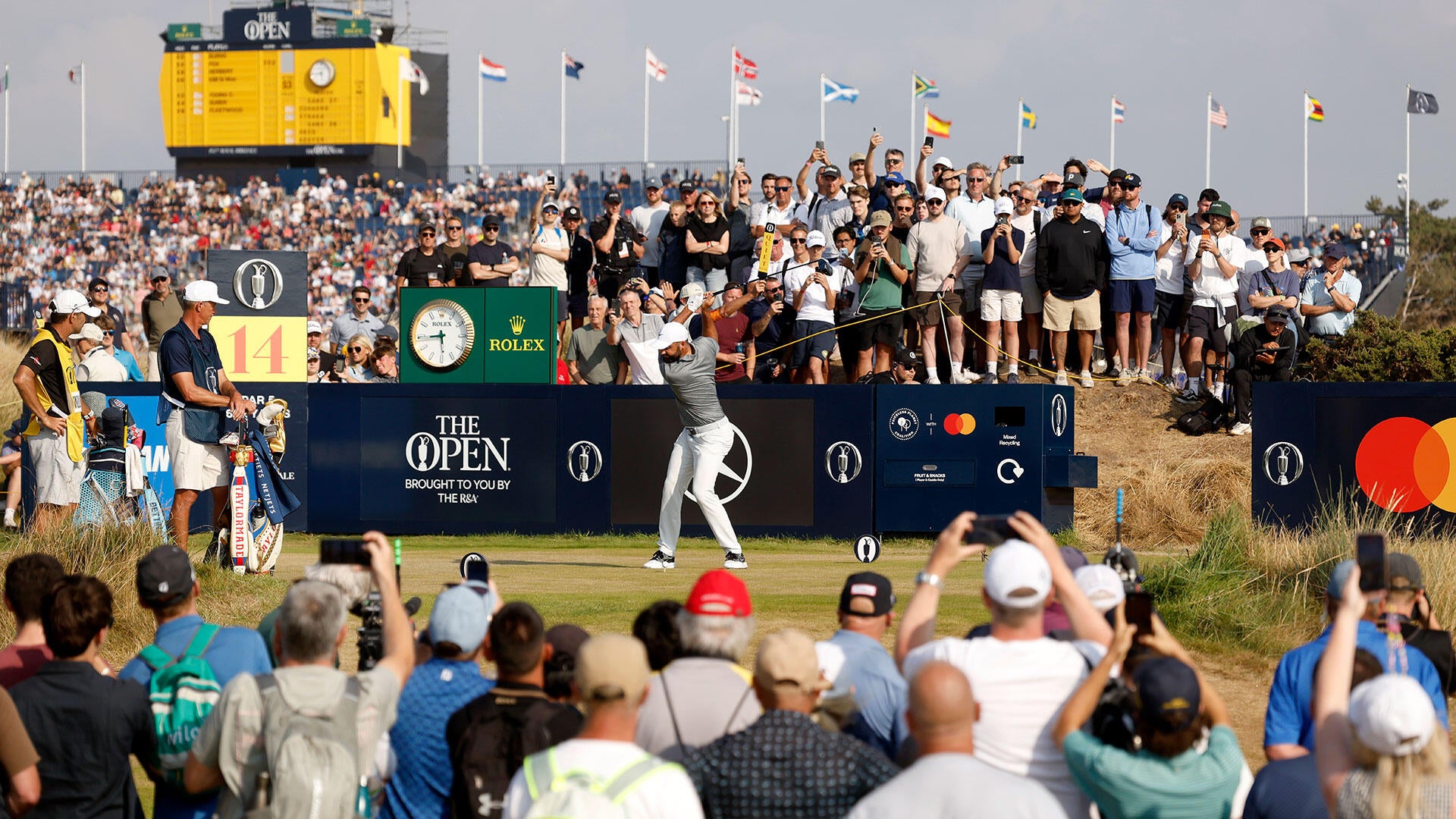
Bryson DeChambeau had already signed for his second round at Royal Birkdale when the R&A summoned him back to the fifth green. The 2020 US Open champion, four strokes clear of the field at that point on the live leaderboard, was assessed a two-stroke penalty under Rule 8.2a for what the governing body classified as an improvement of his lie: stomping down grass behind his ball in the rough after an errant tee shot, an action the R&A deemed had altered the conditions affecting the stroke. By the time officials released the updated scorecard at 20:53 UTC on 17 July 2026, the arithmetic of the 154th Open Championship had been quietly rewritten.
The incident is more than a one-line correction. It reframes the second round as the moment the tournament lost its would-be runaway and gained something rarer: a rules dispute that will be argued over in clubhouses from Southport to Scottsdale for the rest of the summer.
What the rules officials actually saw
The R&A's case rests on a short, unglamorous sequence. DeChambeau's drive on the par-five fifth settled in thick grass short of a cross-bunker. As he walked toward the ball, television footage and on-site observers captured him pressing down the grass immediately behind the lie, a habit familiar from his power-fade warm-ups and a gesture the broadcast team at first treated as incidental. The R&A's rules team did not. Under Rule 8.2a, a player must not improve the line of play or the area of intended stance by moving, bending or breaking anything growing or fixed, except in taking a fairly taken stance. Pressing down grass behind the ball, even briefly, falls inside that prohibition.
The penalty was applied after the round had concluded, which is the procedural point that turned a quiet correction into a public confrontation. Players are entitled to review with an official before signing, but once the card is in, the score stands unless a committee reopens under Rule 20.1b on the basis of new evidence. The R&A invoked exactly that provision, called DeChambeau back to the fifth, and informed him of the two-stroke sanction. CBS Sports reported the call-back at 20:38 UTC; BBC Sport confirmed the penalty thirteen minutes later. ESPN's late-night wrap-up at 22:45 UTC noted that the assessment had stalled what had been a clear Day 2 surge.
DeChambeau's case, in his own words
DeChambeau's reaction, captured by the BBC and CBS pools, was incandescent. He disputed the read of the footage, told officials the gesture was incidental to setting his feet rather than an attempt at improvement, and questioned why the committee had chosen to reopen after the card was signed. The argument has two prongs. First, that the rules of golf require officials to act on what they observe in real time, not on television evidence assembled after the fact, and that reopening the round on that basis creates a precedent players cannot prepare for. Second, that the specific act of pressing grass is so common in modern course management, particularly on links fairways grown thick in a wet British summer, that enforcing it only against a player whose score had drawn attention looks selective.
Neither point is frivolous. The R&A's own guidance on the use of video review is narrowly drawn, and television evidence has historically been admissible only when an official did not see the breach and cannot reasonably have been expected to. The committee's decision to reopen will invite scrutiny of what, exactly, was visible to the on-site rules team before DeChambeau signed.
The leaderboard before and after
Before the assessment, DeChambeau sat at the top of the leaderboard by four strokes. After, he was tied for the lead with the second-round co-leader, with the round of 67 downgraded to a 69 that no longer separated him from the field. The Open's halfway cut, set at the top 70 and ties, swallowed two players inside the original projected number. More consequentially, the three players tied at second overnight now begin the third round one shot, not five, behind a man whose temperament on Friday evening was visibly frayed.
Royal Birkdale's par-fives are reachable, and DeChambeau's length advantage had been the single biggest variable separating him from the chasing pack. Two strokes on a links course are recoverable, often within a single hole, but they are not free. The penalty also costs him a pairing preference: the third-round tee sheet is built on the second-round scores that the card, not the live broadcast, recorded.
Why this argument will outlast the tournament
Rules disputes at majors rarely change the winner. They change the conversation. The Open has not had a penalty-driven controversy of this scale since the anchored-putter debate of 2013, and the difference is that this one turns on a gesture visible to any viewer at home. The R&A will need to explain, on the record and in writing, why a two-shot sanction was applied after the card was signed, and what the threshold is for invoking video review under Rule 20.1b. Players will ask, privately and then not so privately, whether the same footage would have triggered the same call at the back of the field.
DeChambeau will play the third round on Saturday morning under the new score. The tournament will resume. What remains contested is whether the R&A's judgment was correct on the facts, and whether the process by which it was reached is one the rest of the field would accept if applied to them. The sources do not yet resolve that question; only the governing body's post-round statement, when it arrives, will.
This article leaned on CBS Sports, BBC Sport and ESPN wire copy for the sequence, the score change and DeChambeau's on-site reaction. The structural read on Rule 8.2a and Rule 20.1b is this publication's; readers are directed to the R&A's own rules archive for the canonical text.