Caitlin Clark, the WNBA, and the politics of officiating
NBA commissioner Adam Silver says the debate around Caitlin Clark has stopped being about fouls and become something else. The WNBA's biggest star isn't buying that framing.
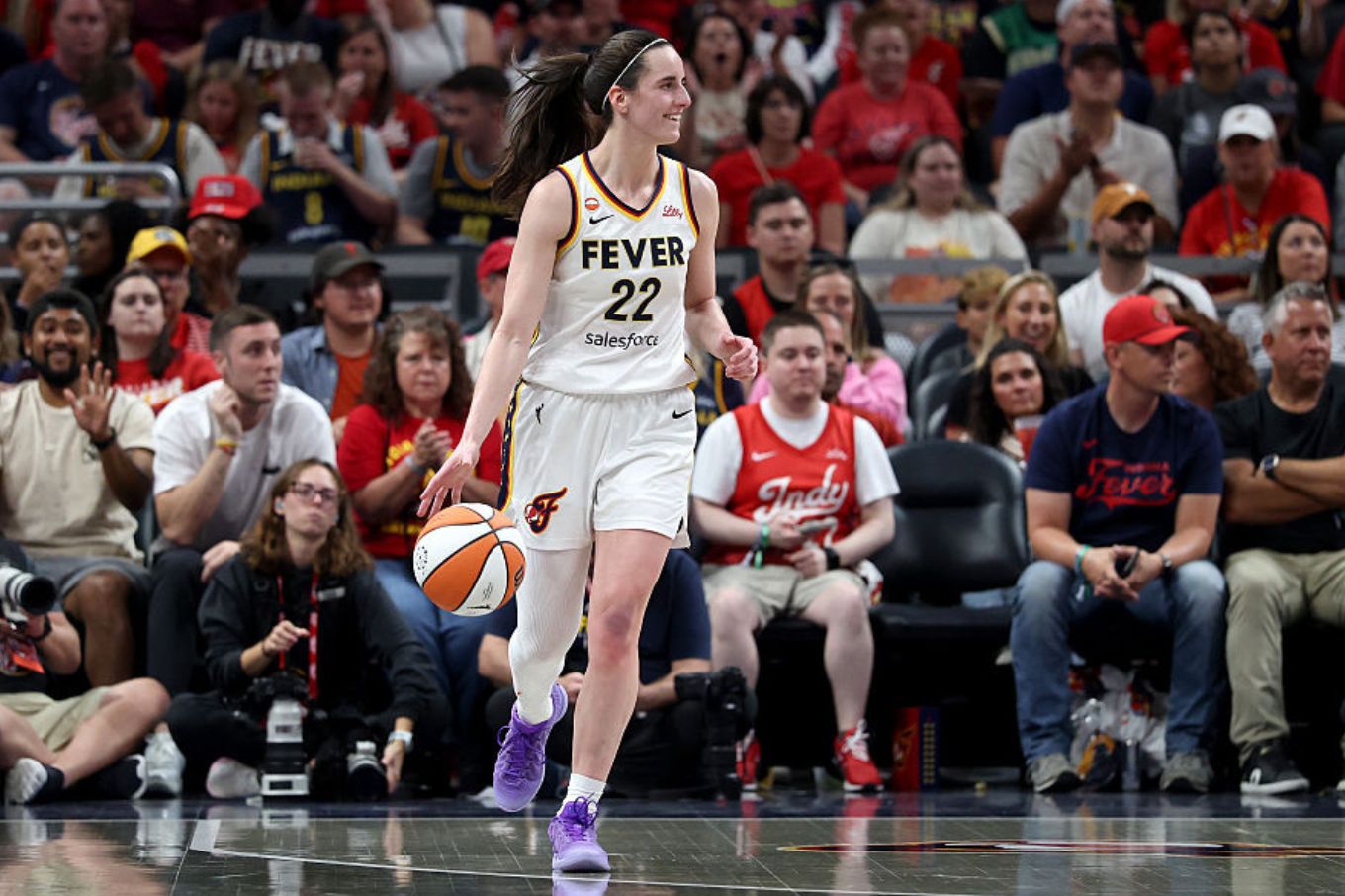
Indiana Fever guard Caitlin Clark stood two feet from referee Gerda Gatling on Wednesday and screamed. The outburst came in the third quarter of a 71–58 loss to the expansion Golden State Valkyries, the kind of result that would have stayed a box score if not for the volume. The Fever trailed by double digits, the whistle kept going the other way, and Clark kept going at Gatling until a teammate steered her away. Two days later, the loudest voice in basketball governance had a diagnosis.
Adam Silver, the NBA commissioner whose league is the WNBA's operator and financial backstop, told reporters on Thursday that the conversation around Clark has stopped being about fouls. It has, he said, become a "political football", a phrase he used twice in the same briefing, the kind of repetition that signals a man trying to close a door that has already been kicked in. The debate "is not largely about officiating," Silver said, in remarks reported by ESPN and the BBC. He did not specify what, in his reading, it is largely about. That is the part worth sitting with.
A star, a standard, and a target
The officiating question is not imaginary. Watch any Clark possession closely and the pattern is visible: defenders crowd her on the catch, forearms across the back, hands sliding into the lane, contact that the league's own rules describe as illegal but referees routinely let go. Clark absorbs more hits per game than any perimeter player in the league, by a margin that is visible without a stopwatch. The Fever's record, hovering below .500 despite a generational talent, is part of the story.
But the part Silver flagged is the layer on top. Clark is a straight, white, midwestern guard who happens to be the most-watched athlete in women's basketball. Every foul she takes and every foul she doesn't get is now a referendum on something, the league's marketing priorities, the racial composition of its fan base, the politics of who gets protected and who gets played rough. The same physical contests that would be Tuesday in a men's game become, in Clark's case, content. That is the dynamic the commissioner is naming, and it is real.
It is also, inconveniently for Silver, partly a story the WNBA built. The league's growth thesis since 2024 has run through Clark's audience. Television contracts, ticket revenues, social-media metrics, sponsorship inventory, all of it has been re-priced around the assumption that she plays, and plays visibly. When the league's own officiating standards fail to protect the asset the business model depends on, the league does not get to claim the debate is politicised and then decline to police the fouls.
What Silver actually said
Silver's comments, carried in a BBC Sport report timestamped 09:27 UTC on 17 July 2026, came against a backdrop of escalating coverage of physical play directed at Clark. The ESPN version of the exchange, timestamped 02:07 UTC the same day, sharpened the framing: Clark has become a "political football" amid debates about officiating and physical play. Silver used the phrase once in his prepared remarks, then again when asked to clarify. He stopped short of saying the WNBA was failing to protect her. He stopped shorter of saying it wasn't.
The omission is the story. A commissioner who believes officiating is incidental does not need to be asked twice. A commissioner who is unsure, or whose officials are unsure, will keep returning to the political framing because it is the framing that does not require him to discipline his own product.
The counter-read
There is a version of this in which Silver is right, and the politically correct version is the one in which he is wrong. Some portion of the officiating conversation is genuinely downstream of culture-war framing. Every missed call against Clark is, on some accounts, treated as evidence of a league that coddles Black veterans and punishes the white newcomer; every missed call for Clark is, on others, evidence of preferential treatment. Both readings exist in the broadcast booth, on the timelines, and in the inbox of every WNBA PR contact. Silver's job, narrowly defined, is to make the on-court product boring. He is telling the public that the on-court product is now the least interesting thing about a Clark game.
That is also a convenient thing to say when your officiating department is under-resourced, when your season is two months shorter than the NBA's, and when the talent gap between stars and role players is wider than the rules were written to accommodate. The structural problem is older than Clark. The structural solution, full-time officials, expanded review, a discipline standard that travels with the player and not with the jersey, is expensive, and the league has spent the last two years spending on marketing instead.
What to watch
The Fever play six of their next nine on the road, including a three-game swing through the Western Conference that will put Clark in front of three of the league's more physical defensive schemes. The WNBA's competition committee is scheduled to meet before the All-Star break. Whether the meeting produces a public statement on physical-play enforcement, or a quiet memo to the crews, will be the most honest read of how seriously the league is taking its commissioner's diagnosis. If the next time Clark is hit across the arms nothing changes, the political football Silver is trying to deflate will be the one he is still holding.
Monexus framed this through the lens of league governance and the gap between marketing strategy and officiating investment. The wire coverage emphasised Silver's "political football" language without pressing him on what concrete officiating changes he would support.