Seventh night of strikes: CENTCOM widens the air campaign against Iran as peace accord signing looms
US Central Command confirmed a seventh straight night of strikes inside Iran on 17 July 2026, hours after announcing that Tehran and Washington had set a date to sign a peace accord.
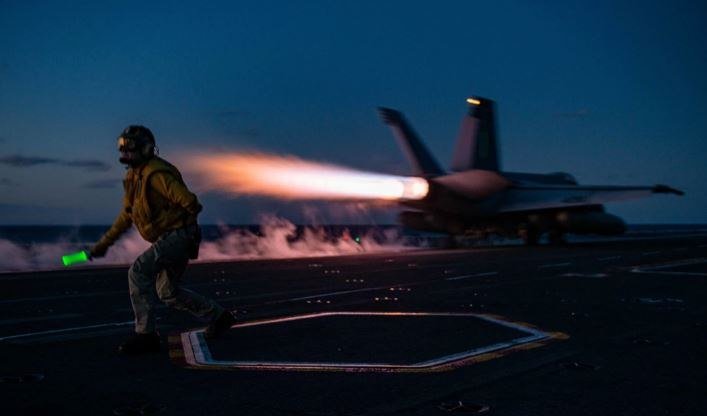
At 20:46 UTC on 17 July 2026, US Central Command confirmed that American aircraft had carried out a seventh straight night of strikes inside Iran, extending a bombardment campaign that had already knocked out seven bridges in the country's south the day before. The announcement landed in the same news cycle in which CENTCOM separately disclosed a peace accord with Tehran scheduled for signing later this month, leaving the war-and-talks track running on parallel rails that few analysts had predicted even two weeks ago.
The arithmetic is unusual. Washington is negotiating a settlement while its air arm continues to degrade the infrastructure of the country it is negotiating with. The sequencing is the story. Understanding it requires separating the two signals CENTCOM has been transmitting: an operational one about what is being hit each night, and a political one about what is supposed to be signed in a few days' time.
What the campaign has actually hit
CENTCOM's overnight statement, distributed via the OSINT-affiliated Instant News Alerts channel on Telegram at 20:46 UTC on 17 July, framed the latest round as part of a continuing effort to degrade Iran's military capability. The previous night's strikes, according to that same channel, destroyed seven bridges in southern Iran, infrastructure that any modern air campaign would treat as logistical chokepoints for armoured and artillery movement.
Middle East Eye reported the same announcement at 20:17 UTC on 17 July, citing the CENTCOM statement directly and pointing readers to its own live blog tracking the parallel peace process. The Middle East Spectator channel on Telegram logged the news at 19:59 UTC, adding a granular caveat the wires had not: no fresh strikes had been recorded on Iran since that morning, suggesting the official CENTCOM statement was a back-fill of operations already flown earlier in the day rather than a brand-new raid in real time. That distinction matters. It tells readers that the public-facing rhythm of "seven nights running" is, at minimum in part, a communications schedule.
The peace accord that nobody is explaining yet
The harder question is the diplomatic one. CENTCOM's own framing, as relayed by Middle East Eye's live blog, is that a peace accord has been agreed in principle and that a signing is set for later this month. The exact date, the venue, the counterpart on the Iranian side, and the substantive contents have not been disclosed in the three source items currently in circulation. There is no Iranian foreign ministry readout in the thread, no third-party guarantor named, no annex describing what happens to Iran's nuclear programme, its missile forces, its proxy network, or the sanctions architecture.
That silence is itself a signal. In any negotiation that has produced a deal worth signing, the lead negotiators usually brief their press ecosystems within hours of the announcement. The fact that the only public-facing account of the accord is a CENTCOM statement carried by outlets that depend on Western wire feeds suggests one of two things. Either the deal is narrow and technical, focused on a single file such as prisoner exchange or deconfliction in the Gulf, in which case the absence of fanfare is consistent. Or the deal is wider but still in the caveating phase, with each side reserving the right to walk back public commitments in the days between announcement and signature. The strikes, in that reading, are leverage designed to harden the Iranian side's negotiating position before its representatives sit down at the table.
How a strike campaign and a peace process run in parallel
The structural reading is straightforward. Coercive air campaigns in the modern US playbook are typically used to set terms before negotiations, not after them. The textbook case is Libya 1986, where strikes on Tripoli preceded a withdrawal of Libyan forces from Chad. The 1998 Desert Fox operation sat between a weapons-inspections crisis and a diplomatic settlement that took another two years to lock down. The 2018 strikes on Syria followed a chemical-weapons incident and were calibrated to leave the Assad regime standing while degrading specific capabilities.
What is happening in the Iran file is more aggressive than any of those analogues. Seven consecutive nights is not a punishment raid; it is a deliberate, sustained degradation of the country's military-industrial and transport base. The destruction of seven bridges in a single night is a logistical operation, the kind of work that takes weeks of target planning and is rarely repeated unless the intent is to render a section of the country difficult to move through for months. The most coherent explanation is that Washington is lowering the ceiling of what a future Iranian government, whatever its composition, can credibly threaten. A deal signed after a week of intensive bombing carries different deterrent weight than one signed before the bombs fall.
The counter-reading is equally serious. It is possible that CENTCOM is sequencing strikes ahead of a diplomatic deal because the military calendar and the political calendar are simply out of sync. Aircraft already loaded for their missions cannot easily be recalled without leaking operational details. Pilots already at readiness execute. Targets already validated get hit. If a deal were to be signed tomorrow, the strikes tonight would still happen because the order to launch them was issued before the diplomatic text was final. In that reading, the campaign is the tail of a decision cycle, not the leading edge of a coercive one.
What to watch before the signing
The credible indicators are narrow. The first is whether CENTCOM publishes a target list for the bridges destroyed on 16 July. Specific bridge names and coordinates would signal that the operation was aimed at dual-use infrastructure with military significance, not symbolic civilian targets. The second is whether Iran's foreign ministry or presidency issues any English-language readout on the deal. Silence past 18 July would suggest Tehran is unhappy with something in the text. The third is whether the Gulf states, particularly Qatar and Oman who have carried shuttle diplomacy in earlier rounds, confirm any role as host or guarantor. None of those signals are present in the current source set.
What the sources do not contain is equally important. There is no Iranian casualty figure, no third-country humanitarian readout, no UN agencies quoted, no Israeli statement despite Israel being the most directly affected regional party. There is no oil-market reaction reported in the thread, even though a sustained campaign against Iranian bridges and military infrastructure, if prolonged, would normally print a risk premium in Brent within hours. That absence could mean the market has priced this in as contained. It could also mean the wire services have not yet filed.
The honest summary is that Washington is publicly bombing Iran and publicly negotiating with it in the same news cycle. Both statements are sourced. Neither cancels the other. Until the accord is signed and its contents read out, the strikes are the only verifiable fact on the ground.
Desk note: Monexus is treating the CENTCOM announcement and the peace-accord framing as separate claims, each carrying the sourcing caveat its provenance requires. The strike count is sourced to CENTCOM via three independent relays (two Telegram channels and Middle East Eye); the peace accord is sourced to the same CENTCOM statement as carried by Middle East Eye's live blog, with no Iranian-side confirmation yet on the record.
Wire provenance
This editorial synthesis draws on the following public wire/social posts:
- https://t.me/s/osintlive
- https://t.me/s/Middle_East_Spectator