Burnham takes Labour's reins, and the UK's seventh PM in a decade inherits a country on edge
Andy Burnham will on Monday become Britain's seventh prime minister in ten years. The handover says more about the state of Westminster than about the man.
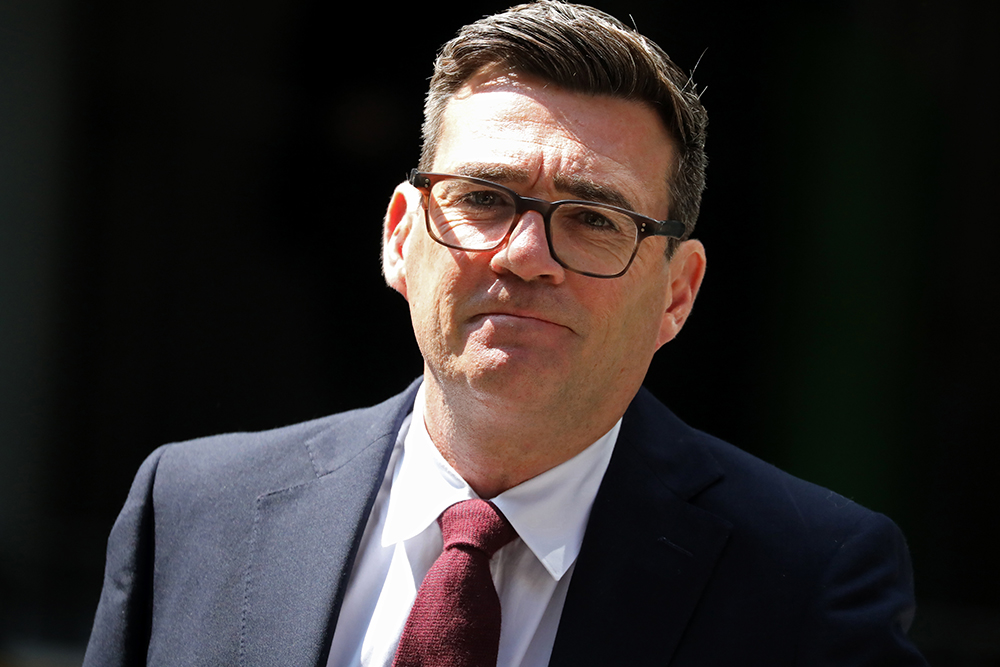
At 15:52 UTC on 17 July 2026, three Telegram monitoring channels carried the same bulletin within ninety minutes: Andy Burnham, the Mayor of Greater Manchester, is the new leader of the UK Labour Party, and will on Monday become the 59th Prime Minister. The New York Times framed the moment in less neutral terms, "Burnham Becomes Labour Leader and Britain's Incoming Prime Minister," noting that he will be "the seventh prime minister in a decade."
That arithmetic is the story. Britain is about to install its seventh head of government in ten years, a churn rate that would have looked implausible at the start of the 2010s. The succession itself, Burnham replacing Sir Keir Starmer as Labour leader and, because Labour still holds a Commons majority, moving straight into Downing Street, is constitutionally routine. What it reveals about the underlying politics of the country is anything but.
A handover that is also an indictment
Burnham's path to the leadership was less coronation than vacuum-filling. A party that has cycled through more leaders than the Conservatives in the same period does not pick winners on momentum; it picks them on exhaustion. The Greater Manchester mayoralty gave Burnham ten years of distance from Westminster's factional weather and a profile built on visible regional delivery: transport, policing, housing. That CV is precisely what a parliamentary party running out of road reaches for when Westminster itself has stopped producing winners.
The framing in the New York Times header matters. It situates the handover inside "political upheaval and economic stagnation," not inside any single scandal or crisis. The British economy has been grinding through the longest stretch of flat productivity growth since the records began, and the public has watched successive occupants of Number 10 exit through the same revolving door: electoral collapse, internal coup, or a slow media siege culminating in resignation. Burnham is, on paper, the answer to that pattern. Whether the pattern survives him is the open question.
What Burnham is not
The Telegram channels that surfaced the story, GeoPWatch and WarMonitors, both running in English on the channel-monitoring side of the platform, treated the bulletin as procedural. The New York Times treated it as a transfer of power at a moment of national strain. Neither source offers much in the way of programme: no cabinet list, no policy manifesto, no concrete first-100-days pledge. The sources do not specify what triggered Starmer's exit or under what internal party mechanism the succession was formalised, and this publication has not seen an official Labour statement naming the timetable.
That gap is the point. Westminster coverage, in the period preceding a leadership transition, tends to flood with leaks, demands for mandates, and contested narratives about legitimacy. This time, the silence is striking. It suggests either a managed internal process that did not need to be sold, or a news environment so saturated with crisis that a prime-ministerial handover does not, on its own, qualify as the lead.
The structural frame, in plain terms
Look at the G7 from 2016 to 2026 and the British churn rate is an outlier. France has had three presidents in that window. Germany three chancellors. Italy, admittedly, has had more, but Italy's volatility is built into its constitutional architecture. Britain has the oldest unbroken parliamentary continuousness in Europe, and yet it has run through seven prime ministers. Something is breaking in the link between voter mandate, party machine, and the Downing Street residence itself.
Two structural forces are doing the work. First, the collapse of the two-party system as a stable coalition-builder: voters who once split between Conservative and Labour now fragment across the Liberal Democrats, the Greens, Reform UK, and the Scottish and Welsh nationalists, with the result that even majority parliaments rest on brittle coalitions of faction. Second, the speed of the modern news cycle: a leader who would once have been given eighteen months to recover from a bad conference speech is now given a weekend. Burnham's relative insulation in Manchester is, in this reading, not a quirk of biography but a survival strategy the system is rewarding.
The counter-read
There is a cleaner story available, and it is the one Labour insiders will prefer. Burnham is a generational talent, the most capable political operator produced by the party in two decades, and the country is lucky to have him at the helm at a moment when grown-up regional governance is what is needed. His handling of the Manchester Arena inquiry aftermath, his pandemic communications, his willingness to pick fights with Whitehall over devolution, these are not nothing. The counter-read holds that the churn is the surface; the underlying continuity of competent centrist government is the substance.
The honest version is that both stories are partially true, and that the balance between them will be settled by events none of the sources can yet see. What is verifiable is the headline itself: on Monday, Andy Burnham becomes the 59th Prime Minister of the United Kingdom, the seventh in a decade, at a moment the New York Times described as one of "political upheaval and economic stagnation." The remaining material, policy direction, cabinet composition, electoral mandate, the question of an early general election, is, for now, absence rather than substance. The story will be what he does with the office. The arithmetic is what the office has become.
Desk note: Monexus framed this handover as a constitutional event whose meaning is carried by its frequency rather than by its particulars. The Telegram channels that surfaced the bulletin treated it as procedural; the wire treated it as a transfer of power under strain. Both framings held, and the synthesis is the article above.
Wire provenance
This editorial synthesis draws on the following public wire/social posts:
- https://t.me/GeoPWatch
- https://t.me/WarMonitors