Bandar Abbas night: what Iran denied, what its own TV reported, and what the silence leaves open
On the evening of 17 July 2026, explosions were reported in Iran's main Gulf port. Iranian state media first denied a projectile hit. Hours later, its own correspondent described the sound of enemy fighter flight overhead.
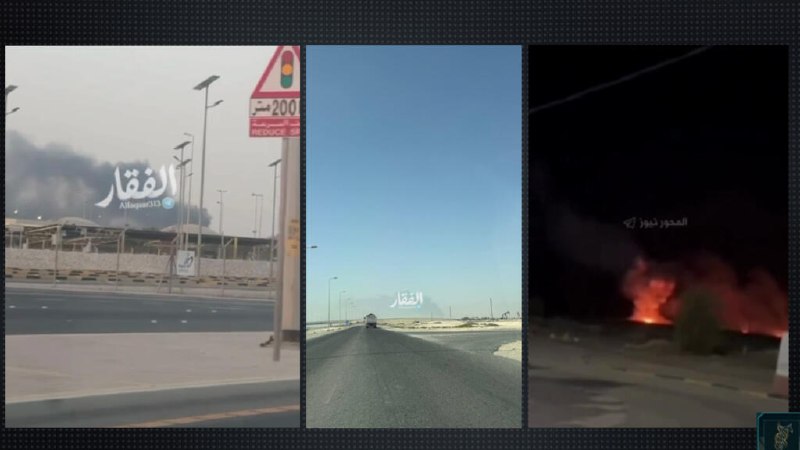
At 20:52 UTC on 17 July 2026, a Telegram channel that tracks Gulf military activity posted that explosions had been heard in Bandar Abbas, the capital of Hormozgan Province on Iran's southern coast and the home port of much of the Islamic Republic's navy. Five minutes later, Iran's official Tasnim news agency, through its Tasnim Plus channel, carried a denial from the Hormozgan governorate: no projectile had been reported to hit the city, and the sounds "probably came from another source." Less than two hours after that, at 22:36 UTC, a Tasnim Plus TV correspondent said live on air that the sound of enemy fighter flight had been heard over Bandar Abbas. By the time the chain of messages ended, the only verified facts were three contradictory statements, all from Iranian state-adjacent channels, none independently corroborated.
The sequence matters less for what it confirms than for what it reveals about the information environment around a Gulf flashpoint. Bandar Abbas is not a marginal target. It hosts the headquarters of Iran's southern naval command, the bulk of its small-craft fast-attack fleet, and a container terminal that handles a large share of the country's non-oil trade. Any strike there, real or rumoured, ripples through global oil markets and through the Strait of Hormuz, the chokepoint through which roughly a fifth of seaborne oil passes. When Iranian state media spends a single evening denying, then partially confirming, then reframing an incident at that location, the gap between the official line and the on-the-ground line is itself the story.
The Hormozgan denial, and what it actually said
The first denial, posted by Tasnim Plus at 20:57 UTC, was carefully worded. It did not deny that sounds had been heard in Bandar Abbas. It said only that "no hit" had been "reported" to the city, and attributed the sounds to "another source." The Hormozgan governorate, the provincial authority that would normally coordinate any air-defence response, was cited as the source of that framing. The distinction is important. A denial of impact is not a denial of incident. In a province that sits under the daily shadow of US Central Command surveillance, naval activity in the Gulf of Oman, and periodic overflights by US and allied aircraft, unexplained sounds are not unusual. What was unusual was the speed at which the denial travelled through Iranian official channels, and the speed at which the denial itself was overtaken.
The initial report of explosions came from wfwitness, a Telegram channel that aggregates Gulf military incidents and has a track record of flagging activity from Yemen, Iraq, and the southern Iranian coast within minutes of occurrence. The report itself was brief: "Explosions reported aswell in Bandar Abbas, Iran." The post did not specify a cause, did not identify an actor, and did not provide imagery. It pointed to Tasnim's earlier denial of an earlier incident, a detail that suggests the channel's editors believed the evening's events formed a pattern worth distinguishing from the day's baseline noise.
The Tasnim Plus reversal
At 22:36 UTC, the picture shifted. According to a live report carried by Tasnim Plus, a TV correspondent in Bandar Abbas stated that "the sound of enemy fighter flight is heard in Bandar Abbas." The phrase "enemy fighter" in Iranian state-media usage refers unambiguously to US or Israeli military aircraft; it is not a term applied to domestic operations or to allied Gulf-state flights. The on-air acknowledgement of combat-air activity over the city, from a state-aligned outlet, was a notable departure from the Hormozgan governorate's earlier framing.
Two readings are available. The first is that an initial denial was issued before Iranian air-defence or military commanders had a full picture, and that the live correspondent's on-air remark reflected later information that a projectile or projectiles had come close enough to trigger audible overflight. The second is that the governorate's "no hit" statement was strategically narrow from the outset, designed to reassure the domestic audience while leaving room for military sources to describe the incident in more direct terms once the operational details were clearer. Either reading places the contradiction inside the Iranian information system rather than between Iranian and external sources, a distinction that matters for how the incident will be read in Washington, in Tel Aviv, and in the Gulf capitals.
What is and is not in the record
Three data points are firmly in the public record as of the time of writing: the wfwitness report of explosions in Bandar Abbas at 20:52 UTC; the Tasnim Plus relay of the Hormozgan governorate's "no projectile hit" denial at 20:57 UTC; and the Tasnim Plus live report of enemy fighter flight sounds at 22:36 UTC. No imagery from the scene has been published. No independent Western wire, no US Central Command statement, no Israeli military spokesperson, and no Gulf-state official has confirmed or denied an incident. No casualty figures, no damage assessments, and no identification of the platform responsible for any overflight have been released by any party.
What the sources do not specify is significant. They do not say whether the sounds were sonic booms, intercept attempts, surface explosions, or munitions impacts. They do not say whether any projectile struck land, water, or a vessel at anchor. They do not name a weapon system, a flight profile, or an operator. Iranian state media's reluctance to name the origin of the activity, beyond the word "enemy," is itself an editorial choice: in the past, Iranian outlets have named US or Israeli platforms within hours of comparable incidents. The absence of such naming, combined with the initial denial, suggests a deliberate effort to keep the incident deniable in both directions.
Why Bandar Abbas, and why this week
The location is not arbitrary. Bandar Abbas sits on the mainland side of the Strait of Hormuz, opposite the UAE port of Sharjah and the Musandam Peninsula of Oman. It is the embarkation point for the Islamic Republic of Iran Navy's fast-attack craft and a staging area for the IRGC Navy's patrol-boat fleet, which has been responsible for seizures of commercial tankers in 2024 and 2025. The Bandar Abbas container terminal, operated under concession by Shahid Rajaee port, handled the bulk of Iran's container throughput and is the terminal of record for the country's sanctioned shipping lines, including those linked to the National Iranian Tanker Company. Any sustained disruption there has immediate consequences for Iran's ability to move goods under sanctions, and for the price of marine insurance across the Gulf.
The week's wider context, beyond what the three Telegram items disclose, also matters. The incident comes against a backdrop of US-Iran nuclear diplomacy that has produced no public breakthrough in 2026, and amid recurring reports of Israeli planning for strikes on Iranian nuclear and military infrastructure that have not been formally confirmed by either government. Gulf states have been pushing, through back-channel diplomacy reported in regional outlets, for de-escalation, while Iran's IRGC Navy has maintained a posture of high operational tempo in the lower Gulf. None of this is in the source items, and it should be treated as context rather than as evidence of causation. What the source items establish is narrower: that something happened in Bandar Abbas on the evening of 17 July that the Iranian state first denied, then partially acknowledged, in the span of a hundred minutes.
The information gap as a Gulf-security variable
The dominant framing of events in the Gulf tends to privilege official communiqués, whether from the Pentagon, the IDF, or the Iranian foreign ministry. That framing has a logic: governments are the only actors with the situational awareness to confirm or deny strikes in real time. But it has a recurring blind spot in incidents like this one. The Iranian state is the only source with on-the-ground presence in Bandar Abbas, and its statements within the first two hours of the incident contradicted each other. External observers are therefore in the unusual position of relying on a single national information system that is, in this case, its own counter-source.
This is not a new problem. The pattern repeats whenever an incident occurs inside Iranian territory, where Western journalists have no access and where Iranian state media is both the primary reporter and a primary interested party. The honest description of what is known at 23:00 UTC on 17 July 2026 is that something audible occurred over Bandar Abbas; that Iranian provincial authorities initially said no projectile hit the city; that a state-aligned TV correspondent later acknowledged enemy fighter flight overhead; and that nothing else has been confirmed. Anything beyond that description is inference.
What to watch over the next forty-eight hours
Three signals will clarify the picture. First, whether Iranian state media issues a consolidated statement, either through IRNA or through a foreign ministry briefing, naming the source of the activity and the operational status of the port and the naval base. Second, whether commercial satellite imagery, of the kind released by Planet Labs or Maxar within hours of comparable incidents, shows damage at Shahid Rajaee or at naval facilities south of the city. Third, whether oil futures, marine-insurance premia for transiting the Strait of Hormuz, or tanker-tracking data show a market response consistent with a kinetic event at the port. Until at least one of those signals materialises, the Bandar Abbas night of 17 July 2026 will sit in the same evidentiary category as several previous Gulf incidents: officially denied at the provincial level, partially acknowledged at the national level, and unresolved at the international one.
The deeper structural point is that the Strait of Hormuz has become a place where the gap between what a state says happened and what its own personnel report having seen is itself a measure of escalation. In a stable deterrence environment, that gap closes quickly and the official line converges with the on-the-ground reality. In an unstable one, the gap widens, and the absence of a single authoritative account becomes a vector for miscalculation on every side. The Bandar Abbas night, in itself small, is a working example of how that vector opens.
Desk note: Monexus framed this against the official denial-first sequence rather than the explosion-first reports, on the reasoning that the Iranian state's own internal contradiction is the most verifiable fact in the record. Western-wire confirmation, Israeli or US attribution, and damage assessment are not in the source material and have not been added.
Wire provenance
This editorial synthesis draws on the following public wire/social posts:
- https://t.me/wfwitness
- https://t.me/tasnimplus
- https://t.me/tasnimplus
- https://en.wikipedia.org/wiki/Bandar_Abbas
- https://en.wikipedia.org/wiki/Shahid_Rajaee_Port
- https://en.wikipedia.org/wiki/Strait_of_Hormuz
- https://en.wikipedia.org/wiki/Hormozgan_Province
- https://en.wikipedia.org/wiki/Islamic_Republic_of_Iran_Navy
- https://t.me/wfwitness
- https://t.me/tasnimplus
- https://t.me/tasnimplus
- https://en.wikipedia.org/wiki/Bandar_Abbas
- https://en.wikipedia.org/wiki/Shahid_Rajaee_Port
- https://en.wikipedia.org/wiki/Strait_of_Hormuz
- https://en.wikipedia.org/wiki/Hormozgan_Province
- https://en.wikipedia.org/wiki/Islamic_Republic_of_Iran_Navy