Argentina reaches the World Cup final, and drags a geopolitical banner with it
A 2-1 comeback over England booked Argentina's place in the World Cup final against Spain, and a Falklands banner at full-time has put a geopolitical row back on FIFA's desk.
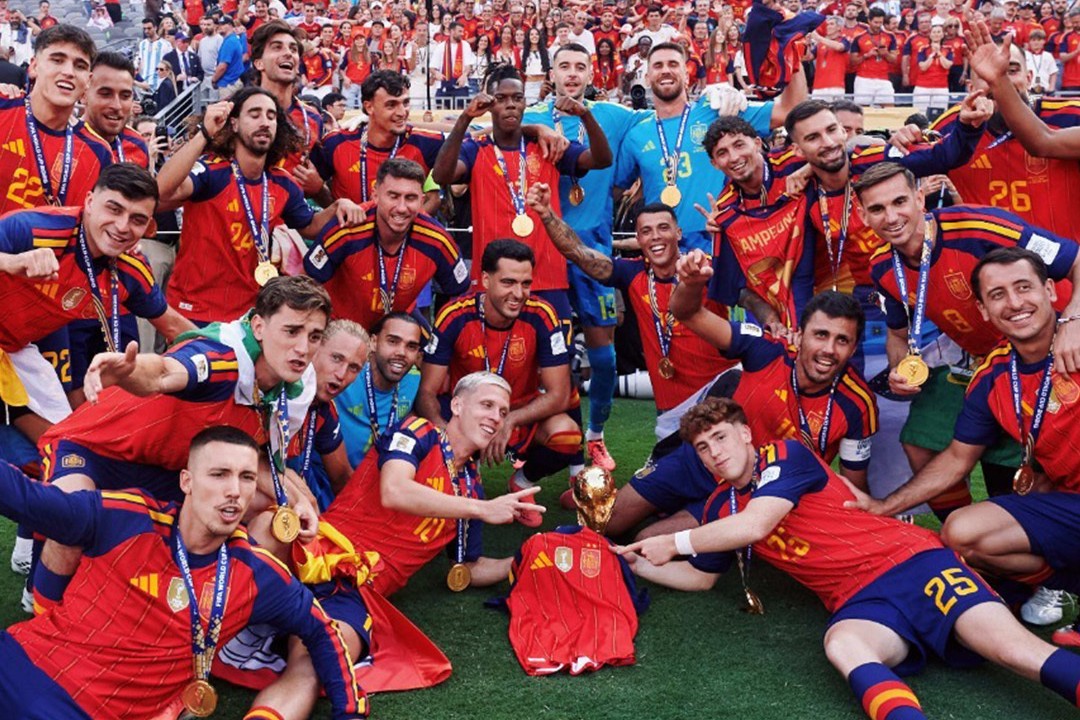
At full time in the 2026 World Cup semi-final on 15 July 2026, Argentina's players did not just celebrate a 2-1 comeback against England. According to BBC Sport, the squad unfurled a banner supporting Argentina's claim to the Falkland Islands, a moment that has put a geopolitical flashpoint back on FIFA's disciplinary desk and guaranteed the build-up to Sunday's final will be louder than the football alone would have made it.
Argentina's win was the headline. The banner is the story, because it forces a tournament organiser, a governing body and two governments to deal with a sovereignty dispute in a competition that is supposed to be insulated from it. The match result earned a date with Spain; the photograph will earn a fine.
A comeback, and a final date
Argentina overturned a one-goal deficit with two late strikes to eliminate England and reach the World Cup final, a result that ESPN described as the defending champions "flipping the script yet again" and booking a chance to retain the trophy against Spain on the final weekend of the tournament. The two late goals produced what ESPN called a "dramatic 2-1 comeback win", and the wire of reaction pieces published across 15 July 2026 treated the result as one of the matches of the competition, with Argentina's experience of winning the previous World Cup cited as the structural reason the side held its nerve once England were ahead.
ESPN's World Cup Daily noted on 16 July 2026 that Argentine fans were still celebrating the result, and a separate piece the same day framed the run-in as a coronation lap ahead of the final. The shape of the bracket, with Spain on the other side, gives Argentina a chance to become the first side in consecutive World Cups since a small group of historic national teams to defend the title in the modern, expanded tournament era, a fact that will dominate the pre-final coverage whatever happens off the pitch.
The banner, and what it costs
According to BBC Sport's report published on 15 July 2026 at 22:37 UTC, FIFA is considering a fine for the Argentine Football Association after players displayed the banner referencing the Falklands, the archipelago Britain has held since 1833 and over which Argentina maintains a sovereignty claim that it has never formally abandoned. The display was brief, the photograph travelled quickly, and the disciplinary question is now procedural rather than political: under FIFA's rules on political symbols at matches, the kind of banner Argentina's players carried carries a financial sanction and not a sporting one, and the fine is therefore a near-certainty rather than an open question.
What is not procedural is the diplomatic echo. Britain's foreign office has, in past cycles of this dispute, treated Argentine references to the Falklands at international sporting events as gestures rather than legal claims, but the visibility of a banner on a global broadcast in 2026, with a World Cup final days away, changes the audience. For Argentine fans inside the stadium and watching from Buenos Aires, the banner reads as continuity with a nationalism that treats the Falklands as unfinished business; for British viewers, it reads as gratuitous provocation in a tournament that England had just been eliminated from. Both readings are accurate. The point is that FIFA now sits in the middle.
The history that travels with the team
Argentina's claim to the Falklands pre-dates the 1982 war, but the war is the event that fixed the dispute in popular memory on both sides of the Atlantic, and it is the war that is invoked, implicitly, every time Argentine players, officials or fans raise the flag in a foreign stadium. The 2026 incident is the latest in a series that includes Argentine World Cup squads honouring the islands in squad photos and on tour, and it lands at a moment when Buenos Aires has had limited leverage to push the issue through normal diplomatic channels. A World Cup semi-final, watched in the hundreds of millions, supplies a different kind of leverage, and the Argentine FA appears to have calculated that the cost (a fine, a reprimand, a headline cycle) is worth the visibility.
The structural read is straightforward. Soft-power contests are increasingly staged in sporting venues, and the room in which they are staged keeps getting smaller: a green-and-white banner, photographed from a tribune, becomes a foreign-policy incident in a single news cycle. The line between patriotic fan display and diplomatic gesture is drawn by FIFA's statutes, but the line between domestic politics and international politics is drawn by the broadcaster.
What FIFA does next
FIFA's room for manoeuvre is narrow. The organisation can fine the Argentine FA, which is the textbook response and the one BBC Sport indicated is most likely; it can open a formal disciplinary file, which escalates the fine but also elevates the incident; or it can treat the banner as a one-off and move on, which would draw criticism from British media and from sections of the British political class. None of the available choices change the underlying dispute. All of them change how the Argentine squad walks out for the final on Sunday.
For Argentina, the calculation going into the final is now layered: a chance to retain the World Cup, a captain under disciplinary cloud, and a federation that has to balance a result that would burnish the country's footballing prestige against a banner that has already put the country's flagging sovereignty claim back in front of a global audience. For Spain, who arrive as opponents without any comparable baggage, the brief is simpler. Win the trophy. Stay out of the photograph.
The final is on the final weekend of the 2026 World Cup, and the trophy will be decided on the pitch. The finer question, about what a national team is allowed to carry onto it, will be decided in FIFA's disciplinary chamber long after the last substitute has been used.
Desk note: Wire coverage of the semi-final concentrated on Argentina's comeback; the banner was the through-line in BBC Sport's report. Monexus frames the incident as a soft-power gesture inside a sporting event, not as either a one-off stunt or a serious legal claim, and flags FIFA's near-certain fine without endorsing either side of the underlying sovereignty dispute.