Zelensky hands the defence portfolio to Ukraine's spymaster-in-waiting
On 16 July 2026 President Zelensky tapped the acting head of the SBU, Yevhen Khmara, to run the Ministry of Defence while parliament considers a permanent appointment, putting the country's intelligence chief in charge of the largest wartime budget in Kyiv.
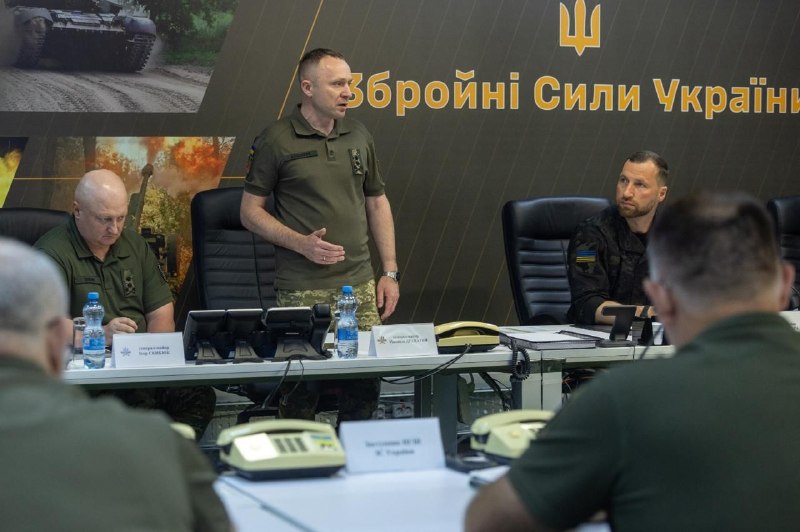
On the afternoon of 16 July 2026, with Ukraine still fighting off a Russian invasion that began more than four years ago, President Volodymyr Zelensky reshuffled the wartime chain of command. He asked Yevhen Khmara, the acting head of the Security Service of Ukraine, to take over the duties of defence minister, and signalled that he would formally request parliamentary approval for the appointment once the required legal procedures had been completed, according to a Kyiv Post official-channel posting at 15:53 UTC and a follow-up from the independent reporter Noel Reports at 16:03 UTC. The third-party war-tracker Clash Report confirmed at 17:23 UTC that Khmara's previous role had been as the acting SBU chief, a detail that places a serving intelligence officer at the helm of the country's largest wartime bureaucracy, with no formally confirmed predecessor in post to take the handoff from.
The move concentrates two of the most sensitive portfolios in Kyiv inside the same office. The SBU combines domestic counter-intelligence with foreign intelligence and runs an investigative remit that touches military procurement, wartime treason cases and the policing of corruption inside the armed forces. The Ministry of Defence, by contrast, manages the budget, the General Staff relationship and the contracts that flow to brigades on the line. Sitting one desk now will be the office that investigates the ministry. That is the simplest way to read the news, and it is also the read that Zelensky's own briefing implicitly endorsed, by leaning on Khmara's counter-intelligence record as the qualification.
The interim minister's actual biography
What the official channels disclose about Khmara is narrow. He was, until this week, the acting head of the SBU, which is itself a caretaker designation inside a service whose formal chief remains vacant by the same template. Zelensky's own framing cited Khmara's experience in "s"-classified work, according to Noel Reports' summary of the briefing; the rest of his career has not been placed on the public record by the office's own communications. That an officer of undisclosed biography has been named acting minister of defence mid-war is itself the fact. Ukraine has not released a curriculum vitae, prior commands or a record of operational tours for Khmara, and the thread coverage from Kyiv Post, Noel Reports and Clash Report contains no further biographical detail beyond the SBU appointment.
The pattern is not new. Ukraine's wartime cabinet has rotated through acting ministers on several occasions since the invasion began in February 2022, frequently with security-service or presidential-office figures sliding into the post while a permanent nominee waits on the Rada's calendar. The official briefings do not name the person being replaced, and none of the three thread sources describe a prior incumbent whose resignation or dismissal triggered the change. The absence is informative: this is not a sacking being defended in public. It is a quiet transition in which an intelligence officer is asked to absorb a procurement-and-command ministry in addition to the running of the SBU.
Why the president is leaning on the SBU
Read in plain terms, the move places an intelligence officer at the head of the institution he has been tasked to police. The SBU's wartime caseload includes investigations into defence procurement, the disciplining of brigades accused of misconduct and the screening of mobilisation practices. Putting Khmara across the desk from those files turns the structural tension inside the portfolio into an asset: the acting minister arrives with institutional knowledge of where the contracts are and where the investigation files run hottest. The president's framing, as relayed by the thread, makes exactly that pitch, citing Khmara's counter-intelligence experience as the relevant qualification.
The counter-read is that no public civilian biography has been supplied. The acting minister will run a budget measured in tens of billions of dollars in Western military and financial aid, will sit across the table from the General Staff, and will be voted on by a parliament that has been operating with its own personnel questions unresolved. None of the thread sources spell out the size of the defence budget or the run-rate of Western support, and none name the General Staff's position on the move. The framing chosen by Zelensky's office sketches a continuity story; the missing biography sketches a different one.
What this changes procedurally
The next visible step is a parliamentary vote. Zelensky has said he will ask the Verkhovna Rada to approve Khmara for the post after the required legal procedures, the same phrasing used for prior wartime appointments and consistent with the constitution's requirement that cabinet members be confirmed by the legislature. Until that vote, Khmara performs the duties in an acting capacity. That bureaucratic phrase matters: it permits the immediate signing of routine documents, the carrying of authority into inter-ministerial meetings and the discharge of functions tied to the wartime command chain, all without the political weight of a permanent appointment.
The procedural gap also creates a window. Acting ministers are the de facto decision-makers and the de jure placeholders. Parliament's calendar and committee referrals set the tempo. None of the three thread items offer a date for the Rada vote; the official phrasing of "after the required legal procedures" is the only sequencing information on the public record. If past practice holds, the parliamentary committee on national security, defence and intelligence will be the venue for the confirmation hearing, and the relevant committee chair will set the timetable. The thread sources do not address that schedule. The transition will run as a presidency-to-Rada motion rather than as a one-day announcement.
What to watch next
Three things become legible in the days ahead. First, the Rada committee agenda: a swift referral signals a parliamentary consensus behind the move; a contested one signals friction inside the president's own coalition on whether a serving intelligence officer should hold the defence portfolio. Second, the General Staff posture. The chief of the General Staff and the commander-in-chief sit on the operational side of the chain; if the acting minister's authority is contested at the operational seam, the friction will surface in the daily briefings. The thread sources do not record any such dispute, and the absence is worth noting rather than assuming. Third, Kyiv's donors. Western capitals fund a large share of Ukrainian defence spending and have shown themselves attentive to the personalities as well as the procurement line items. Whether embassies in Kyiv reserve comment on the acting appointment or read it as routine rotation will set the tone of the aid-flow coverage in late July.
The honest summary is that the public record holds three verified facts: Khmara was the acting SBU chief; Zelensky has asked him to perform the duties of defence minister; and the formal vote will follow the legal procedures prescribed for cabinet appointments. Everything else about the move is reconstruction from those facts and from Ukraine's wartime pattern of acting-minister transitions. Theatrics about the wisdom of the appointment are not in the sources. Neither is a rival claim of who the next permanent nominee might be. The next confirmed beat is the parliamentary referral, and after that, the vote.
Desk note: this article reflects Monexus's standard restraint on personnel coverage from an active war zone. The wire pickup is thin, three Telegram items, and the article confines its claims to what those items verify. No biography has been supplied by the Ukrainian presidency beyond the counter-intelligence framing, and the piece says so rather than reaching.
Wire provenance
This editorial synthesis draws on the following public wire/social posts:
- https://t.me/Kyivpost_official
- https://t.me/noel_reports
- https://t.me/ClashReport
- https://en.wikipedia.org/wiki/Ministry_of_Defence_(Ukraine)
- https://en.wikipedia.org/wiki/Security_Service_of_Ukraine
- https://en.wikipedia.org/wiki/Verkhovna_Rada
- https://en.wikipedia.org/wiki/Yevhen_Khmara