Yemen's Red Sea corridor: how a Daily Telegraph frame obscures the geography on the ground
Two Telegram wires on 16 July 2026 carried the same London headline about Yemen 'encircling' the Red Sea. The frame flatters Tehran and flattens a theatre that is wider, older, and less coordinated than the briefing suggests.
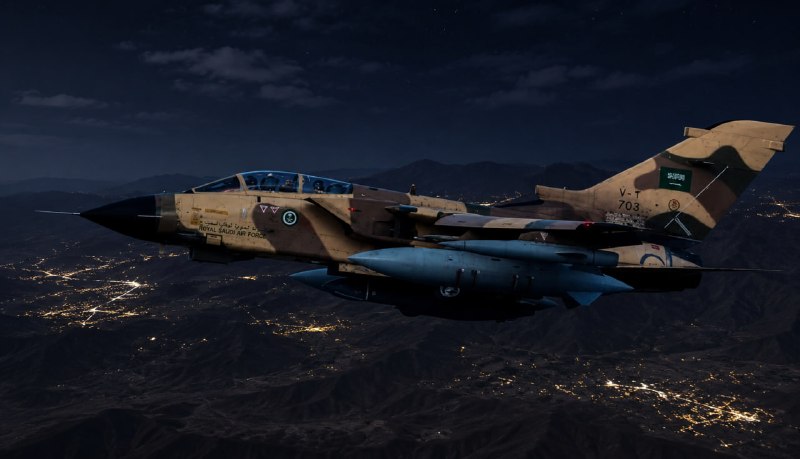
Two wires dropped within 36 minutes of each other on 16 July 2026. The first, posted at 03:07 UTC by the DDGeopolitics channel, summarised a Daily Telegraph report under the headline "Yemen is encircling the Red Sea from two sides." The second, at 02:31 UTC via Fars News, the Iranian state outlet's English service, carried the same Telegraph reading almost word for word. The picture painted is dramatic: a Yemeni squeeze on the Bab el-Mandeb, mirrored by an Iranian grip on the Strait of Hormuz, with the Houthis cast as a southern pincer in a single Iranian-designed trap.
The frame is tidy. The geography, and the politics inside Yemen, are messier than that. The Daily Telegraph's argument deserves to be read closely, because it is doing two things at once: it is making a real claim about maritime chokepoints that are demonstrably under pressure, and it is also doing the work of suggesting a level of command-and-control from Tehran that the on-the-ground reporting in Yemen has not corroborated.
What the Telegraph is actually saying
The Telegraph piece, as relayed by both wires, is straightforward in its strategic claim. It notes Yemeni activity on the western coast, facing the Bab el-Mandeb, and frames it alongside Iranian posture in the Gulf, drawing an explicit parallel with Iran's long-running position at Hormuz. The word used in both relays is "domination." That is a loaded verb for two narrow waterways that no single state has ever closed for any sustained period. But it captures a real anxiety in London and the Gulf capitals: that two chokepoints, on opposite ends of the Arabian Peninsula, are being squeezed in ways that compound each other's effects on tanker insurance, container scheduling, and naval tasking.
The framing matters because it tells Western readers what to worry about: a coordinated Iranian-Yemeni denial-of-trade strategy. The implication is that the Houthis are not a Yemeni insurgency with maritime reach, but an operational arm of the Islamic Revolutionary Guard Corps.
What the on-the-ground evidence does, and does not, support
The Yemeni picture has been consistent for over two years. Ansar Allah, the Houthi movement that controls much of the western highlands and the Red Sea coastline from Hodeidah northward, has launched drones and missiles at shipping in the southern Red Sea, detained crews, and targeted vessels it associates with Israeli, US, or UK interests. The campaign has been loud, well-publicised, and sufficiently effective that major container lines diverted around the Cape of Good Hope through much of 2024 and 2025. None of this requires a Tehran direct-order to explain. The Houthis have their own command, their own media infrastructure, and a Yemeni political project that long predates the current Gaza war.
What the Telegraph frame adds is the second front. The claim is that Yemenis are "seeking to implement a scenario similar to Iran's domination" of Hormuz. That is a claim about intent, not capability. The Bab el-Mandeb is wider and harder to police than Hormuz; the Yemeni coast is fractured between Houthi control, the internationally recognised government in Aden, and a patchwork of southern and eastern actors. A genuine two-sided encirclement would require command of the Gulf of Aden approach as well, which would mean either cooperation with, or conquest of, Aden-based forces that are hostile to the Houthis.
The other reading
There is a competing read of the same facts. The Telegraph's wording, as carried by both wires, treats the Bab el-Mandeb and Hormuz as a single theatre. They are not. They are separated by roughly 2,200 kilometres of Arabian Peninsula coastline, two distinct naval commands, two distinct political orders in Sanaa and Aden, and a Sunni Arab state system in the Gulf that has spent two decades hedging against Iranian maritime influence rather than accepting it. If the goal is to argue that the waterways are individually under pressure, the Telegraph has a strong case. If the goal is to argue that they are jointly controlled, the case is thin.
The Iranian outlet's decision to amplify the Telegraph's framing is itself part of the story. Fars and other Tehran-aligned outlets benefit from a Western-source confirmation of Iranian reach. That is not proof the Telegraph is wrong. It is a reminder that the framing is useful to multiple masters, and useful framings deserve extra scrutiny.
What to watch next
The next data points are not on the editorial pages. They are in the Lloyd's List war-risk insurance premiums, in the Aden government's public posture toward any Houthi naval expansion, and in the US Fifth Fleet's published tasking from Bahrain. If insurance premia for Bab el-Mandeb transits climb while Hormuz premia hold steady, the two-front thesis is being priced as one threat. If they move independently, the Telegraph frame is rhetoric, not strategy.
The Houthi project is real, the shipping disruption is real, and the Iranian interest in a wider regional leverage is real. What is contested is the connective tissue between them. Until the evidence for joint command is on the table, the cleaner description is that two chokepoints are under separate, uneven pressure, and that the Western press has an incentive, like the Iranian press, to merge them into one.
This publication treats the Telegraph's framing as a hypothesis, not a finding. The maritime facts are reportable; the joint-command claim is not yet.
Wire provenance
This editorial synthesis draws on the following public wire/social posts:
- https://t.me/DDGeopolitics
- https://t.me/farsna