Beijing pushes an AI diplomacy agenda while pharmaceutical supply chains deepen China's grip
At a Shanghai forum Xi Jinping is set to frame AI governance as a developing-country project, even as a parallel supply-chain analysis warns the West's dependence on Chinese pharmaceutical inputs is structural, not cyclical.
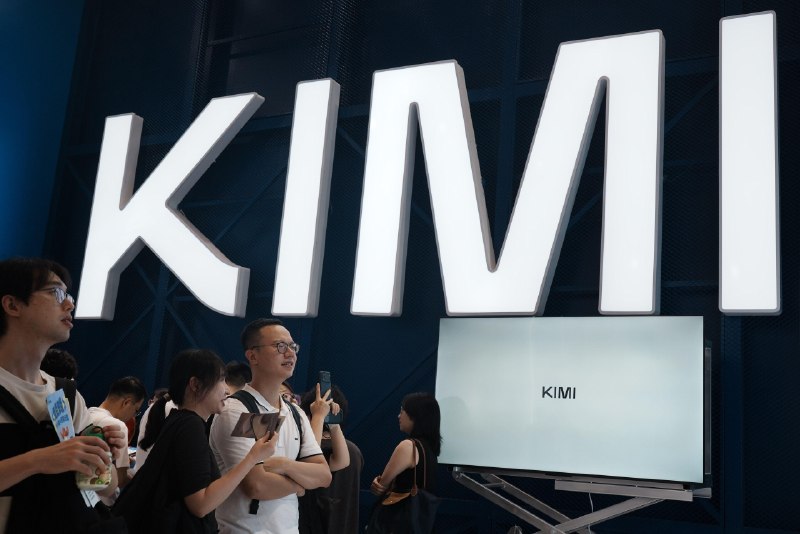
At the World Artificial Intelligence Conference in Shanghai on 16 July 2026, Chinese President Xi Jinping is preparing to lay out an "AI diplomacy" vision aimed squarely at the Global South, according to a Reuters wire alert published at 07:05 UTC. The speech lands in the same week that a South China Morning Post analysis, distributed via Telegram at 07:00 UTC on 16 July 2026, makes a more concrete case about Chinese industrial depth: that Western efforts to onshore pharmaceutical inputs are running into a structural deficit the market cannot easily close.
The two stories are not formally linked, but they sit inside the same strategic logic. Beijing is signalling that the next generation of governance norms for artificial intelligence should be written with, and for, the developing world. The supply-chain analysis argues that for at least one foundational sector, the productive base is already where Beijing says it is. Together they frame a question Western policymakers increasingly cannot avoid: when a competitor sets both the technological floor and the diplomatic ceiling, what does an alternative offer look like?
The Shanghai pitch
The Shanghai conference, running alongside the broader AI industry calendar in July, gives the Chinese government a platform Xi has used before to telegraph governance preferences to a non-Western audience. According to the Reuters wire, his address will frame AI as a domain in which developing countries deserve co-authoring rights over the rulebook, not just access to the finished product. The framing recasts AI from a frontier-tech race into a question of who sets standards for safety, data flow, and model deployment.
The shift matters because the alternative model is already in motion. The European Union's AI Act, the United States' export-control regime on advanced chips, and a thickening patchwork of national-security reviews have together produced a governance stack that is rules-heavy and access-restrictive. Beijing's pitch, as previewed in the wire, is the inverse: open architecture, capacity-building partnerships, and a louder seat for states outside the OECD.
What the pharmaceutical data actually shows
The SCMP piece, distributed via the SCMPNews Telegram channel at 07:00 UTC on 16 July 2026, makes a narrower but more uncomfortable point. Active pharmaceutical ingredients, the chemical compounds that give medicines their effect, are concentrated in Chinese production to a degree that Western reshoring programmes have barely begun to dent. The article frames the West's challenge as "uphill" for reasons that go beyond price: scale, regulatory familiarity, and decades of accumulated process know-how.
For readers, the takeaway is that decoupling in life sciences is a multi-decade project even when political will exists. Generics manufacturers in India, hospital procurement chains in Europe, and US federal stockpile policy all touch the same upstream. When one supply node dominates intermediates, the cost of rerouting is paid in years, not quarters.
The structural read
Two tracks, one trajectory. On the diplomatic side, Beijing is moving from "AI sovereignty" rhetoric, the assertion that states have a right to govern AI on their own terms, into operational diplomacy: forums, signed cooperation memoranda, training pipelines for foreign officials. On the industrial side, Chinese dominance in pharmaceutical inputs is the kind of structural advantage that compounds: capacity attracts more orders, more orders attract more capacity, and the regulatory learning curves stay in the same jurisdiction.
Western policy responses tend to operate on shorter clocks. Subsidies for domestic fabs, the US CHIPS and Science Act, the EU's Critical Medicines Act, all run on electoral and budgetary cycles. Chinese industrial planning operates on five-year and longer horizons. The asymmetry is not new, but the AI and pharmaceutical domains are where it is becoming visible to non-specialist readers.
Where the framing could be wrong
A skeptical reading cuts both ways. The Xinhua-and-Reuters-friendly vision of "AI diplomacy" can overstate how unified the Global South position actually is. India, Indonesia, Brazil, and South Africa have their own AI safety institutes and competing commercial interests; they are not waiting for Beijing to write the rules. On pharmaceuticals, India's generic industry has been building alternatives to Chinese intermediates for years, often with quiet state backing, and Indian regulators have moved to qualify non-Chinese sources.
The Western counter-narrative also has merit. The SCMP analysis is itself an admission of dependency, but the same dependency has, at various points, produced sharp price spikes, quality concerns, and national-security anxiety in Europe and North America. Markets do eventually respond to those signals, even if the response is slower than the political class would like.
Stakes
If Xi's Shanghai address lands cleanly, expect a run of bilateral AI cooperation announcements through the autumn: training academies in Africa, data-centre build-outs in Southeast Asia, possibly a Belt and Road-adjacent AI financing vehicle. The pharmaceutical picture will move more slowly. Western generic buyers will keep buying Chinese intermediates, with louder political rhetoric and small, symbolic reshoring grants. The gap between rhetoric and capacity will widen, then narrow, then widen again as the next shortage cycle hits.
What is worth watching over the next 90 days is whether any major emerging-market government uses the Shanghai forum as a venue to publicly align with the Chinese AI-governance vision, and whether the European Commission publishes its first formal assessment of pharmaceutical input concentration with binding targets. The first would be a diplomatic inflection point. The second would be an industrial one. Neither, on current evidence, is imminent.
Desk note: Monexus treats the Shanghai AI forum and the pharmaceutical supply-chain question as two facets of one structural argument rather than two separate stories. Where Western wire coverage of Chinese industrial strength tends toward alarm or dismissal, this desk reads the underlying data at face value: Chinese capacity is real, the alternatives are real but slower, and the diplomatic framing serves a coherent industrial strategy rather than the other way around.
Wire provenance
This editorial synthesis draws on the following public wire/social posts:
- http://reut.rs/4pp05xp