US strikes on southern Iran open a widening corridor that Tehran says it will answer
Iranian state-linked outlets report multiple overnight US strikes on sites in southern Iran, with Iranian authorities saying four locations were hit and vowing retaliation. The claims, still unverified by Western wires, point to a fast-widening corridor between Washington and Tehran.
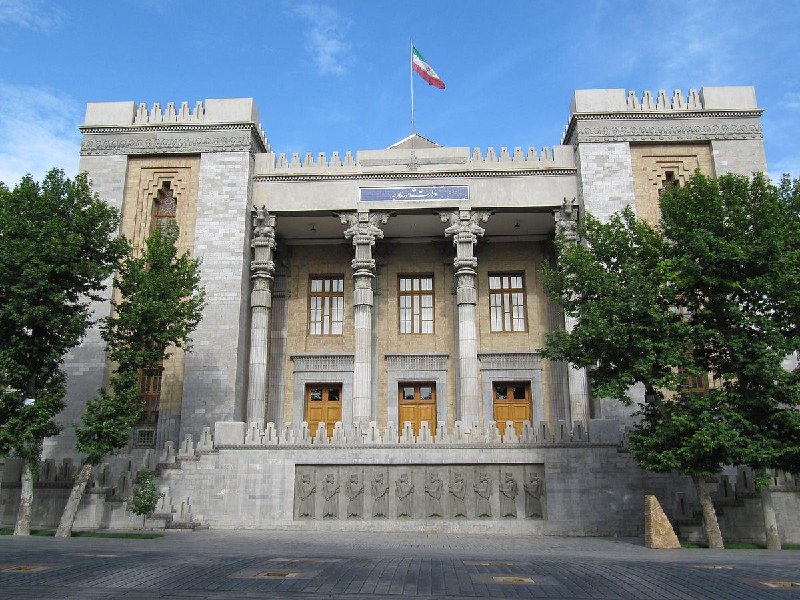
At roughly 08:41 UTC on 16 July 2026, the Beirut-based outlet The Cradle published an overnight summary on its Telegram channel describing what it called a fresh round of US strikes on multiple sites across southern Iran, with Iranian authorities saying four locations had been hit and promising retaliation. The channel's framing was urgent, the claims were sweeping, and the corroboration from Western wires was, at the moment of filing, absent.
That gap, between a fast-moving Iran-linked account and a slower-moving Western wire verification cycle, is itself the story. Overnight strikes on Iranian soil would mark the most direct US kinetic action against the Islamic Republic since the January 2020 killing of Quds Force commander Qasem Soleimani. Tehran's stated promise to answer would, in turn, force a decision on whether the corridor that has been narrowing for months finally snaps open into a regional war.
What The Cradle is reporting
The Cradle's overnight summary, distributed via Telegram in the early hours of 16 July 2026, asserts that US aircraft struck multiple locations across southern Iran. According to the channel's account, Iranian authorities identified four sites around the affected area and framed the action as an act of war requiring a proportional response. The channel's framing treated the strikes as a fait accompli and pivoted immediately to the retaliation question, quoting Iranian officials as saying the response would be timed and shaped by Tehran rather than Washington.
The details available are thin. The Cradle did not, in the version circulating at 08:41 UTC, name the specific facilities struck, identify the unit or command responsible inside Iran's military, or cite satellite imagery, casualty figures, or independent geolocation. The four-site claim rests on Iranian official statements as relayed by the outlet; the outlet's own editorial positioning, rooted in a regional frame sceptical of US and Israeli postures toward Iran, shapes how those statements are presented.
For a reader who only saw the channel's note, the picture is dramatic and one-sided: an unprovoked US strike, an Iranian government unified around retaliation, a regional crisis accelerating. What that reader would not see, yet, is the standard verification chain that a Reuters or Associated Press bulletin would impose before naming targets, naming weapon systems, or asserting a casualty count.
What the Western wires have, and have not, said
At the time of writing, no major Western wire had confirmed the strike package described in The Cradle's summary. Reuters, the Associated Press, Agence France-Presse, and the BBC all run cautious verification protocols for events inside Iran: independent geolocation of after-imagery, cross-checking with two or more officials in separate institutions, restraint on casualty figures that cannot be sourced to a hospital, morgue, or local authority willing to be named.
Iran International, the London-based outlet that often breaks inside-Iran news with speed but carries its own editorial line, had not at the moment of filing matched The Cradle's claims. Israeli outlets, including the Times of Israel and Ynet, had not as of mid-morning UTC carried parallel confirmation. The Pentagon's public-affairs shop had not issued a statement. Iran's mission to the United Nations in New York had not, on the public record, characterised the overnight events in the terms The Cradle attributed to Iranian authorities.
That silence is not proof the strikes did not happen. The Cradle has, in past reporting cycles, broken news that Western wires later confirmed hours or days behind. But it is also the case that a Beirut-based outlet drawing on Iranian official statements will, by structural position, carry the Iranian framing first and at full volume. The discipline of independent verification is precisely the step that separates an event from a claim.
The structural frame: a corridor that has been narrowing for months
What makes the overnight summary worth taking seriously, even before full verification, is the corridor inside which it sits. Through the first half of 2026, the public reporting on US-Iran tensions has tracked a steady narrowing of space between confrontation and open conflict. Axios's Barak Ravid has been the most consistent Western outlet reporting on back-channel negotiations and on the Israeli side's view of those negotiations, including the framing that Washington and Tehran have been closer to a framework deal than either public posture has admitted. That framework, if it exists, would address the nuclear file, the regional file, and the prisoner file in a single package.
The strike account in The Cradle, if accurate, sits at the opposite end of that spectrum. It implies not a deal but a breakdown. It implies a US decision to use direct military force on Iranian soil, in southern Iran, at a moment when regional actors, including Saudi Arabia, the United Arab Emirates, and Qatar, have been quietly holding channels open. It implies, on the Iranian side, a decision by the Islamic Republic's security leadership that the cost of restraint now exceeds the cost of escalation.
Either reading, deal or breakdown, has to explain the same basic fact: the United States has, in public posture, kept a carrier group in the Gulf, kept CENTCOM forward-deployed, and kept diplomatic channels technically open. Iran has, in public posture, kept enrichment running, kept proxy posture high through Hezbollah and the Houthi file, and kept a public line that any strike would be met. The overnight summary collapses that ambiguity in one direction.
Stakes and what to watch next
If the strike account holds up under independent verification, three things change quickly. First, the regional containment architecture that has held since the 2024 escalations, the Saudi-Iranian rapprochement brokered in Beijing, the Oman-brokered US-Iran back-channel, the UAE's quiet mediation role, comes under acute pressure. Second, the oil market reprices: any sustained disruption to the Strait of Hormuz, through which roughly a fifth of global oil passes, would feed directly into fuel prices within days. Third, the Israeli file, where the prevailing assumption in Tel Aviv has been that a US-Iran framework deal is more likely than a US strike, would force a rapid reassessment.
If the account does not hold, or holds only partially, the takeaway is almost as consequential for the information environment. A strike claim that travels on a Telegram channel and into social media before any major Western wire has confirmed it sets the framing of the next 24 hours of coverage, regardless of what later verification establishes. The narrative of escalation is, in that case, already priced in by audiences on both sides.
What remains genuinely uncertain, as of the moment of writing, is the simplest version of the question: were sites in southern Iran hit by US forces in the overnight window, and on whose authority? The Cradle's summary asserts yes. The Western wire complex has not yet said. Iranian official statements, as relayed by the channel, assert a right and an intention to retaliate. The verification chain that turns any of that into settled fact runs through satellite imagery analysis, named on-the-record US and Iranian officials, and independent hospital and morgue reporting on the Iranian side. None of that is in the public record yet.
Monexus reports this story from Telegram-sourced summaries only; the wire confirmation cycle has not, at the moment of filing, independently corroborated the strike account. We will update as verification lands.
Wire provenance
This editorial synthesis draws on the following public wire/social posts:
- https://t.me/thecradlemedia
- https://t.me/TheCradleMedia