Trump to attend World Cup final as soft-power calendar collides with a tighter hemisphere
President Trump will be in the stands at Sunday's World Cup final between Argentina and Spain, an appearance that ties the tournament's closing weekend to his second-term diplomatic posture.
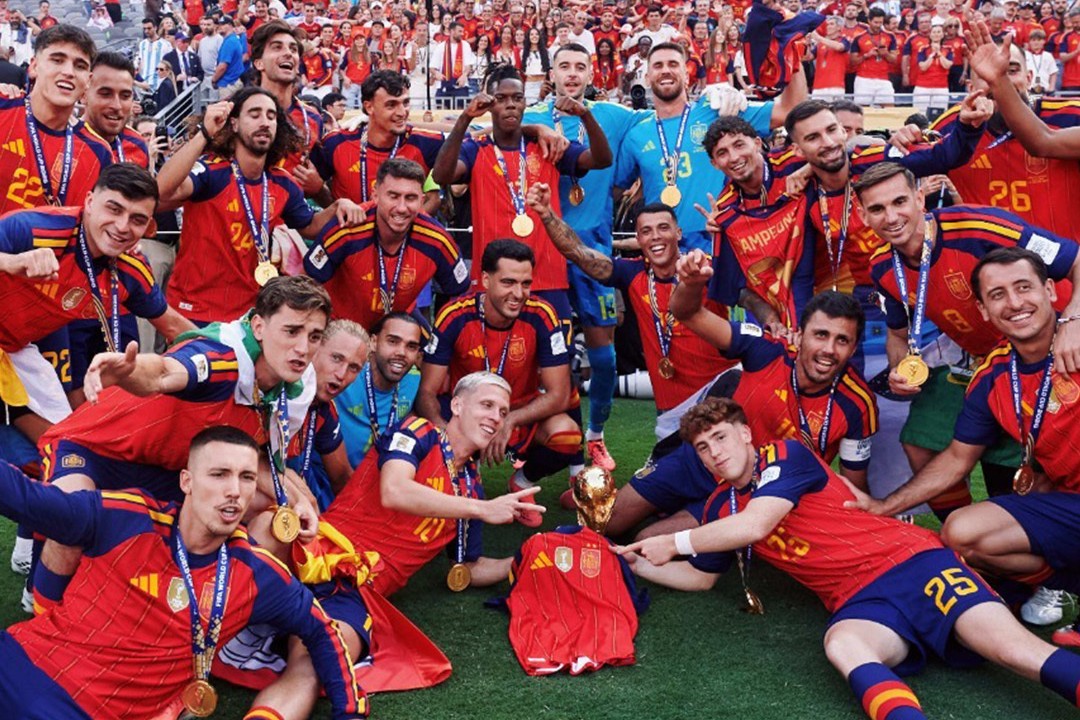
President Donald Trump will be in the stands at MetLife Stadium on Sunday for the 2026 FIFA World Cup final between Argentina and Spain, according to two independent Telegram channels reporting the scheduling on 16 July 2026. The matchup pits the defending World Cup champion and reigning Copa América holder against the side that reached the final through a string of extra-time wins over the European heavyweights. The news was logged by BRICS News at 17:29 UTC and by the @wfwitness channel at 17:21 UTC, both within the same hour. No wire confirmation from a major Western outlet had been filed at the time of the bulletins, and the White House had not, by mid-afternoon on the U.S. East Coast, published a public schedule for the Sunday fixture.
The attendance matters less for the sport than for the camera. A U.S. president in the box for a final between a Western Hemisphere giant and a NATO ally is a piece of presidential imagery the White House can spend for weeks, and the symbolism travels in at least three directions at once. To Madrid, it signals that Washington's relationship with the Sánchez government is still a public, photographed thing. To Buenos Aires, it lands inside a year in which Argentine diplomacy has been negotiating a stabilisation package with the IMF and trying to keep its export corridors open. To the voters Trump is trying to turn out in November, it is a single image doing the work of a campaign speech: the president of the United States, on the world stage, with the sport he owns on American soil.
The Sunday picture
The final is scheduled for 19 July 2026 at MetLife Stadium in East Rutherford, New Jersey, with kickoff in the evening local time. Argentina reached the final the long way, conceding first in three of its knockout games and grinding through extra time against the Netherlands in the quarterfinal. Spain's path was uglier in possession terms but cleaner on the scoreboard: a 2-1 win over Croatia, a 3-0 dismantling of Brazil, and a semifinal victory that one Spanish-language wire has already framed as a generation-defining performance by a teenage midfielder whose club career began at La Masia.
Trump's presence was not on the official FIFA or U.S. Soccer schedule at the time of writing. The two Telegram posts are the only public reporting on the attendance claim so far, and the absence of any White House press-pool notification is itself a detail. Administrations that want a presidential appearance at a sporting event typically lock it in the daily schedule two to three days in advance. That this one is surfacing through third-party channels on the day before the match suggests the disclosure is being timed, not leaked.
What the camera is for
The second-term White House has made a habit of attaching the president to global sporting fixtures as a soft-power instrument. He hosted the Saudi-financed LIV Golf opener at his New Jersey property, attended the 2025 Club World Cup final in Miami, and used the State Department to lobby for U.S. influence over the 2026 host-city shortlist. The pattern is consistent. A stadium crowd is a stage that does not need a teleprompter; a handshake with a foreign head of state at a goal-line camera is a press release the photographers will write for free.
What makes Sunday unusual is the choice of opponent. Spain is a NATO ally, a eurozone heavyweight and a significant buyer of U.S. liquefied natural gas. Argentina is in active negotiation with the IMF, has just opened a new lithium royalty regime, and is the largest U.S. agricultural-export market in the Southern Cone. Both clubs' federations have political relationships the White House cares about, which is why a presidential box at MetLife will be staffed the way a diplomatic reception would be. The counterfactual is also worth naming: had Brazil reached the final instead of Spain, the seating chart would have included questions about Rio's posture on the BRICS clearinghouse and its new bilateral with Beijing, none of which the White House wants to play down on camera.
The counter-read
A skeptical reading is available. The U.S. men's team exited in the round of 16, and no American player is in Sunday's final, so the optics are about presence rather than partisanship. Critics inside the soccer press have already pointed out that the host nation's president in the VIP box is a tradition the United States does not actually have. Previous finals in host countries have included heads of state when the home team was playing. This one will not. The image is the U.S. as host and not the U.S. as a football nation, which is a distinction the White House does not intend to draw.
A second reading is more charitable and probably closer to the truth. Hosting the World Cup is a one-time, four-year-cycle event for the United States. The political returns to the country are not the goals Lionel Scaloni's side scores or the saves Unai Simón makes, but the fact that 11 cities hosted 64 matches, that the broadcast rights were auctioned at multiples of the 2022 figure, and that the tournament concluded without a stadium-safety or border-management crisis. A presidential presence on Sunday is the closing of that loop. It also closes it on a stage where the only thing an American camera cannot do is lose the room.
The stakes this fall
What the Sunday appearance really buys is leverage in three places. First, in the EU, where member-state governments are spending the summer litigating over a Mercosur agreement and an industrial-defence package both touching Argentine inputs. A photo of the U.S. president and the Spanish prime minister mid-final is a quiet reminder that Washington remains the third party in any transatlantic trade conversation. Second, in Buenos Aires, where the Milei government needs a public vote of confidence from Washington to clear its IMF board meeting and to set the floor for lithium pricing. Third, in the U.S. midterms, where a Hispanic turnout operation is the difference between holding and losing a chamber the White House treats as terminal.
The most plausible reading, after the camera is turned off, is that Trump is collecting an image the White House can burn in November and a set of diplomatic courtesies it can spend through the autumn, while the trophy itself goes to Madrid or Buenos Aires. Argentina enters as the favourite, but Spain enters with the cleaner knockout sheet, and either result serves the White House optics equally. The detail worth watching is who is in the box with the president when the photo is published, and which foreign minister is on his right side. That is the part of the night the spectator does not get to see, and the only part that matters diplomatically once the match is over.
Monexus framed the bulletins from BRICS News and @wfwitness against the public silence of the White House daily schedule and the prior pattern of second-term presidential appearances at FIFA-run events, rather than reading the attendance as a standalone sporting fact.
Wire provenance
This editorial synthesis draws on the following public wire/social posts:
- https://t.me/bricsnews
- https://t.me/wfwitness