Trump weighs expanded Iran campaign after Situation Room review of Kharg options
Reporting on 16 July 2026 says President Trump is leaning toward widening US operations against Iran, with Kharg Island and energy chokepoints back on the table after a Situation Room review.
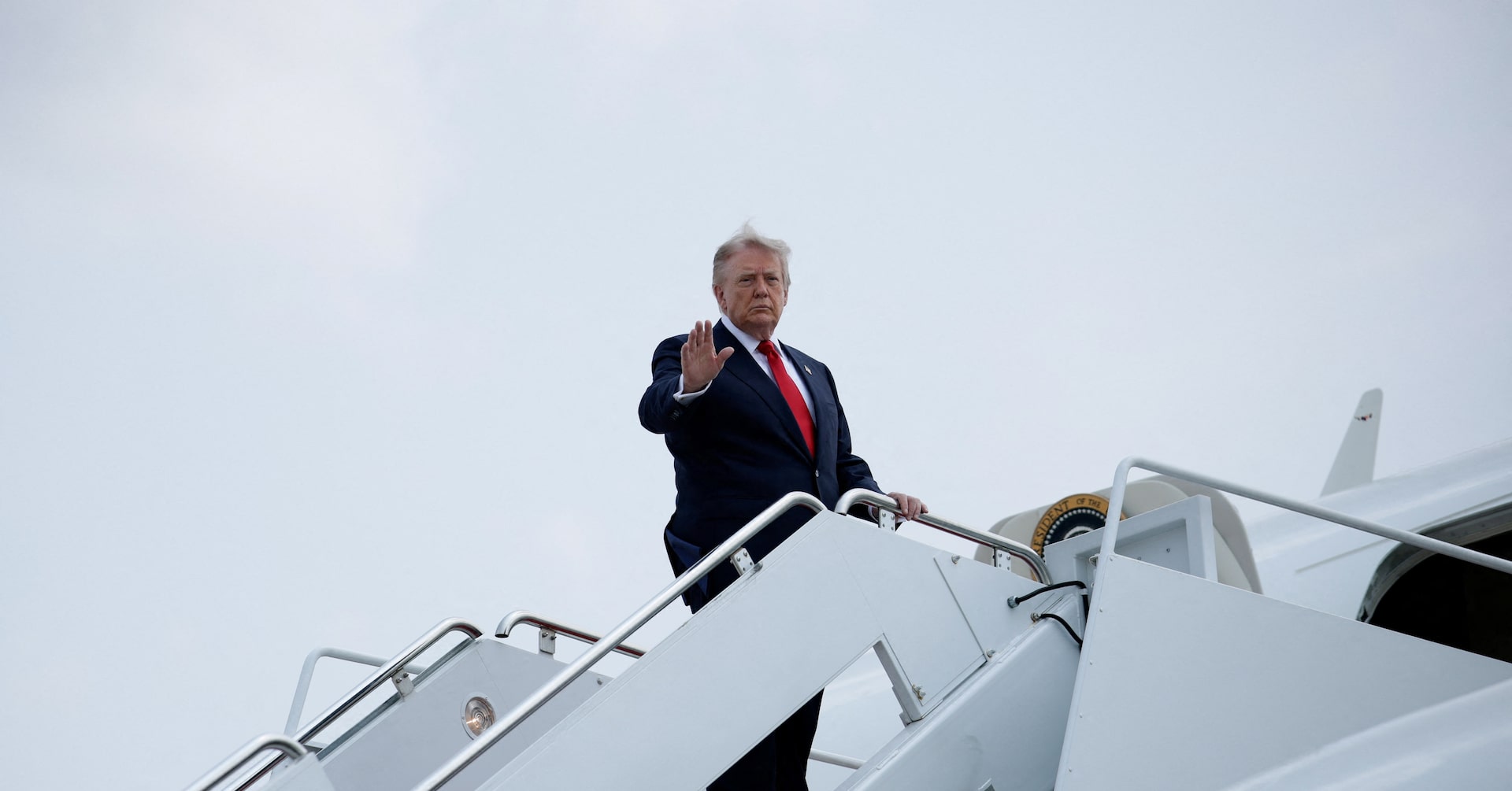
At 05:14 UTC on 16 July 2026, US President Donald Trump was described as leaning toward an expanded military campaign against Iran after being briefed by senior officials on new courses of action, including moves against the country's principal crude-export terminal on Kharg Island in the northern Persian Gulf. The reporting, picked up by aggregators citing The Wall Street Journal and echoed minutes later by the open-source channel OSINTdefender on Telegram, frames the meeting as a Situation Room review rather than a decision, but the strategic direction of travel is unambiguous: the operational envelope under consideration has widened, not narrowed, since strikes earlier this year.
That matters because Kharg is not a symbolic target. It is the single piece of infrastructure that converts Iranian oil into foreign currency, handling the overwhelming majority of the Islamic Republic's seaborne crude exports. Any sustained action against it, from seizure to quarantine to sustained bombardment, would not just degrade Iran's war-fighting capacity; it would also force a market re-pricing of a fifth of seaborne crude flows that currently move through the Strait of Hormuz. Tehran's leverage, and the world's exposure to that leverage, both run through one island.
What the Situation Room actually weighed
The reporting does not describe a decision to attack. It describes a menu. According to the Wall Street Journal-derived thread that surfaced on X at 05:14 UTC on 16 July, Trump received information from high-ranking officials on new courses of action, language that in US national-security practice usually precedes, rather than follows, an executable choice. OSINTdefender's parallel Telegram posts at 05:07 UTC were more granular, naming a Situation Room meeting and explicitly flagging Kharg among the options discussed. Together, the two feeds triangulate to a single picture: the president is not asking whether to escalate, he is asking in what form.
The framing in the open-source channel leans on the word "reportedly," and that hedge is doing real work. Washington has not published an operation order, the Pentagon has not briefed the press, and there is no confirmation from Iranian state media of any imminent US action. What the sources establish is the existence of a planning track inside the US executive that did not exist, or was not public, a week ago. What they do not establish is the timing, the scale, or the legal wrapper the administration would reach for to justify action. A seizure is a maritime-interdiction problem under existing sanctions authorities. A strike is an Article 51 problem. A blockade is something else entirely, and one that historically requires congressional buy-in the White House has shown little appetite to seek.
The Kharg question, plain
Iran's export terminal sits on a 49-square-kilometre island roughly 25 kilometres off the Iranian coast in the northern Gulf. Subsea pipelines run from the mainland; single-point moorings offshore load VLCCs that then transit the Strait of Hormuz eastbound. The configuration is shallow-water, fixed, and replaceable only over years, not months. That is what makes it both a high-value military objective and a high-cost one: damage is straightforward, but so is reconstruction, given enough time and the absence of further strikes.
A US operation against Kharg would also force an immediate Iranian counter-move. Tehran's doctrine for Hormuz treats the strait as a shared vulnerability. Even partial disruption of Iranian exports historically pushes Tehran toward mining, fast-attack craft and anti-ship missile coverage of the chokepoint, moves that would not spare Saudi, Emirati or Iraqi flows. The market consequence is not an Iran-only problem; it is a global problem with an Iranian flag on it. That is the calculation the Situation Room is now being asked to make on the record, and it is the calculation no aggregation of oil futures fully captures.
Why now, and what the framing misses
Western wire coverage has tended to read the moment through a single lens: the US is running out of patience with Tehran's nuclear programme and its proxy network, and is therefore preparing to strike. That framing is not wrong, but it is incomplete. It underweights two factors that this publication considers material.
First, the timing. The reporting lands in mid-July 2026 against a background of European and Gulf-state fatigue with the existing sanctions architecture, and of renewed back-channel diplomacy that Iranian and Omani intermediaries have hinted at in recent weeks. A decision to widen the operational envelope now, before those tracks either succeed or definitively fail, is a decision to close a diplomatic window. The administration may judge that window already shut. The sources do not tell us which way that judgment has gone.
Second, the regional frame. Gulf Arab states have publicly called for de-escalation while quietly hedging with the US on basing and overflight rights. Israel, which conducted its own strikes against Iranian nuclear and missile infrastructure in earlier rounds, has not been named in the 16 July reporting as the operator of any new action, but its preference is well understood. The structural question is whether an expanded US campaign becomes a substitute for a regional settlement, or a precondition for one. Western commentary has largely assumed the former; the record of how prior US-Iran episodes closed suggests the latter is the more honest read.
What remains genuinely uncertain
The reporting carries three load-bearing hedges that the desk chooses to preserve rather than smooth over. One: the source for the Trump account is The Wall Street Journal via secondary aggregation, and the secondary aggregator has not yet been linked to a verifiable primary URL inside the cluster reviewed here. Two: OSINTdefender's posts, while specific on Kharg, are flagged as open-source intelligence that fuses public reporting with analyst inference; the channel's editorial layer is not a primary record. Three: there is no Iranian state-media response in the cluster, which means Tehran's read of the same Situation Room meeting is not yet on the wire. Until at least one of those three load points is upgraded, the strongest defensible claim is the narrow one: the operational menu in Washington has expanded, and Kharg is now on it.
That is enough to move markets and to harden positions in Tehran, Moscow and Beijing. It is not enough to call the next act.
Wire provenance
This editorial synthesis draws on the following public wire/social posts:
- https://x.com/sprinterpress/status/1944998895625117974
- https://t.me/s/OSINTdefender
- https://t.me/s/osintdefender
- https://en.wikipedia.org/wiki/Kharg_Island
- https://en.wikipedia.org/wiki/Strait_of_Hormuz