Tony Leon returns to the headlines as DA lobbying row tests South Africa's opposition brand
A onetime opposition face turned communications consultant now stands accused of leveraging political ties to reach DA ministers and municipal officials, reopening a wider debate about access in Cape Town's corridors.
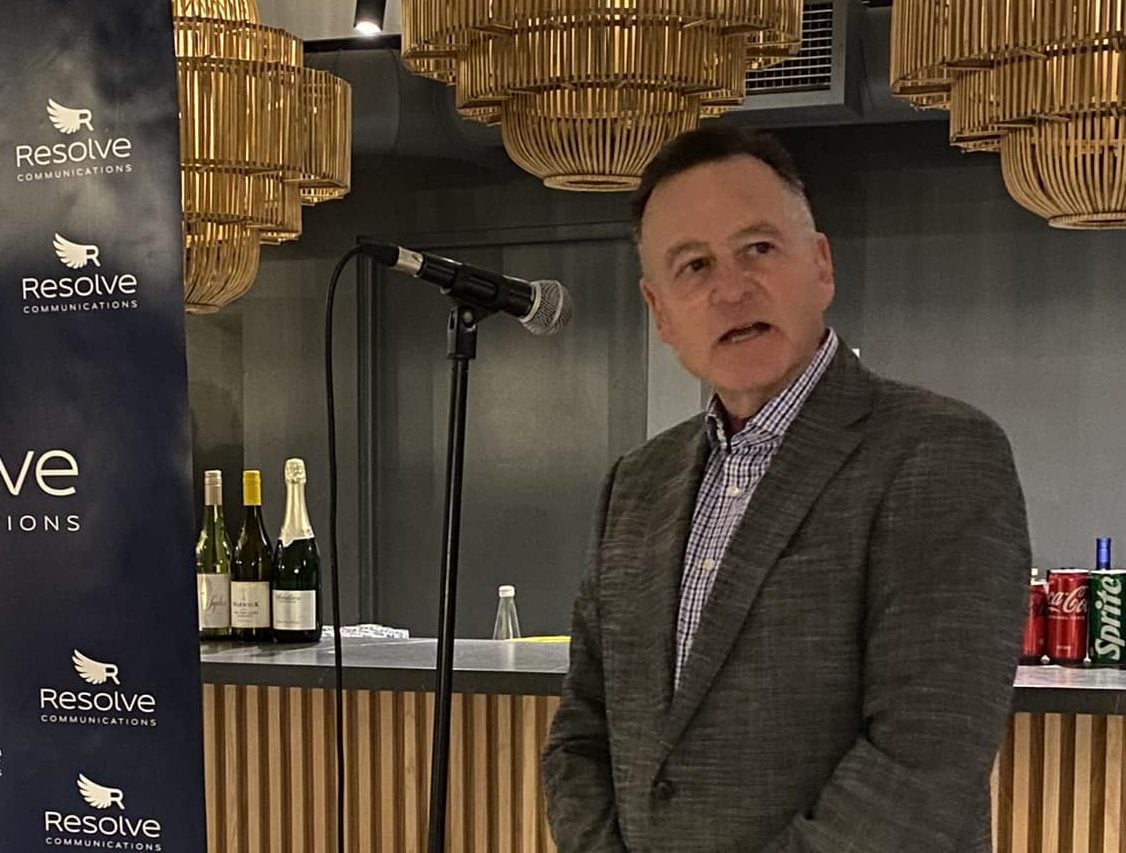
A lobbying dispute inside South Africa's Democratic Alliance has pulled Tony Leon, the former opposition leader turned communications strategist, back into the political spotlight he once commanded and later walked away from. The Africa Report's African Politics desk reported on 16 July 2026 that Leon's firm stands accused of using his political connections to reach DA ministers, lawmakers and municipal officials, an allegation that has reopened a quieter, more uncomfortable question in Cape Town: who, exactly, gets to whisper into a governing party's ear, and on whose behalf.
The row matters less for the personality at its centre than for what it exposes about the plumbing of South African politics. The DA runs the Western Cape, governs several of the country's biggest metros through coalition arrangements, and sits in national government as part of the Government of National Unity framework that followed the May 2024 general election. That kind of footprint draws consultants the way Pretoria draws embassies. The allegation is not that lobbying exists; in a liberal democracy it does, and must. The allegation is that the lines between political access, party identity and paid advocacy have blurred enough to warrant a public airing.
The allegations on the table
According to The Africa Report's 16 July 2026 brief, Leon's communications firm has been accused of leveraging the former DA leader's political network to secure access to sitting DA ministers, legislators and municipal officials. The piece frames the controversy as a test of how the party manages relationships built over decades of opposition politics now that the DA holds executive power in multiple jurisdictions.
Leon is a singular figure in the DA's institutional memory. He led the Democratic Party and then the renamed Democratic Alliance between 1994 and 2007, shaping the party's modern federal structure and its post-apartheid posture as a market-oriented, constitutionalist opposition. He left parliament at the 2008 election and later served as South Africa's ambassador to Argentina, before re-entering private life as a director, commentator and, eventually, a communications consultant. The Africa Report's reporting situates the present dispute inside that longer arc: a politician whose name still carries weight inside the very party he once ran, now alleged to be monetising that weight.
The accusation, as paraphrased by The Africa Report, is not that Leon broke any specific law but that the optics and the practice of using a former leader's network to approach current officials crosses an ethical line the DA has elsewhere been quick to police.
Why the DA finds this awkward
The DA's brand rests on a clear pitch: clean governance, transparent procurement, distance between money and political access. The party has built years of opposition messaging around exactly the kinds of access-for-influence arrangements that now sit at the centre of the Leon allegations. That history gives the row its sting; the same party that once accused the ANC of state capture is now being asked, in effect, whether its own networks behave differently once they hold the levers.
Cape Town's metros, the Western Cape provincial government, and the party's national-office footprint all sit inside the universe of institutions The Africa Report identifies as having been approached. Each is governed by officials who came up through DA structures, many of whom overlapped with Leon during his leadership years. The network is not covert; it is the party's inheritance. The question is whether consulting work that depends on that inheritance should be disclosed, regulated, or simply not practised.
South Africa's lobbying framework has been a long-running policy file. The Political Party Funding Act, in force since 2021, requires parties to disclose large private donations above a set threshold, and the Electoral Commission of South Africa has used it to publish donor lists. That regime covers money flowing into parties; it does not cover consultants approaching office-bearers on behalf of clients. A consolidated lobbying register has been on the policy agenda for years, including a draft framework the Department of Justice advanced in earlier administrations, but it has not been enacted. The Leon allegations land in that gap.
The counter-read
There is a more forgiving framing, and The Africa Report gestures at it. Former politicians possess knowledge, contacts and credibility that markets will price. A consulting firm that hires a former party leader is doing what consultancies in London, Washington and Brasília do every day. If Leon's firm is making representations to current officials, those representations are presumably on behalf of identifiable clients pursuing identifiable outcomes, and there is no allegation of bribery or corruption in the briefing. The line between legitimate advocacy and improper influence is, in most democracies, drawn by disclosure rather than prohibition.
The DA's internal politics complicate the picture further. The party is in the middle of a realignment after the 2024 election, in which it performed below its pre-election polling but retained enough seats to enter national government and consolidate its Western Cape hold. Factions inside the party have disagreed, sometimes publicly, over how aggressively to position the DA as an independent force and how closely to coordinate with the ANC-led national arrangement. A row involving a former leader with known sympathies for parts of the party's centrist establishment is, predictably, read through that factional lens.
What to watch next
The next signal worth tracking is whether the DA's federal executive treats the matter as a disciplinary file, a political communication problem, or a prompt to revisit the party's own lobbying guidelines. The Africa Report's reporting does not, at this point, point to a formal complaint having been filed with the Independent Electoral Commission or with law-enforcement structures. The dispute is, for now, a party-internal reputational contest with a public-facing dimension.
There is also a wider policy hook. South Africa's lobbying-regulation debate has stalled for the better part of a decade. A high-profile row involving a recognisable political name is the kind of event that tends to reopen stalled legislation, both because the cabinet has a political incentive to act and because civil-society groups gain fresh material. Whether the Leon case produces that legislative tail, or simply burns itself out as a Cape Town news story, will be clearer in the weeks following the party's internal processes.
What the sources do not specify is the identity of the clients on whose behalf Leon's firm is alleged to have approached officials, nor whether any particular decision was altered as a result. The allegations sit, for now, at the access layer. The harder questions, about outcomes, will follow if the disclosure regime catches up to the practice.
Monexus framed this as an internal governance test for a party now exercising executive power, rather than a personality story; the wires have run the row as political gossip, and that emphasis understates the regulatory gap the case exposes.
Wire provenance
This editorial synthesis draws on the following public wire/social posts:
- https://en.wikipedia.org/wiki/Tony_Leon
- https://en.wikipedia.org/wiki/Democratic_Alliance_(South_Africa)
- https://en.wikipedia.org/wiki/Political_Party_Funding_Act,_2018
- https://en.wikipedia.org/wiki/2024_South_African_general_election