Tehran's signal fire: why Iran keeps striking US assets in the Gulf
Within ten hours on 15-16 July 2026, Iranian-aligned channels reported explosions at US-linked sites in Kuwait and Bahrain, with PressTV calling Bahrain the biggest Iranian attack on American bases since the war began. The pattern is not a battlefield update; it is a negotiation in ordnance.
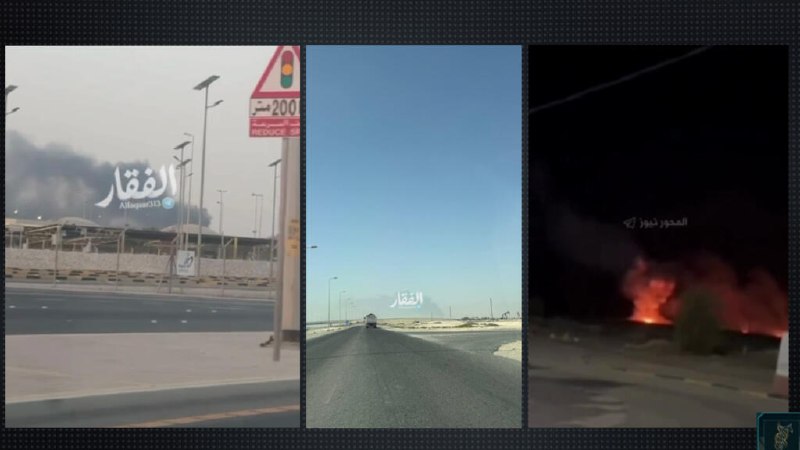
At 21:44 UTC on 15 July 2026, an American military and foreign-policy analyst with the X handle @sprinterpress posted a four-word verdict on the war raging in the Gulf: The probability of Iran's surrender is zero. Forty minutes later, Fars News's international channel reported several explosions in Kuwait and said local sources had identified American economic interests and facilities as the target of an early-morning attack. The same account reported, at 23:11 UTC, attacks on a US base in Bahrain coinciding with the activation of warning sirens. By 23:40, al-Alam Arabic was carrying an urgent bulletin: Explosions sound at American bases in Bahrain. At 00:33 UTC on 16 July, Mehr News relayed a PressTV line that Tehran intended to be read as the headline of the night, namely that Iran's strike on the American base in Bahrain was the biggest attack since the beginning of the war.
The sequence is the story. The pattern this week is exactly the pattern that has defined Iran's wartime behaviour since the first exchanges of this conflict: a calibrated strike, an immediate admission of responsibility, and an explicit escalatory frame, biggest since the beginning of the war, designed for English- and Arabic-language audiences long before any Western wire has had time to arrive on the ground. The asks behind the ordnance are the point. The point is being made on two frequencies simultaneously: a tactical one for Washington, and a narrative one for the Arab street.
What the strikes actually were
According to the four Fars News posts filed between 22:21 UTC and 23:11 UTC on 15 July, local sources reported an attack on American economic interests and facilities in Kuwait in the early morning hours of Thursday, without naming a specific company, base, or installation. A second wave hit a US military site in Bahrain as sirens sounded. Al-Alam Arabic, the Iran-aligned satellite outlet backed by Iranian state media, independently corroborated the Bahrain explosions at 23:40 UTC. PressTV, via Mehr News an hour later, characterised the Bahrain strike as the largest such action since the war's opening phase. None of the four channels provided casualty figures, damage assessments, missile types, or attribution beyond Iran. None of the channels named a specific US unit or installation. The reporting posture throughout the night is closer to signalling than to military communique.
Why Iran's public posture matters more than the blast radius
The geography of these strikes is too specific to be coincidence. Kuwait hosts the staging grounds for US logistics into the Gulf; Bahrain hosts Naval Forces Central Command and the Fifth Fleet's forward headquarters. Striking both inside a ten-hour window sends a single, legible message: no American node in the Gulf is out of range, and no node is sacrosanct. The PressTV line, relayed without caveat by Mehr News, escalates the message further: the biggest attack since the beginning of the war is not a description; it is an announcement of a new normal that Tehran intends to anchor in the public record before Western wires arrive.
Iran's wartime media doctrine is built to outpace Western confirmation cycles. Fars, al-Alam, PressTV and Mehr are not simply transmitters of fact. They are transmitters of framing, designed to impose a specific reading of events while the dust is still settling. The American analyst's zero-surrender verdict at 21:44 UTC and the PressTV escalation line at 00:33 UTC frame the same operational data in the same direction, which suggests coordination across at least the messaging layer of Iranian decision-making.
The structural frame
Read the Iranian communications without their propaganda mask and the picture is conventional great-power bargaining. A state under sustained military pressure, facing the implicit threat of a regime-change escalator, refuses to concede and demonstrates that refusal in the only currency the adversary cannot ignore: physical risk to its forward-deployed forces and economic assets. The American analyst's remark, the probability of Iran's surrender is zero, is the same point a strategist would make at RAND or IISS: when the cost of conceding is regime survival, the cost of fighting is, by definition, the lesser of two impossibles.
Iran's broadcast architecture turns that strategic reality into a domestic and regional political asset. By naming the strikes before any Western press conference, by grading their own intensity on a public scale, Tehran forces every Gulf capital, every opposition chancery in Washington, and every negotiating channel into a reactive posture. This is information warfare conducted in the same idiom as the missile war, and it is calibrated to produce negotiation leverage, not battlefield effect. Whether it produces that leverage depends on a question the Iranian channels cannot answer for themselves: whether the strikes hit anything that mattered.
What remains genuinely uncertain
Every number that a Western reader will want from this sequence is not in the public record yet. The four channels carry no casualty figures, no damage assessments, no confirmation from Pentagon or CENTCOM spokespeople, and no read of the operational response from US Central Command or the Fifth Fleet. The same sources that gave Iran the loudest microphone also control the loudest silence. Independent verification from Bahraini, Kuwaiti, or US military spokespeople is the variable that will determine whether this is read in Washington as a negotiating shot or a phase change. Until that verification arrives, the PressTV escalation line, however loud, is only the opening offer.
Desk note: The Iranian-state-aligned channels carried this story end-to-end, while the Western wire desks remain silent on the strike's specifics. Monexus reports what is documented in the open-source feed and flags the verification gap.
Wire provenance
This editorial synthesis draws on the following public wire/social posts:
- https://t.me/FarsNewsInt
- https://t.me/alalamarabic
- https://t.me/mehrnews