Tariff refunds outpaced June collections as Washington's war powers get reset
Customs duty rebates nearly doubled the receipts they offset in June, while the Trump administration reopens a 60-day military clock on Iran. Both lines point to the same question: who actually pays for sustained confrontation.
For a brief window on the morning of 16 July 2026, two very different kinds of numbers crossed the American fiscal desk at the same hour. Customs duty rebates paid out to importers came in at nearly double the duties actually collected in June, per data flagged by Unusual Whales and traced to Yahoo Finance. Within twenty-four hours, the same feed would note that the Trump administration had formally notified Congress of a resumed military campaign in and around Iran, restarting a fresh 60-day clock under the War Powers Resolution. Read separately, the two items look unrelated. Read together, they sketch a balance-sheet version of the same strategic question: what does sustained confrontation cost when the budget arithmetic is already bending?
The thesis this piece advances is straightforward. American tariff policy and American war policy are pulling in opposite directions on the same ledger, and the fiscal drag of the trade fight is now doing more to constrain Washington's room for manoeuvre than any single diplomatic objection. Customs duty refunds that outpace collections are not a routine accounting curiosity: they signal that importers who paid contested duties under earlier enforcement regimes are getting money back faster than new duties are flowing in. The War Powers notification, meanwhile, gives the executive another sixty days of unilateral latitude to use force in the Gulf without fresh congressional authorisation. The conjunction matters, because the second authority is being exercised at exactly the moment the first is producing less revenue than expected.
The numbers that disagree with the politics
The immediate trigger is a single line buried in the Treasury's monthly customs receipts, surfacing via Yahoo Finance and republished by Unusual Whales on 16 July 2026. In June, the federal government paid out close to twice as much in tariff refunds to businesses as it actually collected in fresh duties over the same month. That is unusual. Tariff revenue is designed to be a one-way flow: duties are assessed, importers pay, the Treasury keeps the money. Refunds happen only when a contested assessment is reversed, or when a court-ordered remedy forces a return. A refund-to-collection ratio nearing two-to-one in a single month means the pipeline of reversed assessments is now wider than the pipeline of new collections, at least temporarily.
Two readings are plausible. The first, more generous to the administration, is that aggressive enforcement in earlier quarters produced a backlog of cases that have now been adjudicated in importers' favour, draining Treasury of the contested funds while a more measured enforcement regime comes online. The second, less flattering, is that the policy itself was less durable than billed, that the underlying legal architecture for the most aggressive tariffs was always going to be tested in court, and the courts have begun returning the money. Both readings point in the same direction fiscally: the headline tariff-revenue figures that have padded Washington's books in past quarters are now an unreliable guide to what's coming in next.
Sixty days, restarted
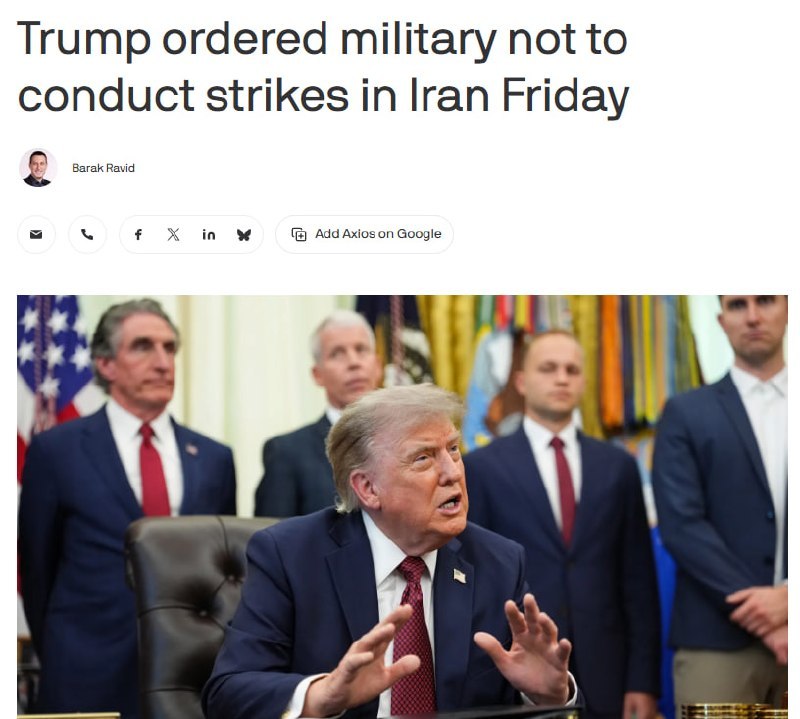
The Iran track moved on a separate rail. On 15 July, with the Unusual Whales alert posted late in the evening UTC, the Trump administration notified Congress that military operations in the region had resumed. The notification restarts a fresh 60-day clock under the War Powers Resolution, the post-1973 statute that allows the executive to use armed force abroad without prior congressional authorisation for up to sixty days, after which further action requires either a fresh authorisation or a formal withdrawal. The text of the LinkedIn alert is explicit: the notification gives the administration another sixty days of unilateral operating room before Congress has to act.
This is the second notification cycle of the year. A first round in the spring gave the administration its initial sixty-day window, then lapsed into a quieter posture, and is now being reset. The restart matters less for what it changes on the ground immediately than for what it says about the political balance inside Washington. Each notification cycle is also a small piece of leverage. A president willing to keep the clock fresh is a president signalling that he does not intend to ask permission for the next phase, whatever that phase turns out to be. A Congress that lets the clock restart without forcing a vote is, by definition, a Congress that has decided to defer.
The structural bind
The two items belong on the same ledger for a reason that has nothing to do with Iran or with importers. Both are expressions of executive discretion that the fiscal system is now asked to absorb. A war powers framework that allows sixty-day unilateral extensions is, in effect, a fiscal option on future defence spending. A tariff regime whose refund pipeline runs faster than its collection pipeline is, in effect, a policy option whose premium has fallen. Put them side by side and the structural picture is plain: Washington has more freedom to act this month than it has a budget to pay for acting next month. The Congressional Budget Office and the Joint Committee on Taxation will eventually price both into their baselines. The bond market, more sensitive, will start to do it sooner.
None of that is inevitable. The refund spike could be a one-month artefact, the war powers notification could be the prelude to a de-escalation round, the baseline forecasts could be revised upward later in the year. What is harder to dispute is the direction of the drift. Tariff revenue was sold through 2025 as a fiscal backstop. War powers authority is now being routinely cycled through 60-day windows. The two together produce a fiscal posture in which near-term capacity looks ample and the medium-term shape of the balance sheet looks exposed.
What the markets and the importers are quietly pricing in
Importers who suddenly find themselves holding refund cheques will do what rational corporate treasurers always do with refunds: redeploy. Some will reduce revolving credit lines tied to customs bonds. Some will accelerate orders they had paused pending the refund. Some will simply book the cash as a one-time gain that smooths the next quarterly print. Refund-driven liquidity is not new money; it is the return of money previously booked as expense. That distinction matters for anyone modelling corporate working-capital lines at scale, because a refund pipeline that outruns new collections looks exactly like a tax holiday to the companies receiving it.
On the war powers side, the markets that price Gulf risk have already partially absorbed the first notification cycle of the year. Insurance war-risk premia on tankers transiting the Strait of Hormuz, refinery crack spreads on the Rotterdam benchmark, and the dollar's behaviour against the rial in the offshore market are all live readouts of how the second cycle is being priced. The available public feeds do not yet give a clean print on any of these for the post-15 July window, so the cleanest thing this publication can do is flag the gap rather than gesture at it.
What remains genuinely uncertain
The thread sources agree on the basic arithmetic and on the fact of the notification. They do not agree, and cannot agree, on what either means for the next quarter. Three things remain genuinely unresolved. First, the refund spike is a single-month reading; a single Treasury month is not yet a trend. Second, the war powers notification has been issued; the second-cycle operational footprint inside Iran or its proxies has not been independently confirmed in publicly available reporting at the time of this article. Third, both items say nothing clean about whether the administration intends the next sixty days as an escalation phase, a deterrence phase, or a holding pattern. Each of those three readings is consistent with the notifications so far. The data will discriminate among them; the data has not yet arrived.
For now, the safe editorial position is the one this publication has taken: the political signal and the fiscal signal are pointing in the same direction, and that direction is not the one the headline numbers suggested six months ago. Importers will get more money back than they put in this month. The executive has more room to act this month than the budget picture supports. Both are true at the same time, and the second cycle of both will be the test of whether that is the start of a new pattern or a one-off overlap.
Desk note: Monexus is framing the tariff-refund and War Powers notifications as entries on the same fiscal balance sheet, rather than as separate trade and security stories, because the source thread places them within twenty-four hours of each other and Treasury's customs receipts are the cleanest public read of the underlying policy pressure.
Wire provenance
This editorial synthesis draws on the following public wire/social posts:
- https://t.me/CryptoBriefing
- https://t.me/CryptoBriefing/2
- https://t.me/CorriereDellaSera
- https://t.me/The_Jerusalem_Post
- https://en.wikipedia.org/wiki/War_Powers_Resolution