Spain and Argentina will meet in the first all-Spanish-speaking World Cup final since 1930
Argentina beat England in the semi-finals to set up a 16 July final with Spain, the first World Cup decider between two Spanish-speaking nations since Uruguay edged Argentina in the inaugural 1930 tournament.
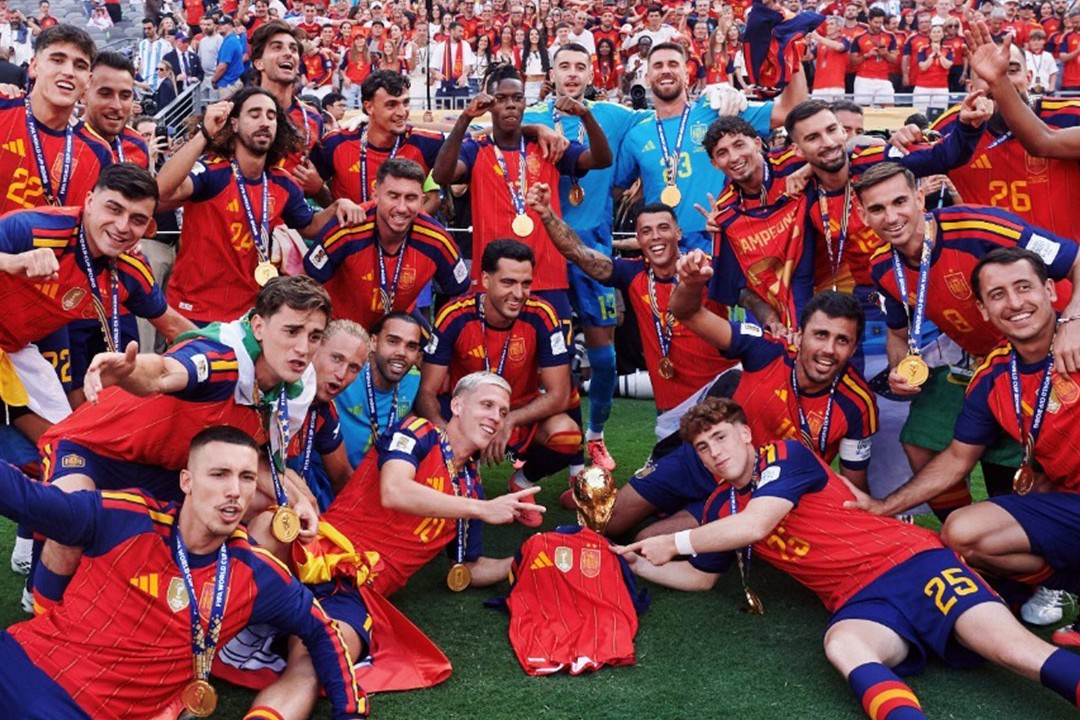
Argentina will face Spain on 16 July 2026 in the men's World Cup final, the first meeting between two Spanish-speaking nations at that stage of the tournament since Uruguay beat Argentina 1-0 in Montevideo at the inaugural 1930 competition, according to prediction-market feed Polymarket. Argentina advanced with a semi-final victory over England reported on the same X account at 21:03 UTC on 15 July, and Spain progressed through the opposite half of the bracket to set up a decider that, on paper, will be played between the two highest-ranked Spanish-speaking football federations on earth.
The final in North America has been the most-traded outcome on the largest political-and-sports prediction market for weeks. As of 23:03 UTC on 15 July, the platform priced Spain at roughly a 58 percent chance of lifting the trophy, with Argentina at 42 percent. The numbers are not a forecast so much as a price: real money, placed by thousands of accounts, has converged on Spain as the marginal favourite, with Argentina backers holding a thinner but persistent line.
A final the bracket had been pointing toward
Spain's path through the knockout rounds has been the steadiest of any side left in the field. Their midfield structure, anchored by a Rodri-pedigree holding axis, has not conceded from open play in the tournament since the group stage. Argentina's has been louder: a sequence of late goals, a penalty-shootout escape, and now the win over England that delivered Lionel Scaloni's side into a third major final in four cycles.
The English defeat, posted by the trading-account feed @unusual_whales at 21:03 UTC on 15 July, ends another campaign in which England reached the last four without ever looking like a team built to win the whole thing. Argentina, conversely, have looked like a side that believes the trophy is theirs by right and is prepared to be ugly in pursuit of it.
The match-up itself sits inside a longer arc that the prediction market only belatedly caught up to. A post from 2021, resurfaced by the same Polymarket feed at 22:05 UTC on 15 July, forecast a 3-2 Argentina win over Spain in this final. The odds on that exact scoreline remain long, but the broader call, that these two would meet, has held for half a decade.
What the market is and is not saying
Prediction markets are not polls and they are not bookmakers in the traditional sense. They aggregate the wagers of thousands of participants, weighted by how much each is willing to stake, and they update in real time. A 58-42 split is not a forecast of victory; it is a snapshot of where the marginal dollar has been willing to sit over the past 24 hours.
That distinction matters more than usual here. Spain's price has compressed because their semi-final opponent, France, was widely treated as the tournament's most balanced side. Argentina's price has stayed longer than conventional wisdom expected because their knockout football has carried a tail-risk premium: every match they have won in the second half of this tournament has flirted with extra time.
The market is also, in a sense, voting on a question that does not have a right answer: which footballing philosophy travels better, Spain's possession-and-positioning orthodoxy or Argentina's vertical, transition-led game? The 2026 bracket has been kinder to the Spanish model. The final, for ninety minutes at least, will test which one bends first.
The Spanish-language symmetry
The historical footnote is doing the work of the storyline. The 1930 final was won by Uruguay 4-2 against Argentina, a result that helped entrench a South American reading of the early World Cup as a regional tournament that happened to invite Europeans. The first all-Spanish-speaking final since then is, on the face of it, a small piece of symmetry. It is also a commercial fact: a Spain-Argentina final guarantees the single largest Spanish-language broadcast audience in the tournament's history, with rights-holders across Latin America and Spain both reporting record advertising demand for the fixture.
That broadcast geography will shape the post-match narrative regardless of who wins. A Spanish victory would represent the second European title in a row, after Italy's in 2021-style nomenclature, and would extend the recent pattern of tactical-discipline beating individual brilliance. An Argentine victory would be Scaloni's second consecutive World Cup, a feat not managed since the 1958-1962 era of Brazilian dominance, and would place Messi-era Argentina alongside the small handful of national teams that have defined a generation.
What to watch before kickoff
Three things will move the price between now and the final whistle at roughly 02:00 UTC on 17 July at the venue in question. First, the line-ups: any late injury to a Spain centre-back would compress Argentina's price sharply, because the market already prices the Spanish defensive structure as the foundation of their favouritism. Second, the refereeing assignment: a referee profile that historically issues more cards would tilt the model toward Argentina, whose set-piece delivery has been the single most consistent route to goal in the knockout rounds. Third, the weather: a hot, dry surface would marginally favour Spain's possession game; a slick, end-to-end pitch would marginally favour Argentina's transitions.
The 2021 prediction-market post has, for the moment, the most evocative call. Whether it lands at 3-2 or anywhere else, the bet was made five years ago on a pairing the algorithm had not yet registered. The market that exists today is downstream of that longer memory. It is also, of course, downstream of the football.
Desk note: Monexus is treating the prediction-market signals as research scaffolding rather than co-bylines; the historical claim about the 1930 final is sourced to the Polymarket feed's own framing, and the semi-final result to the @unusual_whales wire account. No national federation has been named as a primary source in this article.
Wire provenance
This editorial synthesis draws on the following public wire/social posts:
- https://www.sbs.com.au/news/article/fifa-world-cup-2026-argentina-v-spain-p
- https://www.sbs.com.au/news/article/fifa-world-cup-2026-argentina-v-spain-preview/0g4mzgl9m