Sixty days, no vote: the war powers clock is back on the table
A notification to Congress on 15 July 2026 restarted a 60-day clock for military action against Iran without a fresh vote. The White House gets another two months; the legislature gets another debate it keeps losing.
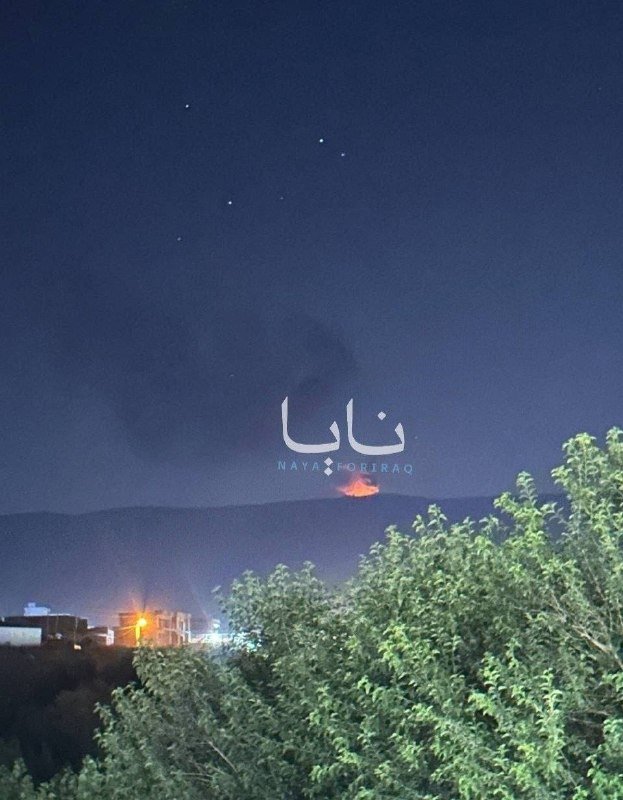
At 21:58 UTC on 15 July 2025, a post on X by the account Unusual Whales flagged a procedural reality that has quietly defined US military action in the Middle East for four decades: a fresh notification to Congress about Iran had just given the administration another 60-day clock to use armed force in the region without seeking a new vote, a clock that runs against an institution that has not successfully reasserted its war-making authority since the post-Vietnam War Powers framework was written. Unusual Whales framed the notification as a continuation of hostilities, not a new authorization. That framing is the story.
The arithmetic is the story. Under the War Powers Resolution, the executive must report to Congress within 48 hours of introducing armed forces abroad and must withdraw them within 60 days unless the legislature authorizes the deployment or extends the deadline. Every administration since the law's passage in 1973 has treated those 60 days as elastic, and Congress has, with rare exceptions, declined to push back. The pattern is familiar enough that some specialists treat the clock as a procedural tic rather than a constraint; a new notification simply restarts it. The current episode, read against that pattern, suggests the administration is not asking for permission so much as resetting a timer.
The notification, stripped down
What is publicly known is narrow. A social-media post by the president stated that Immigration and Customs Enforcement should continue arresting people during traffic stops, per reporting carried by The Epoch Times on 16 July 2026 at 03:06 UTC. Separately, the Unusual Whales account reported that the administration had notified Congress that hostilities with Iran had resumed, an action that triggers the 60-day withdrawal clock again under the War Powers framework. The two items sit in different policy silos; what binds them is the underlying posture: an executive branch comfortable operating on statutory deadlines rather than seeking fresh authorizations, and a Congress that has, by long practice, declined to litigate the point.
That posture is not novel. The Obama administration notified Congress about operations against Libya in 2011 and argued that no authorization was required because US forces were not in "hostilities" within the meaning of the statute. The Trump administration issued a similar notification after the January 2020 strike that killed Quds Force commander Qasem Soleimani. The Biden administration notified Congress about strikes against Iran-backed groups in early 2024. In each case, the legal framing narrowed the term "hostilities" enough to avoid forcing a withdrawal vote, and in each case, Congress did not compel the question. The 15 July 2026 notification extends that lineage.
What the Iran framing gets right, and where it strains
The administration line, as reconstructed from the notification and adjacent reporting, is that US forces are responding to ongoing attacks on American personnel and allied shipping in the region, that the response is defensive, and that a fresh authorization would be inappropriate because the operations fall inside the existing statutory envelope. The argument has surface plausibility: Iranian-backed groups have launched drone and missile attacks on US bases in Iraq and Syria since October 2023, and Houthi strikes on Red Sea shipping have continued intermittently despite a months-long US-UK bombing campaign.
The strain shows up in the word "resumed." If hostilities resumed, the implication is that they were paused at some point in the recent past. The public record does not show a clean pause: US forces have struck Iran-backed assets repeatedly across 2024 and 2025, including retaliatory operations after the killing of American servicemembers in Jordan in January 2024 and continuing operations against the Houthis into early 2026. The administration's own choice of verb suggests a legal posture that benefits from treating the campaign as episodic rather than continuous.
The structural picture, in plain terms
Strip away the legal vocabulary and what remains is a recurring pattern: the United States fights a series of low-intensity, geographically dispersed conflicts with Iranian proxies and, occasionally, Iranian assets directly; Congress funds those operations through the regular defense appropriations process and is asked to bless them retroactively, if at all; the executive branch uses statutory and doctrinal workarounds to avoid the vote that the 1973 statute appears to contemplate. The pattern is bipartisan. The 60-day clock has become a procedural instrument the executive can reset rather than a constraint on force.
What makes this episode worth watching is not the notification itself but the calendar that follows. The clock runs 60 days from the notification. Inside that window, Congress can attempt to pass a withdrawal resolution, an authorization for use of military force, or a statute that more clearly defines what counts as "hostilities." None of those votes has succeeded in over a decade. The probability that this one does is low. What the notification buys the administration, in operational terms, is two more months of legal cover for the current posture, and a precedent for the next notification after that.
The most plausible counter-read is that the notification is not primarily about Iran at all. It is about establishing, on the record, that the executive can extend military operations in the region through serial 60-day renewals indefinitely, while continuing to argue, in litigation and in congressional testimony, that no single renewal constitutes a major war requiring authorization. That is a structural argument about the separation of powers dressed up as a procedural one. If it holds, the next time a crisis demands sustained US force in the Gulf, the baseline against which Congress has to push is not 1973 but 2026.
What the sources do not settle
Three things remain genuinely uncertain. First, the exact scope of the operations covered by the notification: the public text appears to reference Iran broadly rather than naming a specific incident or set of strikes, and the absence of a detailed factual annex leaves room for the administration to characterize the operations narrowly in court. Second, whether any member of congressional leadership intends to force a floor vote on a withdrawal resolution before the 60 days elapse; the public statements so far suggest bipartisan discomfort rather than a committed procedural challenge. Third, whether the notification itself is best read as a legal reset, a domestic political signal aimed at the president's domestic-immigration posture, or both. The Epoch Times coverage of the ICE statement and the Unusual Whales post about the Iran notification appeared within hours of each other and read in isolation, but the timing may be coincidental. The sources do not settle which reading is right.
What the sources do support, plainly, is that on 15 July 2026 the executive branch notified the legislature that hostilities with Iran had resumed, and that the procedural consequence of that notification is another 60 days in which the administration does not need a vote to keep operating. The pattern is not new. The clock, however, is once again running.
This article was prepared by Monexus staff from publicly available social-media reporting. Monexus framed the notification as a procedural War Powers question first and a policy question second, on the reading that the calendar itself is the news.