Sam Neill's cause of death revealed three months after cancer-free announcement
The New Zealand-born actor, 78, died at St. Vincent's Hospital in Sydney three months after announcing he was cancer-free, with the cause of death now publicly disclosed.
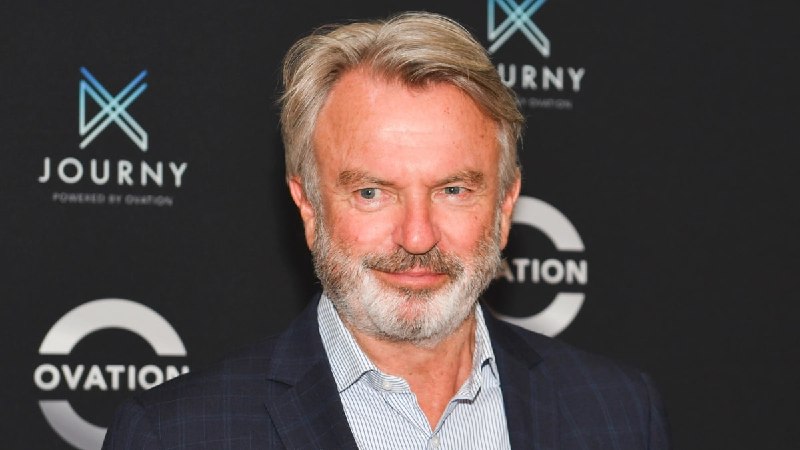
Sam Neill, the New Zealand-born actor whose six-decade screen career stretched from the Otago-shot period piece of his early work to the global blockbuster franchise that defined his later years, died at St. Vincent's Hospital in Sydney. He was 78. The cause of death, disclosed on 16 July 2026, came roughly three months after Neill announced publicly that he was cancer-free, a development that had read at the time as a reassuring coda to a years-long illness he had first spoken about in 2022.
The disclosure reorders the closing chapter of one of the Anglosphere's most recognisable screen careers, and it puts a familiar public narrative, the celebrity beats cancer, back in the public record under more complicated circumstances. The hospital, the city, and the short interval between the upbeat announcement and the death are now the load-bearing facts; everything else is interpretation.
What was announced, and when
In 2022, Neill confirmed he had been treated for stage-three angioimmunoblastic T-cell lymphoma, a rare blood cancer. The news was delivered in the promotional round for his memoir Did I Ever Tell You This?, and the framing from the actor and his representatives was candid: the treatment had been gruelling, the prognosis was uncertain, and the book, finished during chemotherapy, was partly an exercise in leaving a record behind. By 2023 he was describing himself as in remission. In the months that followed, the language softened further, and by April 2026 the public position was that he was cancer-free. The death, at St. Vincent's in the Sydney CBD on 16 July 2026, sits three months past that most recent assurance.
The cause itself has now been publicly stated, though the specific pathology released by the hospital and family is not detailed in the wire circulated by the Epoch Times Telegram channel on 16 July 2026 at 13:34 UTC. That gap is worth naming. A "cancer-free" announcement, in the patient-advocacy idiom that has become common since the early 2010s, is usually shorthand for "no detectable disease at the most recent scan"; it is not, strictly, a declaration of cure. Immunotherapy and targeted-therapy remissions can be durable; they can also, in a minority of cases, be followed by late relapse or by treatment-related complications that present clinically as something other than the original malignancy.
A career that did not need a franchise, then got one
Neill's professional standing rested on two distinct foundations. The first was a long stretch of character work in New Zealand and Australian productions, followed by a deliberate migration to British and American television and film, where he built a reputation as a steady, physically credible presence across genres. The second, and the one that fixed him in global popular memory, was the Jurassic Park franchise, beginning with the 1993 Spielberg film and recurring in three sequels across three decades.
That second foundation has done a particular kind of work in the obituaries that have begun circulating. It has allowed writers to treat the rest of the career as a kind of prelude, which is unfair to a filmography that includes The Piano (1993), The Hunt for Red October (1990), The Remains of the Day (1993), and a substantial run of New Zealand-led productions including Sweetie and the Peaky Blinders finale film, The Immortal Man (2025). The risk of the franchise-led framing is that it converts a varied, trans-Tasman career into a single Hollywood data point.
The antipodean industry context
Neill's death lands in a Screen Australia and New Zealand Film Commission landscape that has, since roughly 2022, been recalibrating around streaming-era economics and the long tail of pandemic-era production shutdowns. Australian and New Zealand performers with genuine international reach remain a small pool; the loss of one is treated by local outlets as an industry event, not only a personal one. The St. Vincent's location, in Sydney rather than Neill's long-time homes in the South Island of New Zealand or in the NSW Southern Highlands, will draw its own questions, and they are questions the public record does not yet answer.
There is also a New Zealand cultural framing that this publication finds worth surfacing without overstating. Neill was unusually willing, for an actor of his international standing, to be publicly identified with New Zealand projects and New Zealand stories, including the country's own reckoning with its wine industry, its central Otago landscape, and its small-screen industry. He used his memoir publicity, in 2022 and after, to talk about New Zealand in terms that did not depend on Hollywood for legitimacy. That posture is part of the inheritance, separate from the franchise work, that the next generation of antipodean actors will be measured against.
What remains uncertain
The published cause of death, as relayed by the Epoch Times wire, is not paired in the source with a detailed pathology report, a treating-physician statement, or a family spokesperson quote beyond the immediate confirmation. The interval between the April 2026 cancer-free announcement and the July death is short enough that questions about what changed, and when, are reasonable. They are not, on the public record, answered yet. Readers should expect fuller detail to come from a family statement or from an obituary written with the cooperation of his representatives; the wire currently in circulation is the starting point, not the closing word.
Wire provenance
This editorial synthesis draws on the following public wire/social posts:
- https://theepochtim.es/nroimf