Sam Neill, the Antipodean everyman, exits on his own terms
The 77-year-old New Zealand actor, beloved from Jurassic Park to The Piano, died of pneumonia on 16 July 2026 after publicly beating lymphoma, his agent confirmed.
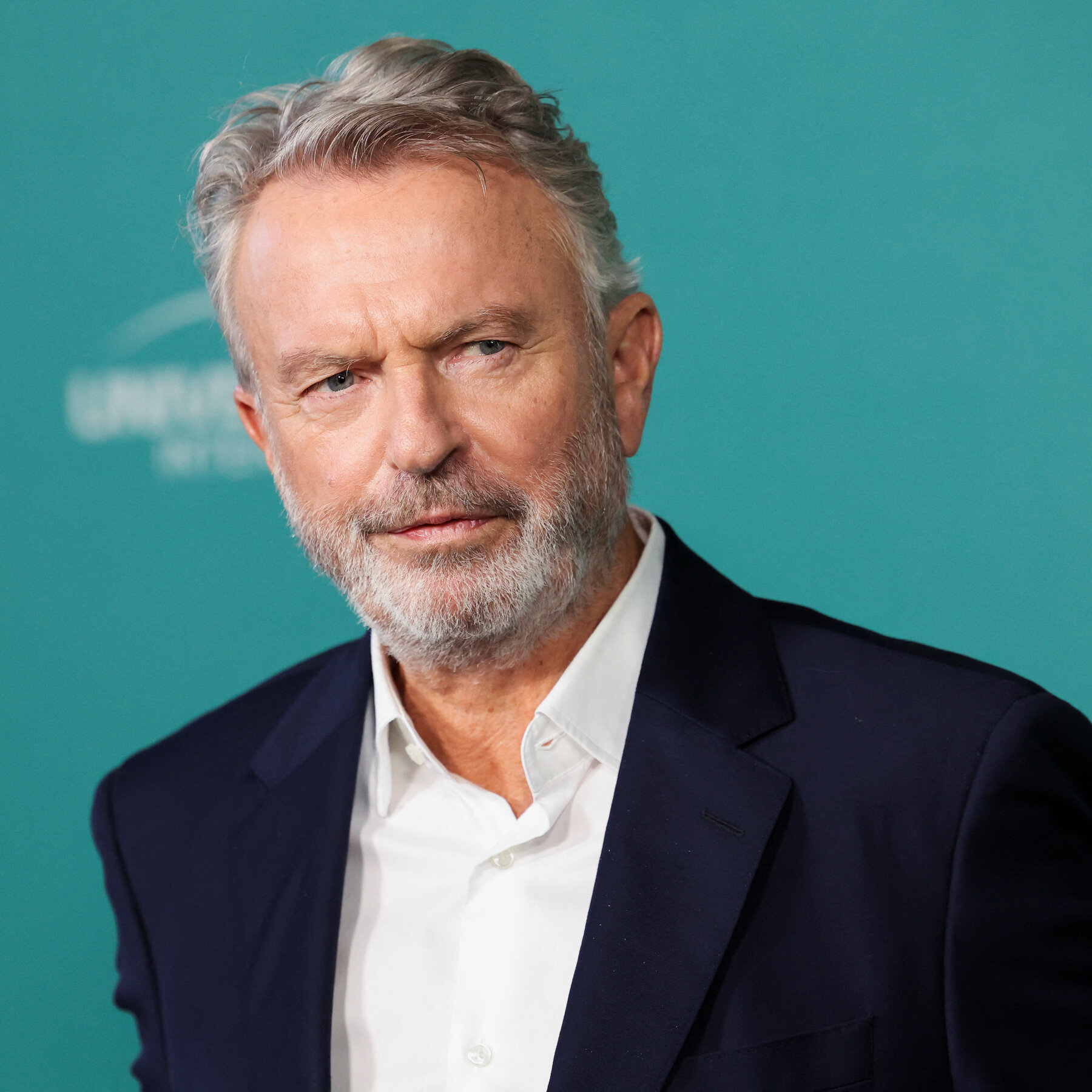
Sam Neill, the New Zealand actor whose on-screen ease carried him from a marauding velociraptor hunter in Jurassic Park to the patient romantic lead of The Piano, died in New Zealand on 16 July 2026 of pneumonia, his agent confirmed to The New York Times on the same day. He was 77. The statement, issued through agent Caroline Jeffries, made clear that Neill had previously "fought and beaten" lymphoma before he fell ill with the respiratory infection that ended his life.
The brief, factual confirmation closes a public-health chapter that Neill himself opened two and a half years earlier. In a 2023 memoir, Did I Ever Tell You This?, the actor disclosed that he had been diagnosed with stage-three angioimmunoblastic T-cell lymphoma during the first season press tour for Jurassic World Dominion. The disclosure was unusually direct for a star of his commercial standing, and it produced the kind of public farewell-adjacent coverage that the British tabloids, for once, did not need to inflate: the man was simply telling them, on the record, what he had. The remissions that followed appeared durable enough that Neill returned to work, completing roles in Apples Never Fall (2024) and the New Zealand-shot thriller The Ridge, both released in 2024, according to his public filmography.
An actor who never quite left home
Neill spent four decades moving between the small New Zealand productions of his youth and the Hollywood tentpoles of his middle age without ever quite consenting to belong to either. He was raised in the North Island town of Omagh, Northern Ireland, before his family emigrated to New Zealand when he was seven, a biography the agent's statement does not retell but which has shaped every piece written about him since The Piano (1993) and Jurassic Park (1993) made him, briefly, the most familiar New Zealand face on the global screen.
He was unusually willing, in interviews, to demystify that familiarity. Asked repeatedly how a New Zealander ended up in a leading role in a Steven Spielberg blockbuster, Neill would offer a version of the same answer: casting is casting, the accent is the accent, and the work is the work. There is no A-list Kiwi film industry; there is a Kiwi actor who, every few years, leaves for somewhere larger and then comes back. Neill did that more visibly than most, and he did it without the bitterness that often accompanies second-tier stardom in the Anglophone film economy.
The New Zealand film industry, before and after him
The structural fact worth holding onto is that New Zealand's screen sector, in the half-century before Neill's death, grew from a state-supported curiosity into a recurring source of export revenue without ever approaching the scale of Australia, Canada or the United Kingdom. The country's audiovisual incentive scheme, administered through the New Zealand Film Commission, was designed in part to retain exactly the kind of mid-career talent that Neill represented. In his later years, he was a regular presence in locally financed productions and, by several accounts, an uncommonly hands-on mentor to younger Kiwi actors. The industry's long-running inability to capitalise on that success is, in a small way, also part of his story: a country that can reliably produce one internationally bankable lead per generation has, historically, not built the support structure to keep that lead working at home.
The agent's confirmation deliberately avoids the word "battle," a small but telling editorial choice. Neill himself had already done that rhetorical work in 2023, and his family appears to have decided that the second chapter of the public story did not require new language. The cause is named. The sequence is named. The rest is for the obituaries.
What remains uncertain
A handful of details typically expected in a same-day confirmation are absent from the statement. No specific location within New Zealand is named; no hospital, no hospice, no home city. The age is given as 77, which is consistent with Neill's widely reported birthdate of 14 September 1947 in Omagh, but the statement does not explicitly reconcile the two. Funeral arrangements, charitable designations, and the question of whether further medical detail will be released through a New Zealand outlet rather than via international wire are all, as of 16 July 2026, unanswered. The pattern is familiar: agents in the first twenty-four hours name the cause, defer the rest, and let the trade press fill the silence over the following week. The Neill family has, so far, declined to take that bait.
How Monexus framed this: a cause-of-death confirmation reported straight, with the lymphoma disclosure in its proper sequence, the New Zealand film-economy context treated as a structural fact rather than colour, and the tabloid impulse to dramatise the second illness resisted.