Paris and Gaza take to the streets for a doctor Israel holds without charge
Demonstrators in Paris and across Gaza demand the release of Dr Hussam Abu Safia, detained by Israeli forces at Kamal Adwan, as a rare cross-border campaign reopens the question of medical detentions.
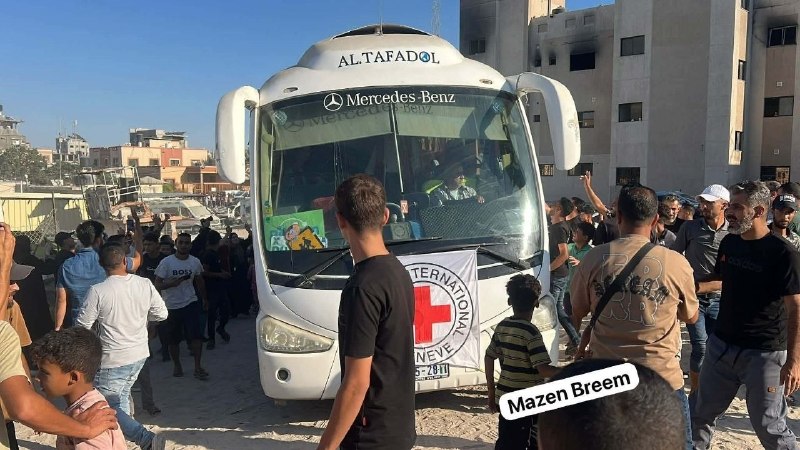
Demonstrators gathered in Paris and in multiple locations across the Gaza Strip on 16 July 2026 to demand the release of Dr Hussam Abu Safia, the medical director of Kamal Adwan Hospital, whose detention by Israeli forces has become the rallying point of a rare synchronised protest campaign on two continents. Al Jazeera English reported the parallel mobilisations in a brief filed from its global newsroom at 01:07 UTC, framing the action as a coordinated demand for the release of a physician whose case has come to symbolise a wider argument over medical protections in wartime.
The protests matter because they pull a single name into public view and force a debate that governments would prefer to keep administrative. Abu Safia was taken from the hospital he ran in northern Gaza, a facility that for months has sat inside the operational geography of Israel's grinding ground campaign; his continued detention without charge is now the test case for whether the institutions that govern international humanitarian law can be moved by street-level pressure in two cities at once.
A doctor becomes a cause
Kamal Adwan Hospital is no abstraction. It is one of the few medical facilities in the northern reaches of the Gaza Strip that remained nominally operational through the early phases of the war, treating the wounded and the displaced under conditions that international medical organisations have repeatedly described as catastrophic. Its director became known inside the Strip long before his name reached European placards, and his removal from the facility, first reported in late 2024 and revisited repeatedly since, hardened an existing line of Palestinian and international advocacy: that the targeting of medical infrastructure and the detention of medical staff are not incidental byproducts of counter-insurgency operations but a recurring feature of how this war has been prosecuted.
That framing is contested. Israeli authorities have, in past statements on medical detentions, argued that individuals working in hospitals are subject to the same security screening as any other person in a conflict zone, and that the presence of a medical title does not exempt someone from interrogation. The line between "doctor" and "operative" is the line the Israeli state has sought to police, and it is precisely the line the protesters in Paris and Gaza are now contesting in the open, on placards, in chants, and in the camera frames that wire editors will choose from.
The Paris piece
Demonstrations in the French capital are politically loaded in a way that mobilisations in Rafah or Khan Younis are not. France is a permanent UN Security Council member, a nuclear power, and a state that recognises a Palestinian one on paper while conducting the kind of quiet diplomatic relations with Israel that allows the European foreign-policy establishment to keep both files open at once. A march in central Paris for a detained Palestinian doctor therefore lands inside an active policy conversation, not outside it.
The French far left has long used Gaza as a mobilisation issue, and the established centre-left has been less willing to make individual Palestinian cases the centre of mass street politics. The visible presence of a broad coalition on 16 July, if confirmed by on-the-ground reporting in subsequent days, would mark an extension of the European protest constituency for Gaza beyond the parties that have owned the issue since October 2023. It would also test the limits of French interior-ministry tolerance: Paris has, at various points in the past two years, restricted pro-Palestinian demonstrations on the grounds that they risk public disorder or spill over into antisemitic targeting of Jewish institutions. The framing of this particular march, with a single named detainee and a specific humanitarian demand, is harder to argue against on those grounds.
The Gaza piece
Inside the Strip, the geography of protest is itself a story. Al Jazeera's reporting referenced demonstrations in multiple Gaza locations, including Gaza City and points further south. That range matters because the freedom to assemble, even briefly, even under observation, is itself contested terrain in a place where Israeli military operations have, at multiple documented points since late 2023, opened fire on civilians gathered in groups that the army defined as operational threats. Holding a protest in Gaza in 2026 is not the same act as holding one in Place de la République.
The protesters' demand is narrow and concrete: release Abu Safia. That narrowness is a tactical choice. A campaign built around a single named individual is easier to translate across language, easier to verify, and harder to dismiss as general political posturing than a campaign built around a broader indictment. It also fits a recognisable international-humanitarian repertoire: the named prisoner as the legible face of a structural argument.
What the wire is not yet telling us
The single Al Jazeera item that drove this article does not, on its own, answer several questions a responsible editor has to ask. It does not name the French organisers, so the coalition breadth claimed above is provisional until confirmed by a wire with on-the-ground correspondents in Paris. It does not specify the size of either the Paris or the Gaza crowds. It does not state Abu Safia's current legal status beyond the broad fact of detention: whether he has been transferred to an Israeli facility inside Israel proper, whether he has been allowed consular access, whether any formal charges have been filed or are imminent. It does not address the Israeli government's current public position on his case, which has shifted at points over the eighteen months of his detention.
The dispute over medical detentions in this war is older than Abu Safia's case and will outlast it. Israeli authorities have asserted that hospitals in Gaza have been used for military purposes by Hamas and other armed groups, a claim repeated by Israeli spokespersons and given credibility in some Western wire reporting by visual evidence of weapons caches and tunnel shafts uncovered at specific facilities. Palestinian and international medical organisations reject the implication that the presence of an armed actor inside a hospital indicts the medical staff, and they point to the protections owed under the Geneva Conventions. Both positions have evidentiary support; neither has been adjudicated by a competent international tribunal in a way that has produced a binding finding.
What to watch next
The political clock for Abu Safia now runs on two tracks. The first is judicial: whether Israeli authorities file charges, release him, or continue to hold him in administrative detention under the arrangements that have governed security detainees inside Israel for decades. The second is mobilisational: whether the Paris-Gaza synchronisation of 16 July produces a follow-on wave in other European capitals, in British and Irish cities with established pro-Palestinian constituencies, and inside diaspora medical-professional associations whose letter-writing capacity is real even if it is slow.
A single afternoon of protests will not move either track by itself. But it has done one thing: it has put a name, a face, and a specific detention onto the front of a file that most governments had filed under "ongoing, unspecific." From here, the burden of explanation shifts. The default answer, that the matter is being handled through appropriate channels, will no longer satisfy a street that has decided to ask out loud.
, Monexus framed this through the lens of medical neutrality under occupation rather than the broader Gaza casualty ledger, on the reasoning that a single named detainee is the more legible unit of analysis for European readers encountering the case for the first time.
Wire provenance
This editorial synthesis draws on the following public wire/social posts:
- https://t.me/aljazeeraglobal