Ol Kalou by-election tests Kenya's new opposition front against Ruto's ruling machine
Voters in Nyandarua county went to the polls on 16 July 2026 in a by-election that has become an early stress test for the newly formed Democracy for the Citizens Party and a measure of the political ceiling facing President William Ruto's United Democratic Alliance.
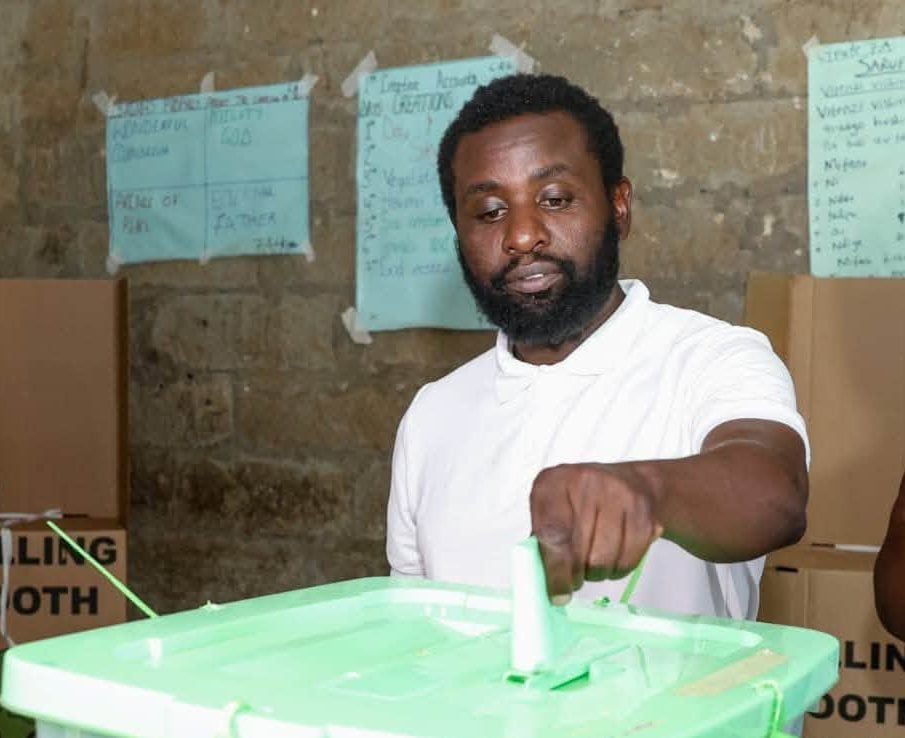
Polling stations in Nyandarua county opened before sunrise on 16 July 2026 for a parliamentary by-election that has, almost against the design of the calendar, become an early national referendum on Kenyan politics after the formal registration of a new opposition party. Live updates from the Standard's newsroom showed queues forming outside stations in Ol Kalou town from 06:00 local time (03:00 UTC), with presiding officers reporting a steady, if not overwhelming, turnout through the morning hours. The contest pits the ruling United Democratic Alliance (UDA) against the newly formed Democracy for the Citizens Party (DCP), the vehicle that former deputy president Rigathi Gachagua has used to regroup his political base since his impeachment-aligned exit from government.
The by-election matters less for the single parliamentary seat at stake than for what the result signals about the durability of the coalition that delivered William Ruto the presidency in 2022, and about whether a serious opposition front can be assembled in time for the next general election. Nyandarua, a Central Province county historically aligned with the Kikuyu-led establishment that powered both the Kenyatta and Uhuru Kenyatta governments, is precisely the kind of terrain on which small swings translate into national narratives. If the UDA holds, the ruling party can argue that the post-Gachagua realignment has stabilised. If the DCP wins, Gachagua's claim to be the de facto leader of the anti-Ruto coalition gains a tangible asset overnight.
A constituency the establishment once treated as safe
Ol Kalou has not been a swing seat for most of the post-2010 period. The Standard's live blog frames the contest as a duel between two national parties, but the deeper story is constituency-level: a seat vacated mid-term, the normal machinery of patron-driven mobilisation, and a voter roll whose boundaries were last meaningfully redrawn a decade ago. The Daily Nation's parallel live coverage frames the vote as a "battle for the soul of Ol Kalou," language that captures the way Kenyan by-elections routinely inflate local contests into proxies for the next general cycle. Neither outlet has yet published projected turnout figures or preliminary results; both report that voting is proceeding without major incident at the time of writing, with agents from both main parties deployed at ward-level tallying centres.
The Standard's reporting identifies UDA and DCP as the two parties contesting the result in any meaningful sense. Smaller parties and independents are on the ballot, consistent with Kenyan by-elections, but the framing of the live coverage treats them as background. That editorial choice is itself a signal: in a country where the Electoral Commission of Kenya lists more than fifty registered parties, a by-election that consolidates into a two-horse race within seventy-two hours of voting tells you something about the speed at which money, brokers and presidential endorsements compress the field.
Gachagua's vehicle, Ruto's ceiling
The Democracy for the Citizens Party is the story behind the story. Registered earlier this year after Gachagua's effective removal from the deputy presidency, the DCP has positioned itself as a Mt Kenya-centred counterweight to the UDA, recruiting defectors from the ruling party and from the broader Kenya Kwanza coalition. The party's choice of Ol Kalou as its first major electoral test is deliberate: Nyandarua borders Gachagua's home county of Nyeri, and a win would extend his personal brand of "mountain politics" into a county that has, at times, drifted toward rival Mt Kenya networks.
For Ruto, the calculus is the inverse. The UDA won Nyandarua in 2022, and losing it in a by-election would not strip the president of any constitutional power. But it would puncture the narrative that the Mt Kenya voter base, despite the bitter impeachment fight, remains firmly inside the ruling tent. Ruto's political model rests on holding the centre while expanding into Western Kenya and the Rift Valley; a DCP win in Ol Kalou would be read in Nairobi's editorial pages, and in the WhatsApp groups that increasingly substitute for them, as evidence that the coalition is fraying at exactly the seam the president's enemies have been pulling.
Reading the framing
Coverage of the by-election is following a familiar Kenyan template: turnout reported as anecdotal ("long queues at Ol Kalou Town primary"), institutional actors quoted in their official capacity ("the returning officer confirmed"), and the opposition's prospects measured less by polling, which is rarely published at this level, than by the volume of campaign spending visible in the final week. The Standard's live blog and the Nation's live coverage both foreground the UDA-DCP axis, which is consistent with how the parties themselves have framed the contest and with how political money has been deployed.
The counter-frame worth holding is that by-elections in Kenya are noisy, expensive and frequently determined by factors that have little to do with national politics: clan arithmetic in a particular ward, a single church leader's endorsement, an unresolved land dispute that gets reactivated through the campaign. A DCP win would not, on its own, prove that the opposition has national momentum; a UDA hold would not prove that the ruling coalition is unbreakable. What both results would do is tighten or loosen the room available to brokers on both sides ahead of the realignment negotiations that will define the run-up to 2027.
What to watch when the count closes
Two numbers will matter more than the rest. The first is the margin. In a constituency this small, a win under five percentage points tells a different story than a win over fifteen: the first reads as a realignment in progress, the second as a routed challenger. The second is turnout relative to 2022. Kenyan by-elections typically run twenty to thirty points below general-election turnout, and any meaningful over-performance would suggest that mobilisation, rather than fatigue, drove the day's traffic. Together, the two figures will let Nairobi read the by-election as either a tremor or a freeze-frame.
The DCP's longer-term test lies beyond Nyandarua. A win here buys Gachagua time and a talking point; it does not yet give him a machine that can compete in Mombasa, Kisumu or the larger Mt Kenya constituencies where the UDA's incumbency, and the state resources that travel with it, remain formidable. For Ruto, the lesson of the day is the inverse: a hold would let him move on; a loss would force a sharper choice between reaching back into the Mt Kenya establishment he has been slowly marginalising, or accepting that the coalition's centre of gravity is shifting, irreversibly, west.
This publication's framing departs from the wire template by treating the by-election less as a discrete event than as the first electoral reading on a coalition realignment that the formal party registration calendar only partially captures. Where the Standard and the Nation foreground the UDA-DCP duel, Monexus reads the contest through the coalition politics of Mt Kenya, on which the 2027 general election will, in significant part, turn.