Netflix says generative AI now touches 300 titles. The disclosure is the story.
Co-CEO Ted Sarandos said generative AI appeared in 300 Netflix titles, including a 17-minute American Experiment sequence. The disclosure is the first time a major U.S. streamer has put a number on AI deployment at this scale.
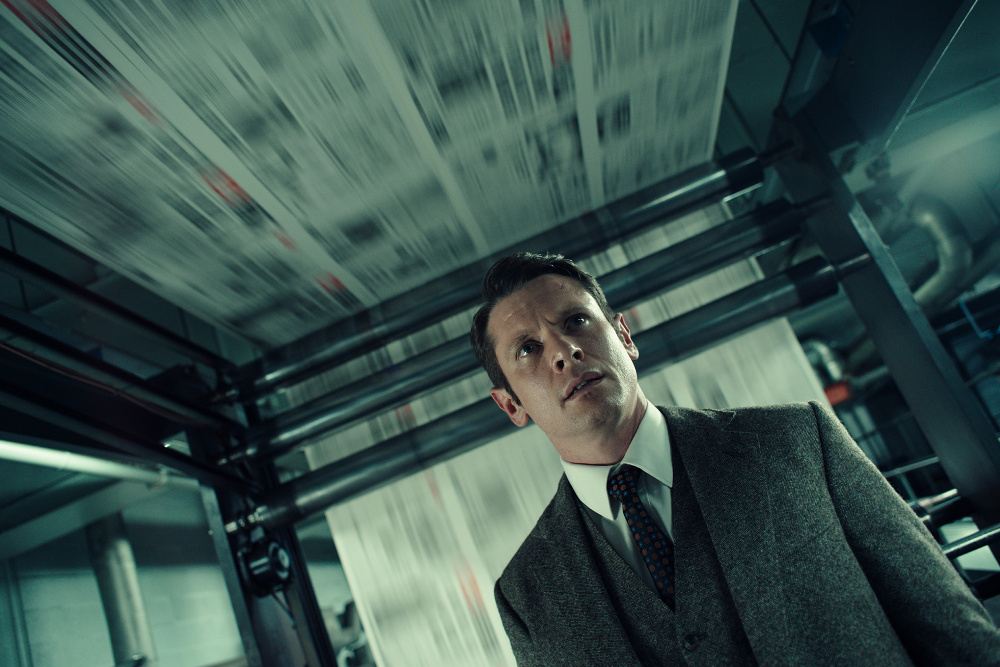
Netflix Co-Chief Executive Ted Sarandos said on 16 July 2026 that generative artificial-intelligence tools have now been used across roughly 300 Netflix titles, with the company's documentary series "The American Experiment" alone containing 17 minutes of AI-generated footage. The figure, surfaced by IndieWire from Sarandos's on-stage remarks, is the first time a major U.S. streamer has put a publicly defensible number on how widely the technology has been folded into its production pipeline.
The disclosure lands at a moment when Hollywood's relationship with generative AI has shifted from speculative threat to operating expense. Netflix is not the only shop experimenting; it is the first to attach a count to the experiment. The size of that count, and the casualness with which Sarandos volunteered it, tells the story: the cost curve of producing visual content has moved, and the company wants credit for moving with it.
What the 300-title figure actually covers
Sarandos described the use of generative AI in 300 different titles, framing the technology as a tool that lets visual-effects teams and production designers "enhance their abilities" rather than replace them. The most prominent example he cited is "The American Experiment," a Netflix docuseries that uses AI to depict historical scenes that would otherwise have required period sets, costuming or licensed archival material; 17 minutes of the show, according to Sarandos, are generated.
The disclosure is unusual in two ways. First, it is a top-line number, 300 titles, that the company has chosen to put into the public record without specifying what share of those uses are cosmetic (image cleanup, rough-cut pre-visualisation) versus generative (newly synthesised footage inserted into the final cut). Second, it is the most senior executive at a tier-one U.S. streamer publicly normalising the practice in front of a press audience. Industry executives have discussed AI workflows behind closed doors for at least two years; Sarandos is the first to defend them on a stage, and to attach a number to the deployment.
The labour counter-current
The disclosure sits uneasily alongside the labour fight that defined the 2023 contract cycle. The Writers Guild of America and SAG-AFTRA both won narrow guardrails on AI use in their 2023 agreements; the Screen Actors Guild's deal, for instance, requires informed consent and separate compensation when a digital replica of a performer is generated. Sarandos's framing, that AI enhances rather than replaces creative work, is the line studios have used since the strikes to manage the politics of automation.
The unions have not publicly responded to Sarandos's 16 July remarks. The relevant question for organised labour is whether AI-assisted VFX or pre-visualisation work, performed at lower cost and on tighter timelines, ends up substituting for the entry-level production-design jobs that traditionally trained the next cohort of below-the-line workers. The studio's argument is that the savings get re-deployed into more production. The union's counter is that re-deployment has historically been the part that never quite arrives.
A cost curve, not a creative revolution
The more honest framing is that generative AI is, today, a cost-and-throughput tool. It does not yet write screenplays at feature quality, and the high-profile narrative experiments of the past two years have been more cautionary tale than success story. What it does well is exactly the sort of work Sarandos pointed to: filling in period detail, generating background plates, producing intermediate frames for VFX, animating logos and stingers, sketching previs. Each of those tasks previously required a small team and a non-trivial budget. Each can now be done by a prompt and a credit card.
This is the structural shift. The marginal cost of a frame drops toward zero, while the cost of acquiring, training and retaining the people who direct the tools remains flat. Studios that can absorb the up-front tooling cost and integrate it into a production pipeline capture the spread. Netflix, with its content spend running into the billions annually and a release calendar that requires continuous throughput, is the studio with the most to gain from that spread. Sarandos's disclosure is, in effect, a quarterly-update slide presented as a philosophy.
What the number does not tell us
The 300-title figure is a count, not a measurement. It does not disclose how many minutes of finished programming were AI-generated, whether any of the work touched performers' likenesses, or how the cost savings were distributed between the studio and its vendors. Sarandos's remarks also pre-empt the regulatory conversation: the European Union's AI Act provisions on transparency for synthetic media take effect in stages through 2026, and U.S. state-level rules in California and New York are tightening around disclosure of AI-generated content in advertising and political material. A streamer that volunteers the number first is, in part, choosing the frame before the frame is chosen for it.
For Netflix's competitors, the disclosure sets a baseline that is awkward to ignore and difficult to match publicly. Disney, Warner Bros. Discovery and Paramount Skydance have all run internal AI pilots; none has named a comparable headline figure. The next test will come during the next earnings cycle, when analysts ask whether the cost savings from AI-assisted production show up in content amortisation per title, or whether they vanish into the same overhead lines that absorbed streaming's original content splurge.
For now, the 300 is the story. The number will be cited, contested, and quietly revised. That is what disclosure at scale looks like: less a clean line than the first draft of one.
This publication framed Sarandos's disclosure as a cost-and-throughput story first and a creative-revolution story second. The wire line so far has emphasised the "enhance abilities" framing; the more consequential read is what the figure implies about the production labour pipeline over the next 18 to 24 months.
Wire provenance
This editorial synthesis draws on the following public wire/social posts:
- https://t.me/indiewire/
- https://en.wikipedia.org/wiki/Ted_Sarandos
- https://en.wikipedia.org/wiki/Netflix
- https://en.wikipedia.org/wiki/Artificial_Intelligence_Act